How do you know if low testosterone symptoms are worth checking?
Symptoms are worth checking when they persist and form a pattern, especially low sexual desire, fewer morning erections or erectile changes alongside fatigue, mood change or reduced strength. Tiredness alone does not diagnose low testosterone. A proper male hormone check uses morning blood tests and clinical review together.
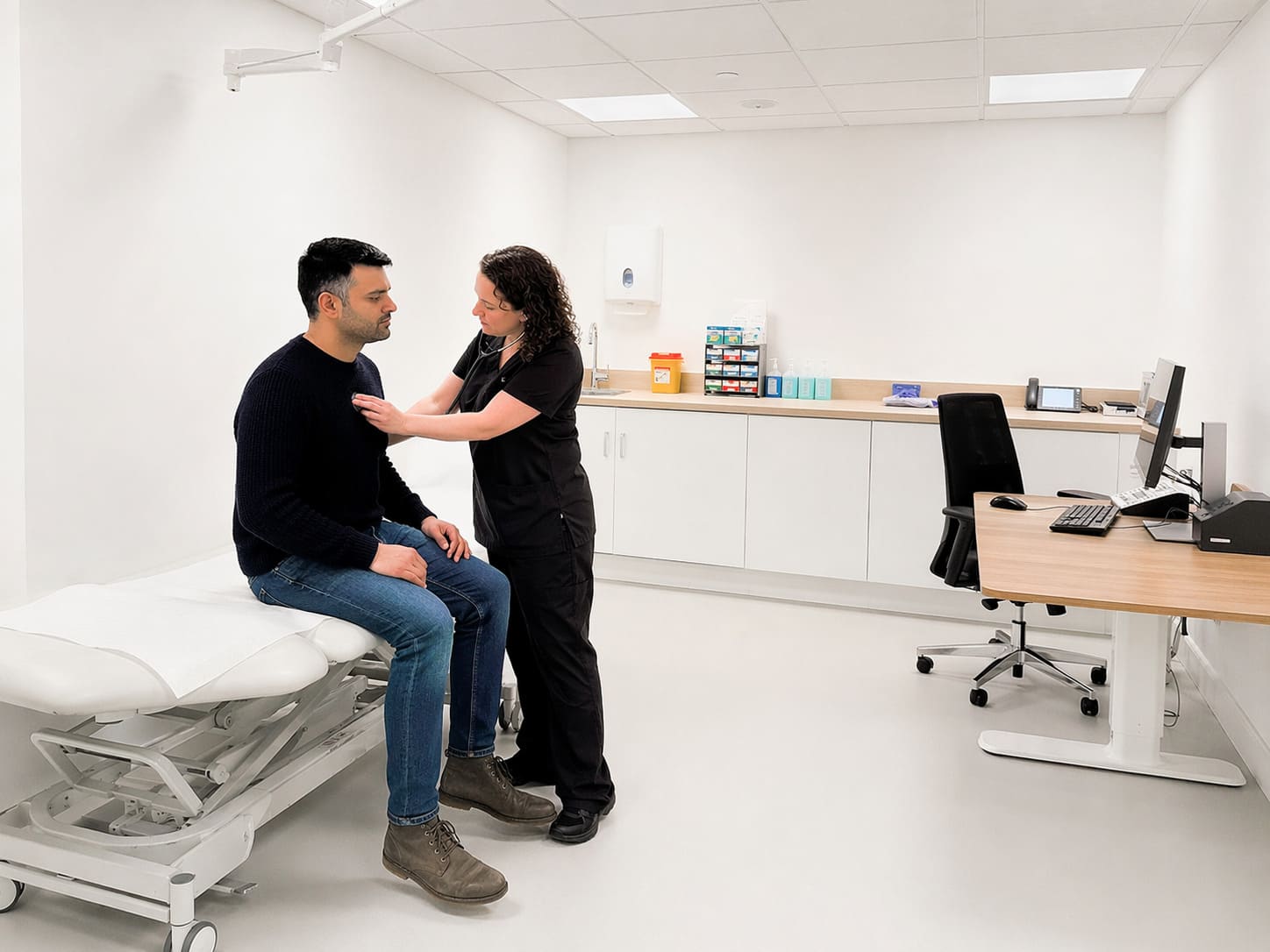
Comprehensive Health Check – Heart and Chest Check – Illustrative Image
What Is In This Article
The first mistake is treating symptoms as a diagnosis
Many men make the same leap: tiredness, weaker gym recovery or lower drive must mean low testosterone. Clinically, that jump is too quick. Symptoms raise the question, but blood results, medical history, medication, sleep, stress and wider health factors help answer it.
“Male menopause” is an imprecise label. The NHS describes the phrase as misleading because it suggests a sudden hormone drop in middle age, when testosterone usually falls steadily, at about 1% a year from around age 30 to 40. Late-onset hypogonadism, the medical term for testosterone deficiency developing later in life, exists, but it is a specific condition, not a default explanation for getting older.
A diagnosis of testosterone deficiency needs two things to line up: characteristic symptoms and low total testosterone or free testosterone. Total testosterone is the overall amount measured in the blood. Free testosterone is the portion more available for the body to use. Without that match between symptoms and blood results, a label can send you down the wrong route.
Testing makes sense when it clarifies a real clinical question, especially when the symptom pattern is more specific than “I feel off.”
The sexual signs carry more weight
Sexual symptoms usually carry more diagnostic weight than low energy on its own. The British Society for Sexual Medicine identifies these signs as particularly suggestive of testosterone deficiency when they occur together:
- Low sexual desire. A clear drop in libido is one of the more meaningful signs, especially if it is persistent and out of character.
- Fewer morning or night-time erections. Reduced spontaneous erections add weight to the picture because they are less tied to a single sexual encounter.
- Erectile dysfunction. Erectile changes can sit within a low testosterone pattern, although circulation, stress, anxiety, smoking, alcohol, medication and other physical causes also need consideration.
More suggestive does mean conclusive. A man with low libido, fewer morning erections and erectile dysfunction has a stronger case for a male hormone check than a man with tiredness alone, but the blood test still matters. Sexual function is affected by the brain, blood vessels, hormones and medication, so a clinician looks for a pattern rather than treating one symptom as proof.
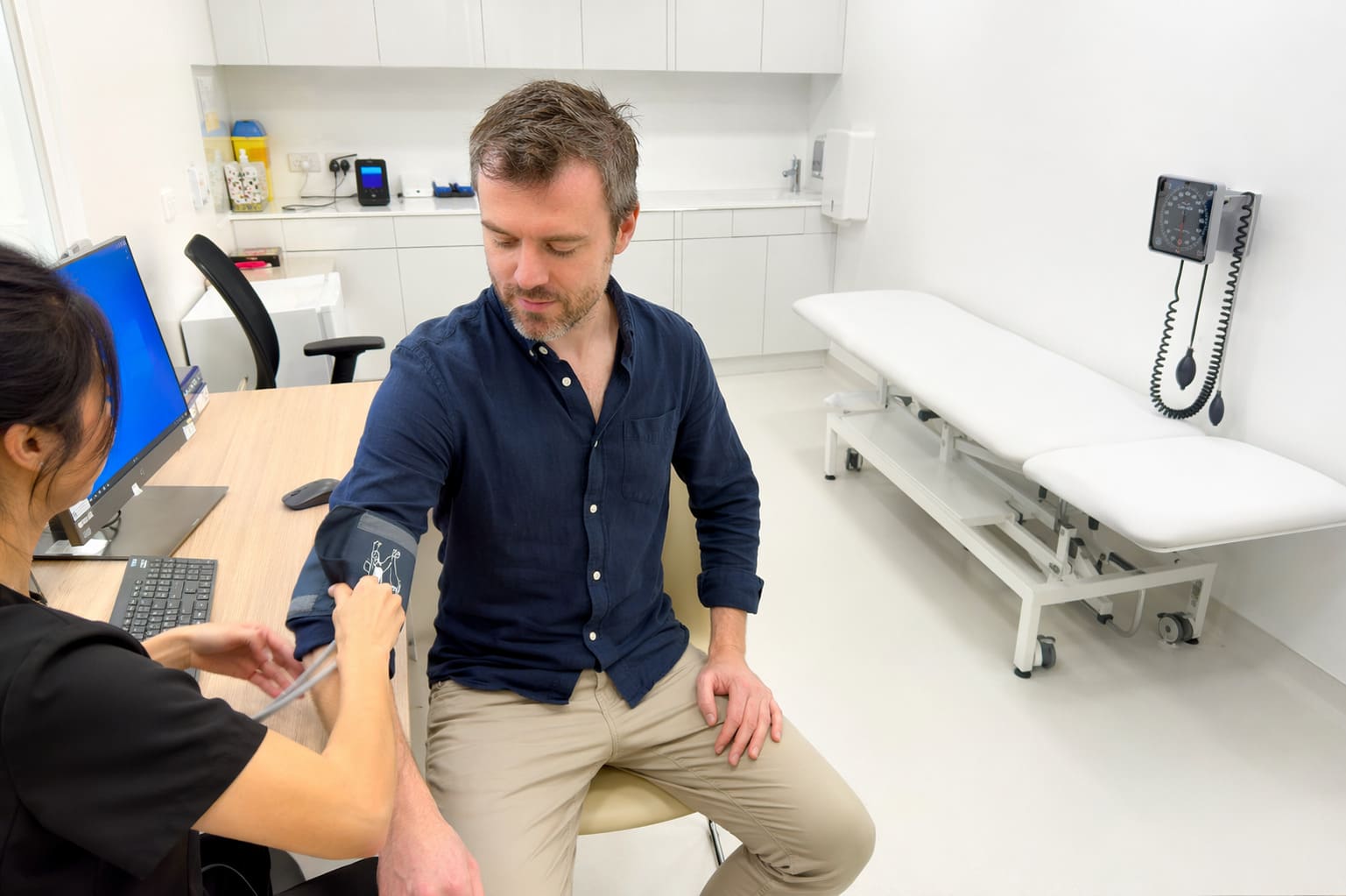
Comprehensive Health Check – Blood Pressure Check – Illustrative Image
The vague signs need wider interpretation
A man who feels flat, sleeps badly, trains inconsistently and has lost some strength may worry about low testosterone. If sexual desire and morning erections are unchanged, the picture becomes less specific. Hormones remain part of the possible explanation, but they are no longer the obvious first answer.
Fatigue, low mood, poor concentration, reduced motivation and weaker physical performance can occur with testosterone deficiency. They also occur in men with normal testosterone levels. Workload, sleep disruption, depression, anxiety, alcohol, smoking, weight change, medication and other physical conditions can create the same surface pattern.
For a professionally active man working around Bank, Moorgate or Liverpool Street, that distinction matters. A hormone panel ordered without a proper review may produce a borderline number that answers less than expected. A GP assessment gives the blood test a job: to confirm or rule out a likely explanation, not to scatter markers across a page and hope one explains everything.
Context changes the meaning of the symptom. Reduced training recovery alongside low libido and fewer morning erections is a different clinical picture from reduced training recovery after poor sleep and high workload.
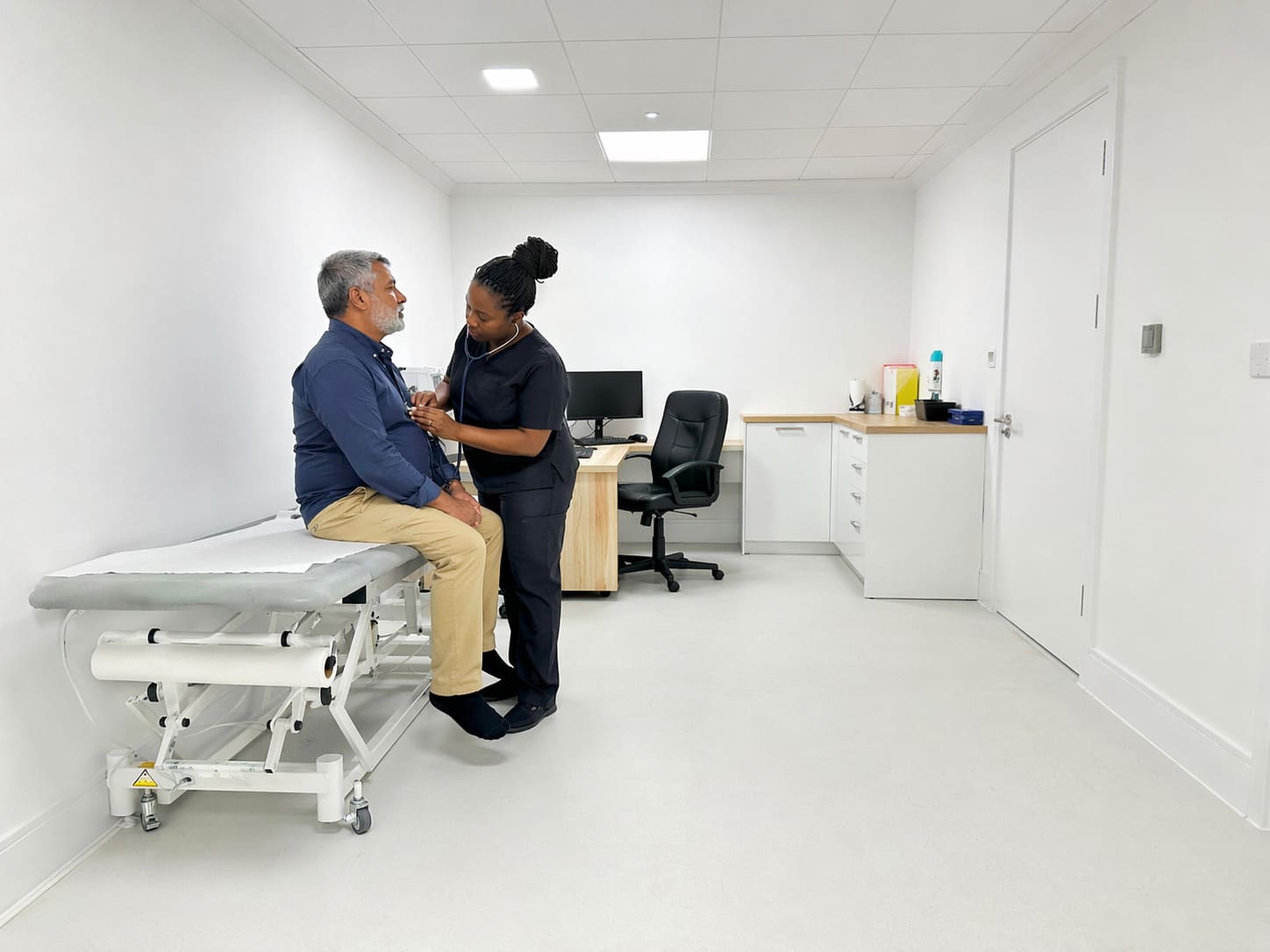
Essential Health Check – Heart and Chest Check – Illustrative Image
The right hormone check is timed and interpreted
A useful male hormone check is not just a testosterone number. It is a timed blood test interpreted against symptoms, medical history and related hormone markers.
| Basic testosterone result | Clinically interpreted hormone assessment |
|---|---|
| Gives one reading, which may be hard to judge on its own | Connects the reading with the symptom pattern and clinical history |
| Can miss the effect of binding proteins | Looks at total testosterone with free testosterone and sex hormone binding globulin where relevant |
| May turn a borderline value into confusion | Uses repeat testing and GP review before drawing conclusions |
| Focuses on testosterone alone | May add markers that point to testicular or pituitary signalling |
Testosterone testing should be done in the morning, not as a random add-on to any blood draw. The British Society for Sexual Medicine recommends serum testosterone measurement from 7am to 11am on at least two occasions, preferably four weeks apart, and if possible not during acute illness. That timing matters because a single low or borderline result can mislead if the sample was taken under poor conditions.
Related markers can make the result more useful. Sex hormone binding globulin, often shortened to SHBG, affects how much testosterone is available. Luteinising hormone, or LH, and follicle stimulating hormone, or FSH, help show whether the body is sending the right signal to the testes. Prolactin may be checked in some patterns because it can point to another hormone signal needing review.
Future Care Medical’s men’s health consultation in the City of London is listed at £140 and can include blood screening for testosterone levels, prostate markers and other hormonal balance markers, with GP review of results. For someone working near London Wall, that kind of structure is useful because the appointment and testing sit within a clinical assessment rather than a standalone number.
Why low or borderline results need a clinical plan
A low or borderline testosterone result needs a careful pause. The temptation is to treat the number as the answer, especially if you have been searching symptoms for weeks. A better clinical route checks whether the number fits the symptoms, whether the test needs repeating, and whether another health issue is sitting behind the same complaints.
The result must match the symptom pattern
Late-onset hypogonadism can explain symptoms in some men, but the diagnosis usually rests on symptoms plus blood tests. That means a low result without matching clinical features needs different handling from a low result in a man with clear sexual symptoms and persistent physical change.
Borderline testosterone sits in the grey area where interpretation matters most. Treatment thresholds exist for symptomatic men, but they belong in a clinician-led decision, not in self-diagnosis. Testosterone replacement therapy may be one possible outcome after proper assessment, yet a hormone check should first establish what is actually going on.
The plan should look beyond testosterone alone
Low testosterone can be a signpost, not the whole map. LH, FSH, SHBG, free testosterone and prolactin can change what the result means and whether GP follow-up or endocrinologist referral is appropriate. Wider health factors also matter because erectile dysfunction, fatigue and low mood may point outside the hormone system.
Future Care Medical is best understood in this context as a process-led private clinic: symptoms, blood results and wider health markers are reviewed together, with the test treated as one part of the assessment. Two approaches are common. One reacts to the first low or borderline figure and turns the conversation straight to treatment. The stronger approach confirms the result, checks whether the symptoms fit, and asks what else the blood pattern is saying. Over time, that second route avoids false starts because it treats testosterone as part of the clinical picture, not as the whole answer.
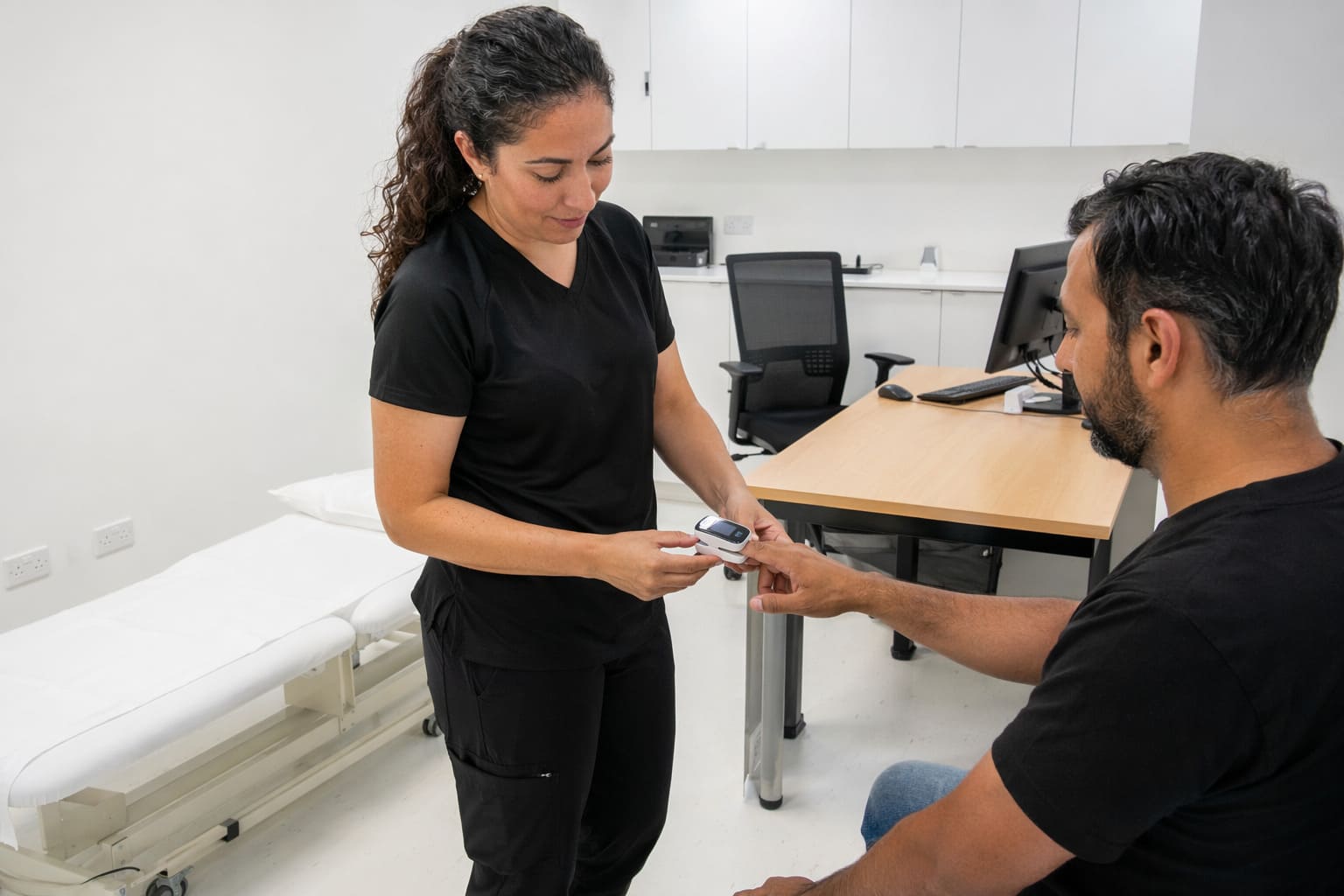
Comprehensive Health Check – Oxygen and Pulse Check – Illustrative Image
Common questions about low testosterone checks
Can stress or poor sleep look like low testosterone?
Yes. Stress, poor sleep, anxiety, depression and heavy workload can produce tiredness, low mood, poor concentration and sexual changes, so those factors need to be reviewed before a hormone result is interpreted.
What is free testosterone?
Free testosterone is the portion of testosterone in the blood that is more available for the body to use. It can be useful when total testosterone is borderline or when binding proteins may be affecting the result.
Should testosterone be tested if you are acutely unwell?
Testing during acute illness can give a result that is harder to interpret. Morning testing when you are clinically stable gives a cleaner basis for review.
Does a hormone check mean testosterone replacement therapy?
No. A hormone check is an assessment tool, and testosterone replacement therapy is only one possible clinician-led outcome after symptoms and repeat blood results have been reviewed.
Can a men’s health blood test include prostate markers too?
Yes. A broader men’s health screen may include prostate markers as well as testosterone and other hormone markers, depending on the clinical reason for testing.
This is general information, not medical advice.