How much does a Well Man health check in London cost?
A private Well Man health check at the London Wall clinic covered here ranges from £350 to £1,999. The price changes with the breadth of blood testing, consultation time, diagnostic input, reporting and follow-up. The best choice is the level that answers your risk questions without adding tests you do not need.

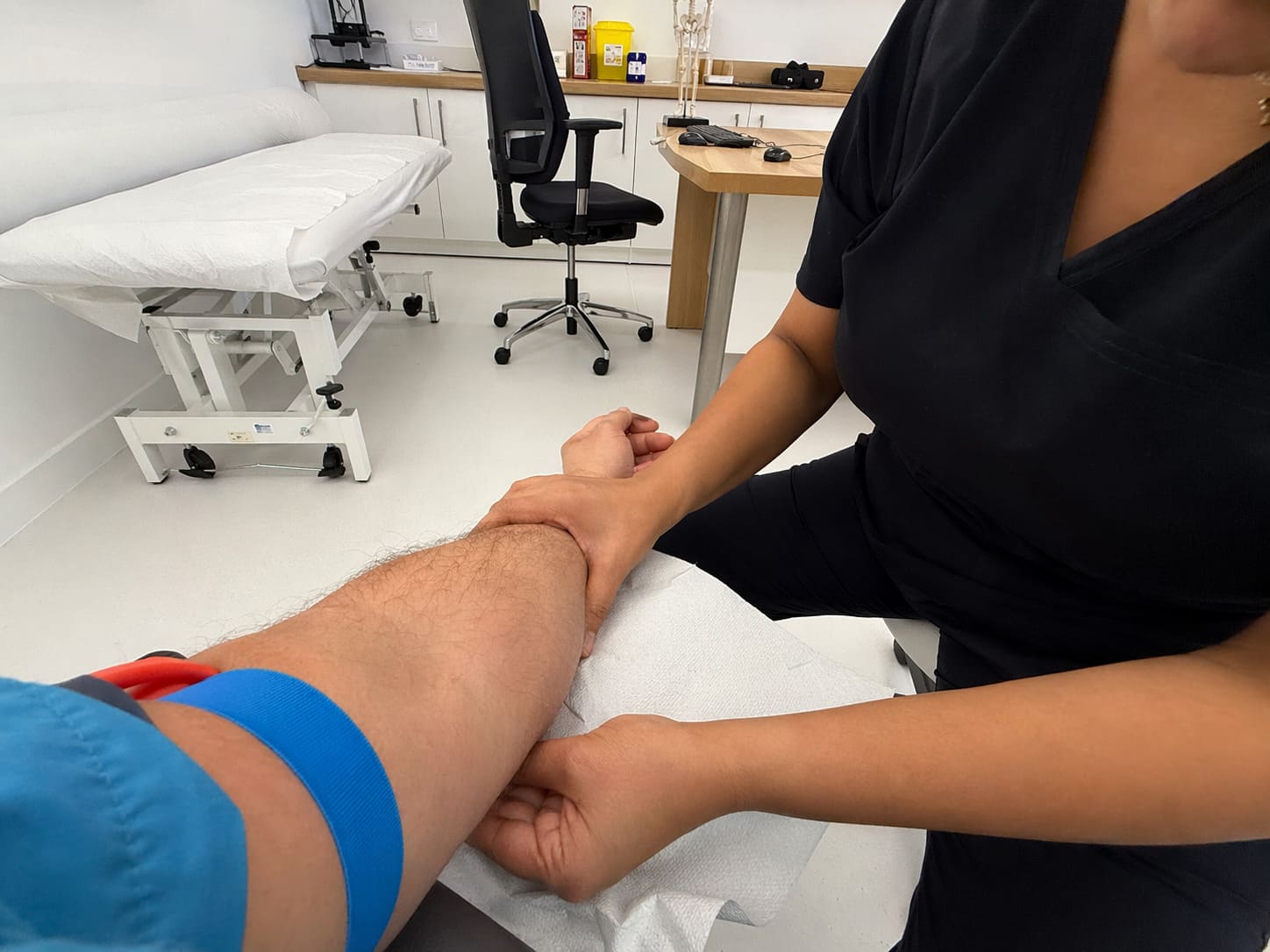
Comprehensive Health Check – Heart and Chest Check – Illustrative Image
What Is In This Article
Current Well Man health check prices in London Wall
Future Care Medical lists Well Man-style health check prices from £350 to £1,999, with package level, reporting and follow-up driving the difference. A low starting price only helps if you know what is being tested and how the results will be explained.
| Package level | Published price |
|---|---|
| Entry programme | £350 |
| Comprehensive | £450 |
| Executive | £615 |
| Signature | £1,999 |
Higher-priced private health screening packages generally include wider blood panels, more detailed reporting, longer clinical review or a stronger follow-up structure. That does not make the largest package the correct answer for every man. A self-funding City worker with no symptoms and a clear baseline question needs a different level of screening from someone with previous abnormal blood results, family history or a specific clinical concern.
Price becomes useful when it is tied to the question you need answered: risk, symptoms, hormones, prostate assessment, metabolic health or a broader review. Without that link, a Well Man check London price is just a number on a page.
A Well Man check links tests to clinical questions
A Well Man health check usually combines a consultation, physical measurements, blood testing and a risk review. The useful part is the link between the test and the decision it supports because a long laboratory list can still leave you with unclear next steps.
Common clinical areas in men’s health screening include:
- Blood count and core chemistry. A full blood count, kidney markers, electrolytes and liver markers help flag patterns that need explanation or repeat testing.
- Lipid markers look at cardiovascular risk, especially when read alongside blood pressure, weight and waist measurement.
- Blood sugar markers. Glucose and HbA1c, a longer-term blood sugar marker, help assess diabetes risk and metabolic health.
- Thyroid profile, iron studies and vitamin D testing can be relevant where symptoms, history or package level make them useful.
- In broader packages, testing may cover hormone assessment, inflammation markers such as high-sensitivity C-reactive protein, shortened to hs-CRP, digestive markers, muscle and joint markers, and cardiac rhythm screening.
No package should be judged by the laboratory menu alone. Blood pressure, body measurements and history give context to the blood results. A raised marker in isolation rarely answers the full question, and a normal result in one area does not prove that every health concern has been cleared.
Different packages include different test areas, so the sensible check is whether each inclusion has a purpose. A blood test that assesses diabetes risk, helps explain tiredness or guides follow-up earns its place. A marker added for reassurance, with no clear plan for interpretation, is weaker value.

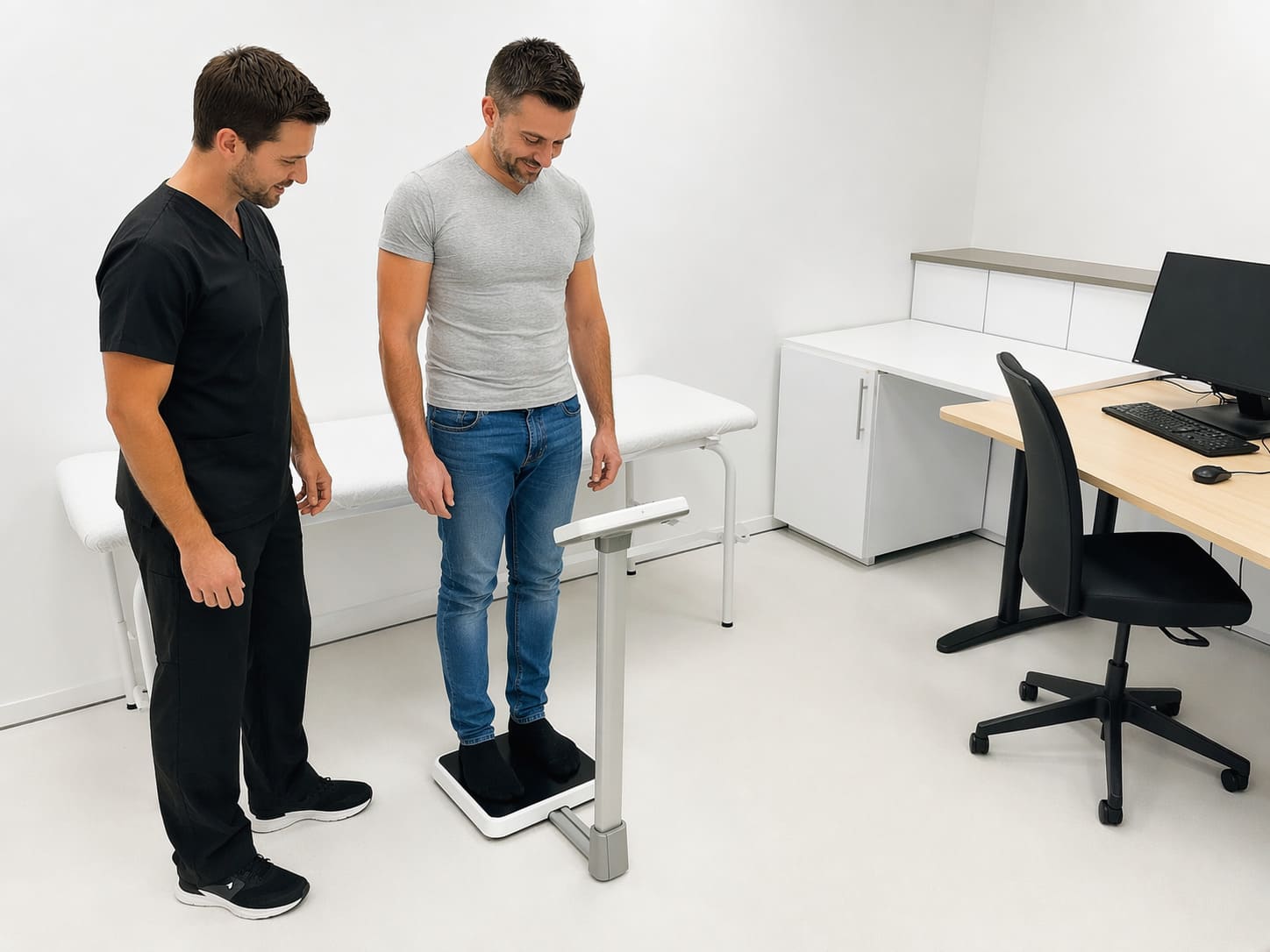
Comprehensive Health Check – Blood Pressure Check – Illustrative Image
PSA and testosterone testing need careful interpretation
Many men ask whether a Well Man check includes a “prostate test”, but the better question is how the prostate-specific antigen test, known as PSA, will be interpreted. PSA and testosterone testing can be useful in men’s health screening, provided they are read with symptoms, age, risk profile and wider blood results.
PSA is not a guaranteed prostate cancer screen
PSA is a blood marker linked to the prostate. It can form part of prostate assessment, yet it cannot confirm or rule out prostate cancer on its own.
That distinction matters because a high PSA result needs clinical judgement. The Department of Health and Social Care has confirmed that current best practice for a high PSA level involves a multiparametric magnetic resonance imaging scan, usually called an MRI scan, before biopsy, in line with NICE prostate cancer diagnosis and management guidance NG131.
Targeted PSA screening is also narrower than many people assume. England is implementing PSA testing every 2 years for men aged 45 to 61 who have pathogenic germline BRCA2 variants and a relevant family history. That is a targeted programme, not a general PSA screening programme for all men.
Cancer-marker blood tests need the same caution. They may be part of a package, but they should not be treated as a simple blood test that clears cancer in healthy people.
Testosterone results need symptoms and context
Testosterone can sit within a hormone assessment, especially where there are relevant symptoms or related metabolic questions. A single testosterone result without context is easy to overread.
Medication, weight changes, sleep pattern, diabetes risk and other blood markers can affect how a result is interpreted. A low, borderline or unexpected result may lead to repeat testing or a broader clinical review, depending on the circumstances. The value lies in the interpretation because the number by itself rarely tells the whole story.
Results matter only when they lead to a clear pathway
Collecting results is the easy part. The clinical work comes when a doctor reviews the numbers against your history, explains what is normal for you, and decides whether anything needs repeat testing, monitoring, imaging or referral.
At Future Care Medical, health screening sits within a structured private GP and diagnostics setting, so results can be connected to follow-up where clinically indicated. More data is not the same as more clarity, especially if no one explains what an abnormal marker means.
A typical Well Man check pathway should make the order of care clear:
- Initial clinical review. The appointment should cover your reason for screening, symptoms, medication, family history and previous results where relevant.
- Measurements and blood tests then provide the clinical data. Phlebotomy is the blood-taking process, and physical checks add context.
- Doctor review of results. A GP or clinician should interpret the findings, not simply send a lab printout.
- Follow-up may involve advice, repeat bloods, monitoring, an electrocardiogram, often called an ECG, imaging such as ultrasound, X-ray or an MRI scan, or referral to specialist medicine.
- If you have a new or persistent symptom, that symptom needs direct GP assessment. It should not be buried inside a broad screening package.
An abnormal result does not automatically mean serious disease. It means the result needs to be read properly and acted on in the right order.

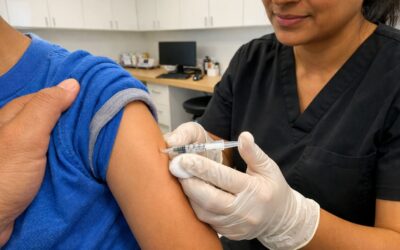
Essential Health Check – Heart and Chest Check – Illustrative Image
An NHS Health Check and a private Well Man check have different aims
Is an NHS Health Check the same thing as a private Well Man check? No. The NHS Health Check has defined eligibility and a cardiovascular risk focus, while a private Well Man check can cover broader men’s health questions depending on the package and clinical need.
The NHS says its Health Check is for people aged 40 to 74 who do not have certain pre-existing conditions, with eligible people invited every 5 years. It usually takes 20 to 30 minutes and includes measurements such as height, weight, waist, blood pressure, cholesterol and possibly blood sugar testing.
Its result includes a 10-year cardiovascular risk score. That score estimates the chance of a cardiovascular or circulation problem such as stroke, type 2 diabetes or kidney disease over the next 10 years.
Private men’s health screening has a different scope. It can include wider blood panels, hormone assessment, prostate markers, an ECG or diagnostic follow-up where clinically appropriate. For men working around London Wall, Bank, Moorgate or Liverpool Street, the practical appeal is also continuity: the appointment, results review and follow-up can fit around a working week without turning the check into a separate project.
Neither route should be judged as a status choice. The right route depends on the question in front of you: defined cardiovascular risk, wider screening, a specific symptom or a result that already needs review.
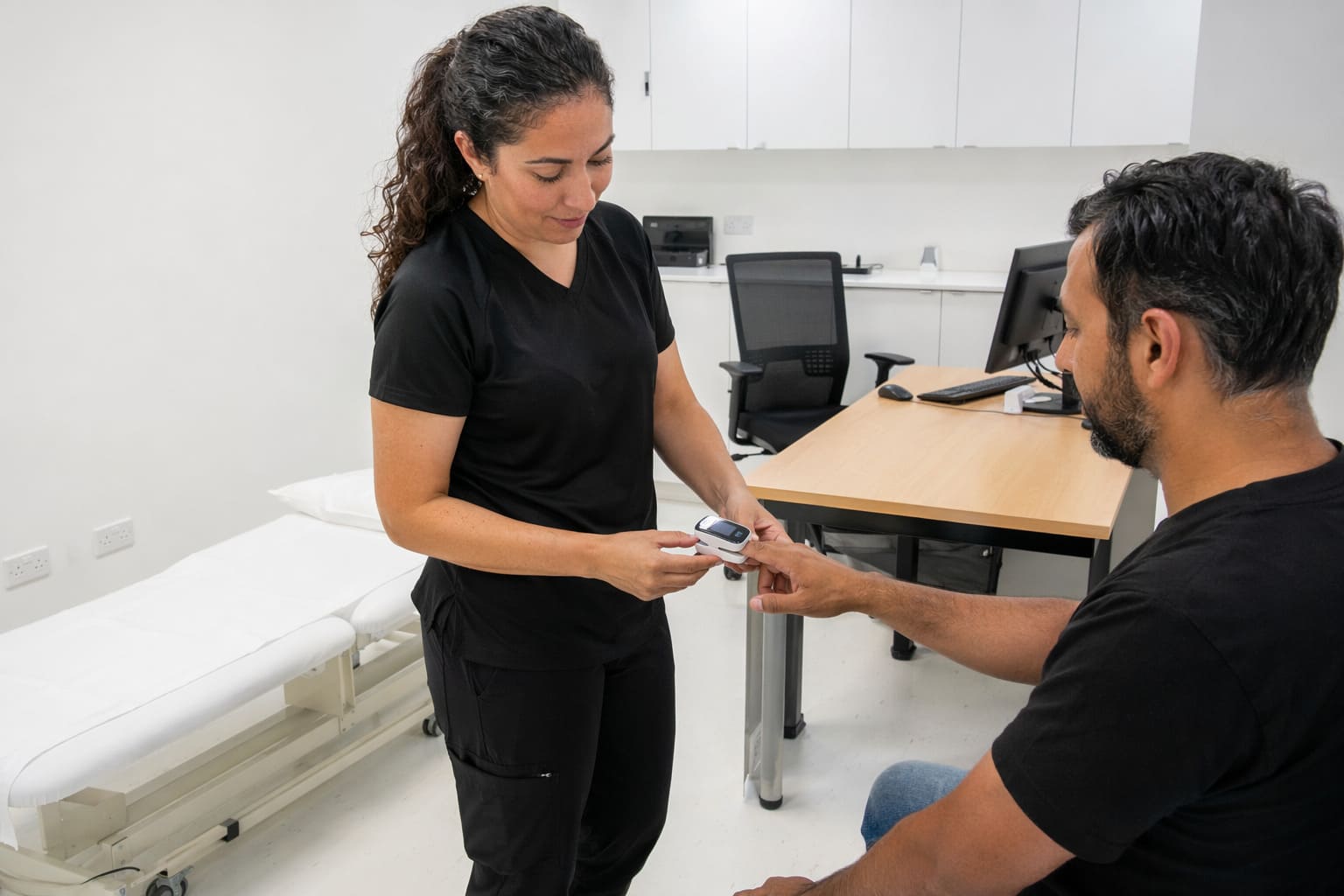
Comprehensive Health Check – Oxygen and Pulse Check – Illustrative Image
The right level answers your clinical question
When choosing a Well Man health check, start with the question you want answered. A lower-level screen may suit a baseline review when you have no specific symptoms, while a broader package makes more sense where family history, previous results or several risk areas need proper interpretation.
Common mistakes are easy to spot. Buying the largest package for reassurance can leave you with extra markers but no clearer decision. Choosing the cheapest option without checking follow-up can leave you with numbers and no plan.
A focused GP consultation can also be the better first step. If you have one defined concern, a medication issue or a symptom that needs assessment, a consultation can direct the right tests instead of starting with a broad panel.
By this point, the choice should look less vague. You are checking whether the package matches your risk profile, whether PSA and hormone results will be interpreted in context, whether abnormal findings have somewhere to go, and whether the report gives you decisions rather than loose data. That shift matters: you move from asking which package looks biggest to knowing exactly what a useful Well Man health check must prove before you choose it.
Common questions about Well Man health checks
Do you need to fast before a Well Man blood test?
Fasting depends on the specific blood tests included in your package. The clinic should tell you in advance if fasting is needed, because following the right preparation helps avoid unclear or repeat results.
Can normal blood results rule out a health problem?
Normal blood results are useful, but they do not rule out every health problem. If you have symptoms, those symptoms still need clinical assessment even when screening blood tests are normal.
Are cancer-marker blood tests useful in healthy men?
Cancer-marker blood tests can form part of a wider assessment, but they need careful clinical interpretation. They should not be treated as a simple way to clear cancer in someone with no symptoms.
How often should men have a health check?
The right interval depends on age, family history, previous results, symptoms and risk factors. No fixed schedule suits every man, so frequency should follow the clinical reason for screening.
Should you bring previous blood test results to a private health check?
Previous blood results can help the doctor see patterns and avoid treating one result as a standalone finding. Bring them if you have them, especially if anything was abnormal before.
This is general information, not medical advice.