What does a raised PSA result mean for you?
A raised PSA result means your prostate needs proper review, not that you have prostate cancer. PSA, or prostate specific antigen, can rise with cancer, benign enlargement, inflammation, infection, recent activity or procedures. The right next step is clinical interpretation of the number alongside your age, symptoms and risk factors.

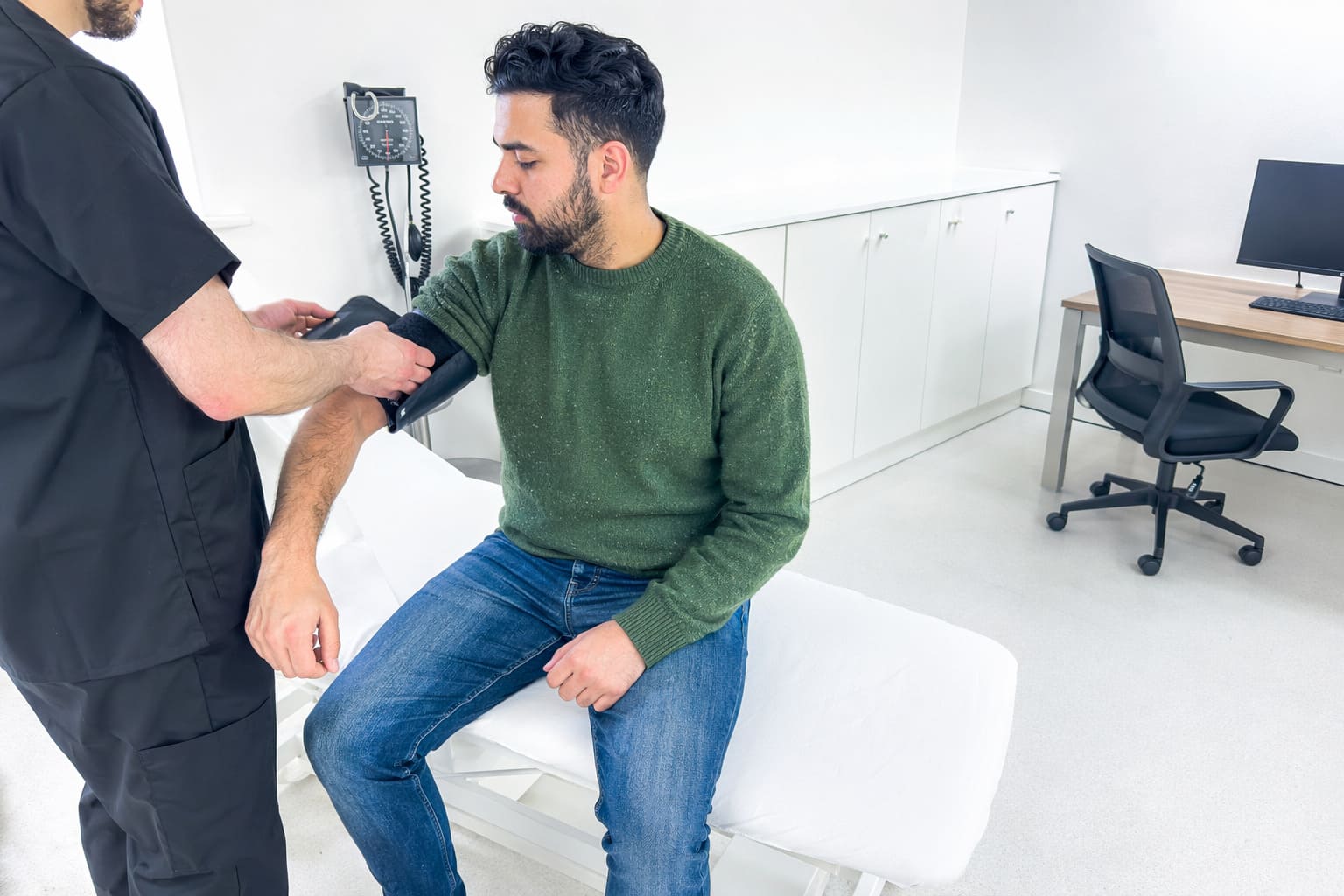
Men’s Health – Medical Examination – Illustrative Image
What Is In This Article
The raised PSA result is a signal, not a diagnosis
Many people see a raised PSA result and read it as a cancer result. Clinically, that is the wrong leap. A high PSA blood test is a signal that something may be affecting the prostate, and it needs a structured review before anyone can say what it means.
PSA is prostate specific antigen, a protein measured in the blood. The result is reported in nanograms per millilitre, written as ng/ml. Prostate Cancer UK says a raised PSA level may suggest a prostate problem, but PSA alone cannot usually tell whether someone has prostate cancer.
Your number still matters. So do your age, urinary symptoms, infection history, medicines, family history and examination findings. The mistake is treating one abnormal PSA as either a diagnosis or a false alarm, because both shortcuts miss the same point: the cause has to be checked.
Why the cause of a raised PSA has to be checked first
A man who has urinary burning, a recent infection or a hard gym session before the blood test may have a raised prostate blood test for reasons that need sorting out before the result is judged. Those factors do not dismiss the result. They change how the result is read.
PSA can rise with benign prostatic hyperplasia, often called benign prostate enlargement or BPH, and with prostatitis, which means inflammation of the prostate. A urinary tract infection, or UTI, can also affect the reading. So can recent ejaculation, vigorous exercise, receptive anal sex, prostate stimulation, a urinary catheter, a recent prostate biopsy, some bladder or prostate procedures and medicines such as finasteride or dutasteride.
Preparation matters because a repeat PSA test is only useful if the conditions around the test are cleaner than the first time. Prostate Cancer UK advises waiting around six weeks after a urine infection has gone, avoiding vigorous exercise for 48 hours, avoiding ejaculation for 48 hours and avoiding receptive anal sex or prostate stimulation for a week before PSA testing.
Future Care Medical sees this as a clinical sorting job first. The raised PSA result, your symptoms and the circumstances around the test all need to be put together before the pathway is chosen. For someone working near London Wall, Bank or Liverpool Street, that kind of structured review can stop a single number being overread or underplayed.

Mens Health – Illustrative Image
The age-specific PSA threshold only starts the clinical decision
“High PSA” is not one universal number. A PSA level that crosses a referral threshold at one age may be interpreted differently at another, and the number does not replace clinical judgement.
The Pan-London Suspected Urological Cancer Referral Guide lists the following age-specific PSA levels as elevated:
| Age group | PSA level described as elevated |
|---|---|
| 40 to 49 years | More than 2.5 ng/ml |
| 50 to 59 years | More than 3.5 ng/ml |
| 60 to 69 years | More than 4.5 ng/ml |
| 70 to 79 years | More than 6.5 ng/ml |
| Below 40 or above 79 | Use clinical judgement |
Those figures help decide whether referral is appropriate, but they do not diagnose cancer. A GP review should also include urinary symptoms, medication history, other health conditions and risk factors. A digital rectal examination, known as DRE, may be relevant because it checks the prostate by examination, not by blood result.
NICE guideline NG131 says decisions about MRI or biopsy should include PSA level, DRE findings, increasing age, black African-Caribbean family background, any previous negative prostate biopsy and other clinical factors. In practice, the useful question is whether the PSA is above a line on a table in your particular case.

Men’s Health – Consultation Discussion – Illustrative Image
The next pathway is repeat testing, review, MRI or referral
When the result comes back raised, the best pathway is ordered rather than automatic. Some men need repeat testing first, some need referral, and some need imaging because the whole clinical picture points that way.
- Check for a temporary influence. A clinician should review infection, recent ejaculation, exercise, prostate stimulation, recent procedures, catheter use and medicines that may affect PSA.
- Repeat PSA where it is clinically sensible. Repeating the test under better conditions can show whether the raised PSA level persists.
- A urine test may be used if infection is suspected. If a UTI is present, the PSA result should be interpreted after that has been dealt with.
- Review symptoms and risk. Urinary symptoms, family history, ethnicity, age and previous prostate investigations all influence the decision.
- Use examination when appropriate. DRE findings can change how urgently referral or imaging is considered.
- Arrange referral or imaging when indicated. NICE recommends multiparametric MRI, also called mpMRI, as the first-line investigation for suspected clinically localised prostate cancer.
London referral guidance treats PSA above the agreed age-specific reference range, with UTI excluded, as a referral criterion. It also says PSA that remains above the London agreed age-specific ranges eight weeks after UTI treatment is a referral criterion, and PSA greater than 20 is a referral criterion even when UTI is present.
Future Care Medical’s role in a raised PSA pathway is practical: a private GP review, blood testing, risk assessment and onward imaging or specialist referral can be coordinated from its City of London clinic. Its published GP consultation prices are £105 for 15 minutes, £160 for 30 minutes and £240 for 60 minutes, which gives self-funding patients clear planning information before a prostate screening review. Once MRI enters the picture, the discussion becomes more specific.
Why structured follow-up matters after the first result
Further investigation can reduce concern without ending the need for monitoring. A low-risk MRI, a decision not to biopsy, or a negative biopsy can all be reasonable outcomes, but each one still needs a documented plan if the PSA remains raised.
The low-risk MRI pathway
A multiparametric MRI is reported using a five-point Likert scale, which grades how suspicious the scan looks. NICE recommends MRI-influenced prostate biopsy when the MRI Likert score is 3 or more.
For a Likert score of 1 or 2, biopsy can be left out only after the risks and benefits have been discussed and a shared decision has been made. If PSA is raised, the MRI score is 1 or 2 and no biopsy is done, NICE recommends repeat PSA testing at 3 to 6 months. A clear plan matters here because a low-risk scan does not make the original blood result disappear.
The negative biopsy pathway
A biopsy checks prostate tissue directly. Biopsy may be done through the rectum, often called TRUS biopsy after transrectal ultrasound, or through the skin behind the scrotum, called transperineal biopsy. The route is a specialist decision, and the reason for doing it should be clear before the procedure goes ahead.
NICE says clinicians should not automatically offer prostate biopsy on the basis of PSA alone. Strong suspicion can still justify biopsy or further review, including PSA density above 0.15 ng/ml/ml, PSA velocity above 0.75 ng/ml/year or strong family history. PSA density compares PSA with prostate size, and PSA velocity looks at how fast PSA is changing over time.
One approach treats a raised PSA as a one-off scare: repeat a few words of reassurance, file the number away and hope it settles. The better long-term approach keeps the number inside a documented pathway, with the reason for each test and the trigger for review written down. That gives you something more useful than relief on the day: it gives you a clear line to follow if the PSA changes again.
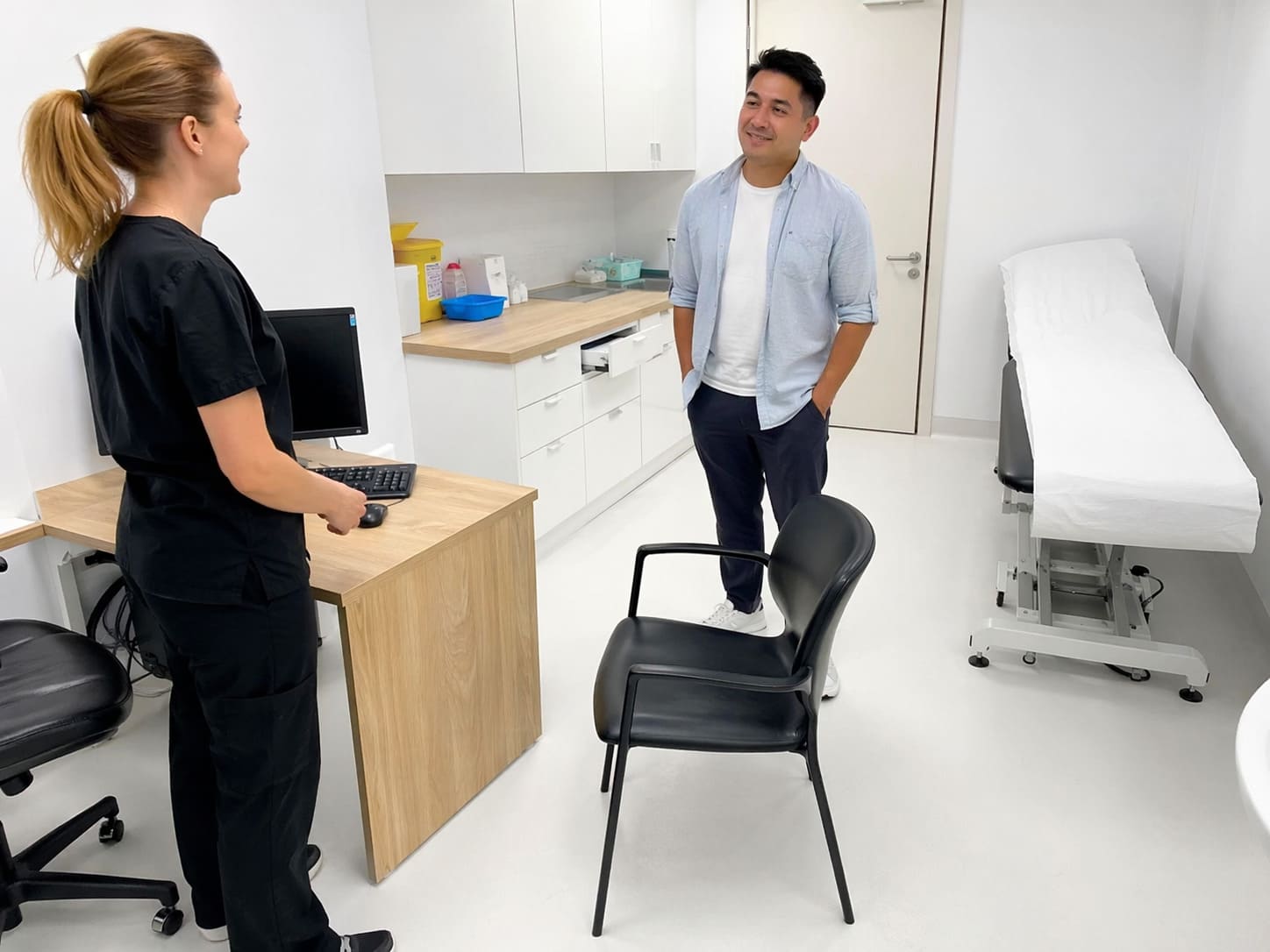
Men’s Health – Consultation Discussion – Illustrative Image
Common questions about raised PSA results
Can medication affect your PSA result?
Yes. Medicines such as finasteride and dutasteride can affect PSA levels, so your clinician needs to know what you take before interpreting the result.
How long should you avoid ejaculation before a PSA test?
Current prostate testing guidance advises avoiding ejaculation for 48 hours before a PSA test. The same preparation window applies to vigorous exercise.
Does a normal PSA rule out prostate cancer?
A normal PSA does not remove every possible concern, especially if you have symptoms or examination findings that need review. PSA is one part of the assessment, not the whole assessment.
Can a clear MRI avoid the need for prostate biopsy?
A low-risk MRI can support a decision not to biopsy, but that decision should be made after discussing the risks and benefits. NICE recommends repeat PSA testing at 3 to 6 months when PSA is raised, MRI Likert score is 1 or 2 and no biopsy has been done.
What should you bring to a GP review after a raised PSA result?
Bring the PSA result, any previous PSA results, a list of medicines, details of urinary symptoms and any family history of prostate cancer. Those details help the clinician decide whether repeat testing, referral or imaging is the right next step.
This is general information, not medical advice.