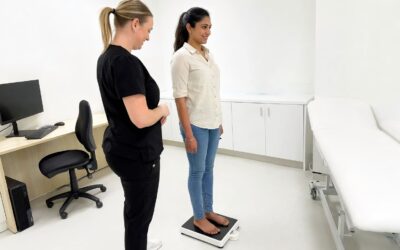
What does starting HRT mean for your symptoms and medical history?
Starting hormone replacement therapy (HRT) means matching your symptoms, menopause stage, womb status, medical history and preferences to a safe prescribing plan. A doctor will choose the hormone combination, delivery method, timing pattern and starting dose, then review how well it works and whether anything needs adjusting.

Menopause Consultation Room – Illustrative Image
What Is In This Article
Starting HRT means narrowing several treatment choices
Many people expect HRT to mean choosing a product. In practice, the first decision is what problem is being treated.
Systemic HRT treats symptoms that affect the whole body, such as hot flushes, night sweats, sleep disturbance and mood symptoms linked with menopause. Local vaginal oestrogen is different. It treats vaginal and urinary symptoms in the area where it is used, so it is assessed separately from whole-body menopause treatment.
“Type” also means several different things at once. A doctor is deciding which hormones are needed, how they enter the body, whether progestogen is needed, how the treatment is scheduled and how it will be reviewed. Preference matters, but preference sits inside a clinical frame.
That is why starting HRT is a structured prescribing decision rather than a one-off choice between tablets, patches or gel. The main categories make more sense once those separate decisions are pulled apart.
The main types of HRT cover hormone combination, route and regimen
The word “type” can mean hormone combination, delivery route or treatment pattern. National Institute for Health and Care Excellence (NICE) guideline NG23 says HRT discussions should cover combined and oestrogen-only HRT, oral and transdermal routes, types of oestrogen and progestogen, sequential and continuous combined HRT, dose and duration.
| Decision | Common options | Why it matters |
|---|---|---|
| Hormone combination | Oestrogen-only HRT or combined HRT with oestrogen and progestogen | People with a uterus who take systemic HRT are usually offered combined HRT. People who have had a total hysterectomy are usually offered oestrogen-only HRT. |
| Delivery route | Oral HRT by tablet or transdermal HRT through the skin, such as patches, gel or spray | Route affects convenience, side effects and risk discussion. NICE states that venous thromboembolism (VTE), a blood clot in a vein, risk is greater with oral HRT than with transdermal HRT. |
| Treatment pattern | Sequential combined HRT or continuous combined HRT | Sequential treatment gives oestrogen every day and progestogen for part of the cycle. Continuous combined treatment gives both every day without a break. |
| Progestogen option | Tablets or a hormone-releasing intrauterine system (IUS), such as the Mirena IUS | Progestogen protects the womb lining when systemic oestrogen is used in someone with a womb. An intrauterine system can also act as contraception. |
| Additional options | Local vaginal oestrogen, testosterone in selected cases, or tibolone where clinically suitable | These are considered for specific symptom patterns or clinical situations rather than as default first choices for everyone. |
Local vaginal oestrogen deserves its own line in the discussion because it is easy to confuse it with systemic HRT. National Health Service (NHS) guidance describes low-dose vaginal oestrogen as creams, gels, vaginal tablets, pessaries or rings for symptoms such as vaginal dryness, burning or pain during sex. It does not treat hot flushes, mood swings or sleeping problems.
Testosterone also needs careful framing. It is not licensed as a general menopause treatment, although a specialist doctor may prescribe testosterone gel for post-menopause low libido when HRT alone has not helped. Tibolone is another option that may come up in selected cases, but suitability depends on the clinical picture rather than preference alone.

Menopause Follow-Up Consultation – Illustrative Image
A doctor decides HRT suitability by following a clinical sequence
Two people can both have hot flushes and still need different HRT plans. One may still be having periods, need contraception and have a womb; another may be post-menopause after a hysterectomy and prefer a non-tablet route. Those details change the prescription.
A good menopause consultation sorts the decision in a practical order:
- Start with the symptom pattern. Vasomotor symptoms, such as hot flushes and night sweats, point to systemic treatment. Vaginal or urinary symptoms may need local vaginal oestrogen, either alone or alongside systemic HRT where suitable.
- Pin down menopause stage. Recent cycle changes, ongoing periods, post-menopause status and hormonal contraception all affect how the doctor interprets symptoms and chooses a regimen.
- Confirm womb status. Someone with a womb usually needs progestogen with systemic oestrogen. A total hysterectomy usually changes that decision.
- Check the risk history. Blood pressure, breast cancer risk, VTE risk, migraine, liver disease, current medicines and family history all matter because they can shift the route, dose or whether HRT is suitable.
- Discuss route preference within clinical limits. Some people prefer gel or patches because tablets do not suit their routine or risk profile. Others prefer tablets because the routine is simpler for them.
- Set the first dose and review plan. If HRT is chosen, NICE says clinicians should use the lowest effective dose. The first prescription is the start of treatment monitoring, not the final answer.
For someone working around London Wall, Liverpool Street, Bank or Moorgate, the practical value of a structured appointment is time as well as clarity. Future Care Medical runs GP-led assessment in the City of London, with private GP consultation pricing listed at £105 for 15 minutes, £160 for 30 minutes and £240 for 60 minutes, including prescription where appropriate. In a menopause consultation, the useful outcome is a reasoned plan that explains the choice, the risks being considered and the review point.

Women’s Health – Personalised Consultation Discussion – Illustrative Image
Blood tests are not a routine gatekeeper for starting HRT
Many people do not need routine hormone blood tests before starting HRT. For otherwise healthy people aged 45 or over with menopause-associated symptoms, NICE says perimenopause and menopause should be identified without laboratory tests.
Menstrual history matters here. NICE identifies perimenopause when vasomotor symptoms have recently started with menstrual cycle changes. Menopause is identified when there has been no period for at least 12 months and the person is not using hormonal contraception.
Testing still has a place. Follicle-stimulating hormone (FSH) testing may be considered for people aged 40 to 45 with menopause symptoms and cycle change, or for people under 40 when menopause is suspected. Premature ovarian insufficiency in people under 40 needs symptoms plus raised follicle-stimulating hormone levels on two blood samples taken 4 to 6 weeks apart.
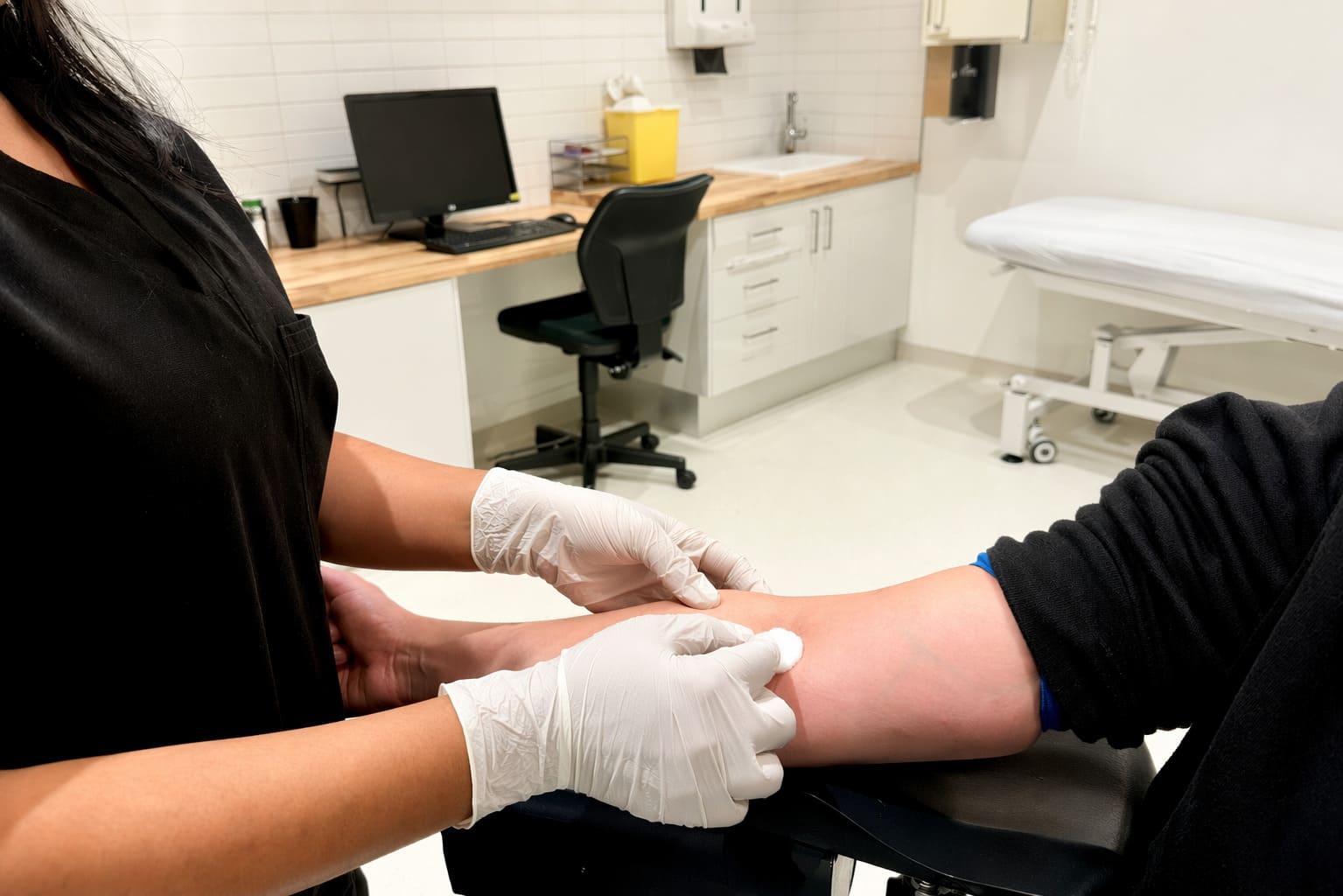
Clinically indicated testing is different from routine hormone panels for everyone. A GP-led assessment may still check blood pressure, review medicines or arrange targeted diagnostics if the history points that way, and Future Care Medical’s integrated model can make the assessment more joined up without turning testing into a blanket requirement.
Starting HRT leads into monitored treatment
A first HRT prescription is a clinically reasoned starting point. The real test is whether symptoms improve, side effects remain acceptable and the plan still fits your health profile after treatment has begun.
Review focuses on benefit and tolerability
NICE says menopause treatment should be reviewed at 3 months to assess efficacy and tolerability, then annually unless earlier review is clinically needed. In plain terms, the doctor checks whether the treatment is doing the job and whether side effects or practical issues are getting in the way.
Adjustments are normal in HRT care. A clinician might change the dose, switch route, alter the progestogen, move between sequential and continuous combined HRT where suitable, or add local vaginal oestrogen for symptoms that have not been addressed by systemic treatment. The point of review is to keep the treatment matched to the person taking it.
Bleeding needs context and a clear threshold for assessment
Unscheduled bleeding can happen after systemic HRT starts, especially in people with a uterus. NICE says vaginal bleeding is a common side effect during the first 6 months of systemic HRT or within 3 months of changing the dose or preparation.
Bleeding beyond those timeframes needs prompt medical help. That does not mean every episode points to a serious problem, but it does mean the clinician should assess it properly rather than simply continuing the same plan without review.
Recent UK guidance has put greater emphasis on structured discussion, bleeding assessment and documented shared decision-making. Over the next 12 to 24 months, the quality marker in menopause care will be clearer follow-up: treatment choices recorded properly, bleeding handled to current guidance and dose changes made for a stated clinical reason.
Women’s Health – Blood and Hormonal Test – Post Blood Draw Detail (2) – Illustrative Image
Common questions about starting HRT
Do you need progesterone if you still have a womb?
If you have a womb and take systemic oestrogen, you will usually need progestogen as well. Progestogen helps protect the womb lining and can be given as tablets or through an intrauterine system such as the Mirena IUS.
Is HRT gel better than patches or tablets?
HRT gel is not automatically better. Gel, patches, spray and tablets are different delivery routes, and the right choice depends on your medical history, risk factors, preference and how reliably you can use the treatment.
Can vaginal oestrogen be used if you are also on systemic HRT?
Vaginal oestrogen can be considered for local vaginal or urinary symptoms even when systemic HRT is being used, if it is clinically suitable. It treats local symptoms and does not replace systemic HRT for hot flushes, sleep symptoms or mood symptoms.
What is the difference between sequential and continuous combined HRT?
Sequential combined HRT uses oestrogen every day and progestogen for part of the cycle. Continuous combined HRT uses both hormones every day without a break, and the choice depends partly on menopause stage.
Can testosterone help low libido during menopause?
Testosterone gel may be considered by a specialist doctor for low libido after menopause when HRT alone has not helped. It is not licensed as a general treatment for menopause symptoms.
This is general information, not medical advice.