Can you book a private doctor without insurance?
Yes. You can see a private doctor without insurance by paying the clinic directly for the consultation and any agreed extra services. Self-pay private healthcare means you do not need insurer approval first, but you do need clear fees for the appointment, tests, prescriptions, referrals and follow-up.
Self-pay is a standard route into independent healthcare. In plain terms, you choose a private GP or clinic, pay for the appointment yourself and decide whether to go ahead with any further care the doctor recommends.
The Care Quality Commission describes independent healthcare as care provided outside NHS trusts and NHS GP services, which includes private doctor and clinic services. For you, the practical point is simpler: you can pay privately for a GP appointment without having private medical insurance.
Insurance changes the admin route. With self-pay, you do not need to check policy terms or wait for insurer approval before arranging a private doctor appointment without insurance. The decision still needs structure, because the consultation fee is one part of the pathway and further services can sit outside it.
A private GP appointment is commonly used for a clinical assessment, a private prescription where appropriate, a referral letter or a discussion about tests. The next question is what actually happens once you choose the self-pay route.

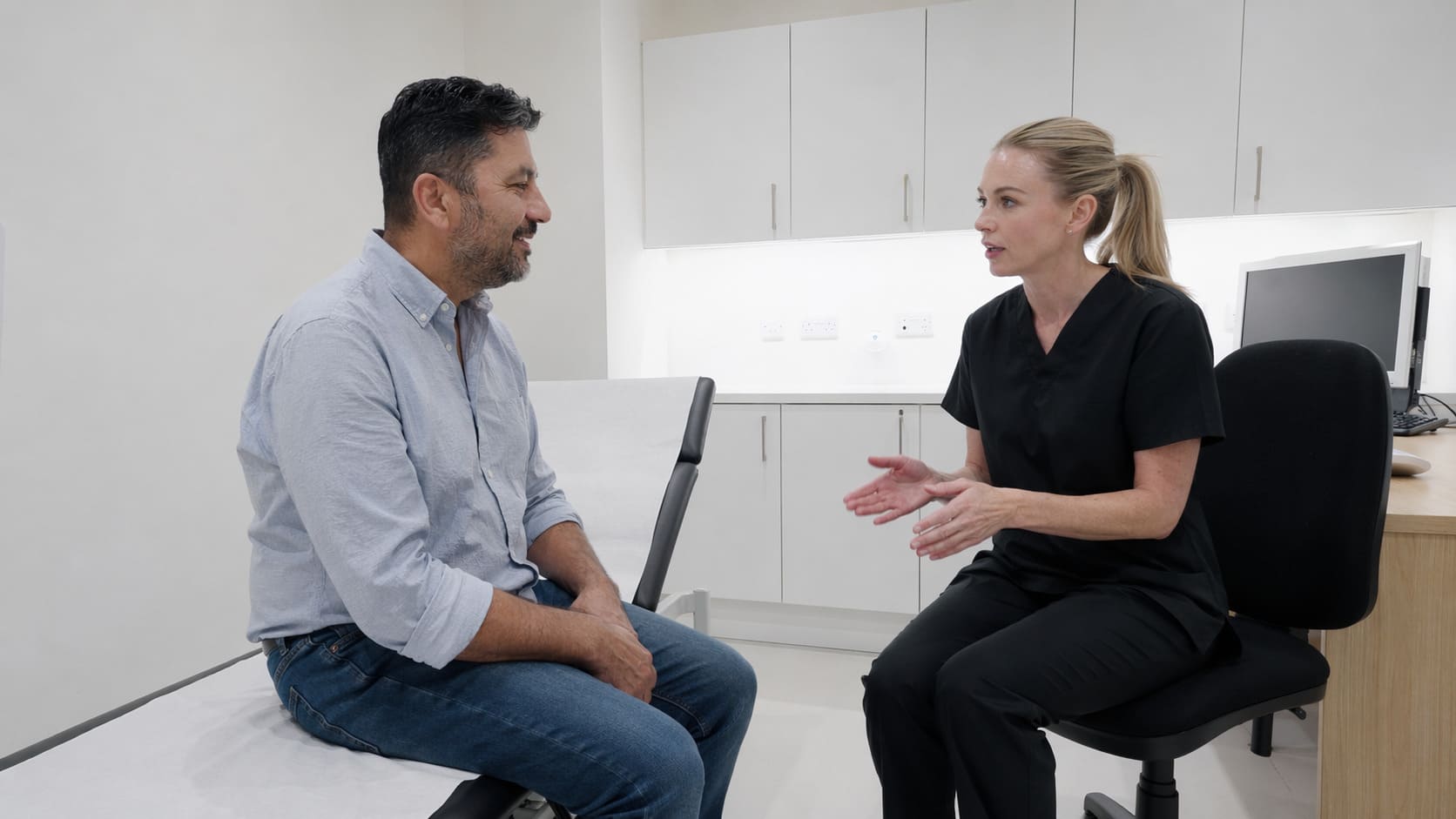
Essential Health Check – Consultation Discussion – Illustrative Image
What Is In This Article
Self-paying works best when you see the whole pathway
A self-paying private GP appointment works as an ordered clinical process, starting with the consultation and moving to tests, prescriptions, referrals or follow-up only where they are needed. That order matters because it keeps decisions clear.
Say you work near London Wall, Liverpool Street or Moorgate and want a defined medical assessment during the working week. You are not buying an open-ended bundle of healthcare. You are paying for a doctor to assess the concern, advise you and agree what, if anything, should happen next.
A typical self-pay private GP process looks like this:
- Book the appointment directly. You choose the appointment type and pay the clinic, rather than arranging the visit through private medical insurance.
- Attend the GP consultation. The doctor asks about the problem, your medical history and any relevant background.
- Have an examination where appropriate. Some concerns need a physical check, while others may be handled through history, medication review and clinical judgement.
- Agree what follows. The outcome might be advice, a private prescription, a referral letter, blood tests or imaging if the doctor thinks those investigations fit the concern.
- Review results or follow-up advice. Where tests are arranged, the next part of the pathway is how results are reviewed and whether another appointment is needed.
Future Care Medical runs this kind of structured private GP route in the City of London, with private GP consultations, referral letters, repeat prescriptions, blood testing and access to diagnostic imaging such as ultrasound, X-ray and MRI scans. Those services do not mean every patient needs testing. A good consultation starts with assessment first, then narrows the options.
Direct access is useful, but it should never become vague spending. Each extra step should be linked to a clinical decision and discussed before you commit to it.
The consultation fee is the starting point
The appointment fee is the first cost, not always the total cost of a full care pathway. Self-pay works best when you know what the consultation includes and which services may be charged separately.
Future Care Medical lists its private GP consultation fees as follows, with prescription included in the listed GP consultation prices.
| Appointment type | Self-pay fee |
|---|---|
| 15-minute GP consultation | £105 |
| 30-minute GP consultation | £160 |
| 60-minute GP consultation | £240 |
Those prices give you a clear starting point. They do not mean every possible test, scan, specialist appointment or procedure is included in the same fee unless the clinic has clearly said so.
Blood tests, imaging and specialist referrals can add cost because they are separate pieces of clinical work. A referral letter is different from the specialist consultation that may follow. A private GP consultation is different from a diagnostic test arranged after it. Keeping those boundaries visible is what protects you from assuming too much.
Department of Health guidance on patients who pay for extra private care says agreement to likely costs should be sought in advance, preferably in writing. For a self-paying patient, that principle is practical: before further private care goes ahead, you should know what service is being added and whether there is a separate charge.
Fees can change, so published prices need checking at the time you arrange care. The safer question is not simply “what is the price?” but “what does this price include?”
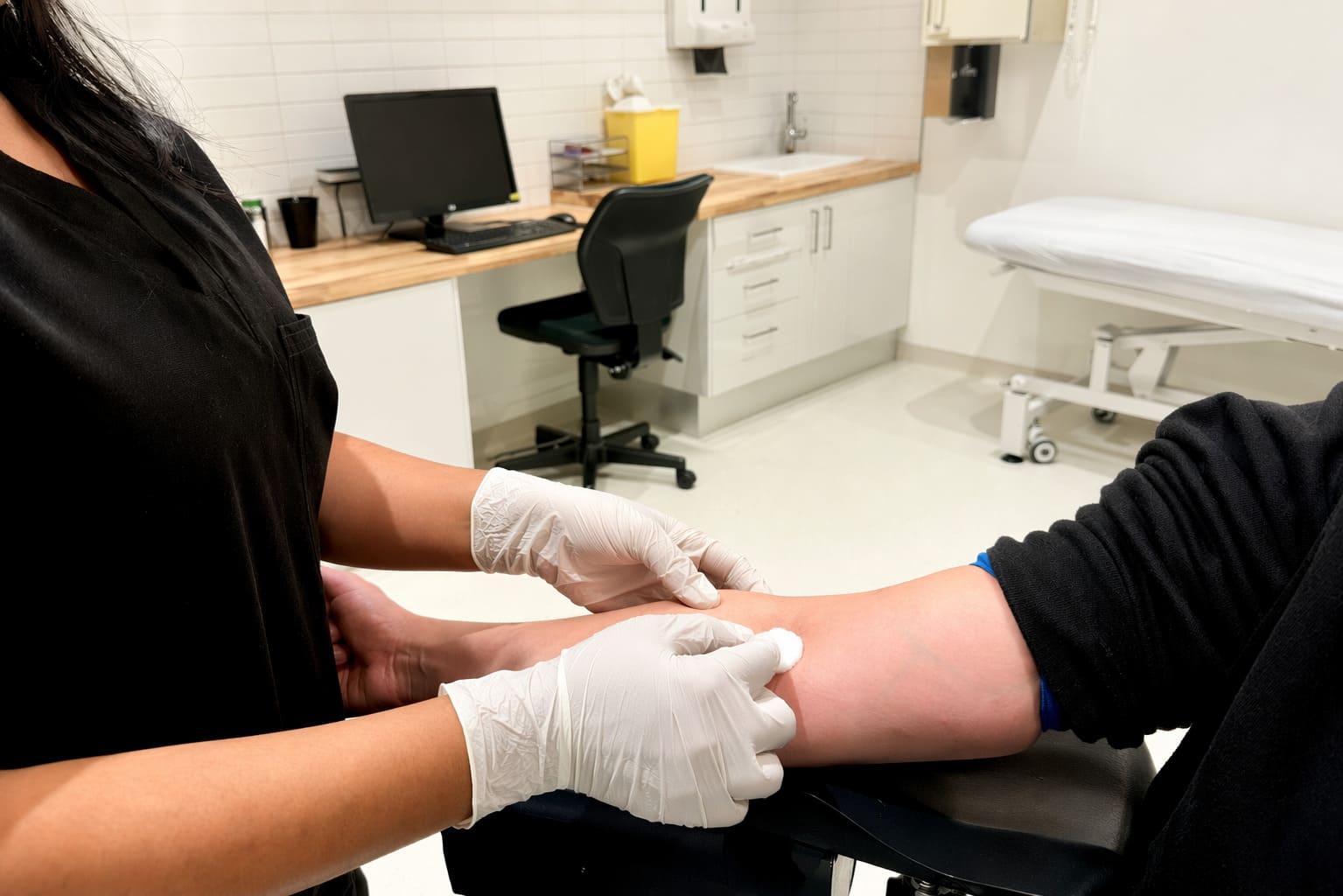
Women’s Health – Blood and Hormonal Test – Post Blood Draw Detail (2) – Illustrative Image
Private care and NHS care remain separate
Can you go private and still use the NHS? Yes, choosing private care for a defined issue does not mean you give up NHS care.
Department of Health guidance says NHS organisations should not withdraw NHS care simply because a patient chooses to buy extra private care. The same guidance also says private care and NHS care should be kept as clearly separate as possible, with clarity over whether each procedure or treatment is privately funded or NHS-funded.
That separation is useful in day-to-day terms. You should know whether a consultation, prescription, test or treatment is being handled privately or through the NHS. Blurring the two routes is where confusion starts, especially if results, letters or ongoing medication are involved.
A private GP may discuss whether information should be shared with your NHS GP, particularly where continuity of care matters. The decision depends on the issue, the information involved and what is right for your care. Clear records matter more than long explanations of policy.

Referral Consultation Wide View – Illustrative Image
A good booking decision is based on clear inclusions
Before booking a self-pay private GP appointment, the strongest check is whether the service is specific enough for you to judge. The appointment length, fee, prescription position and likely extra costs should be clear before you attend.
Location also matters for time-limited patients. A private doctor in the City of London may be practical if your working week is based around London Wall, Bank, Moorgate or Liverpool Street, because the appointment fits more easily around office hours and commuting patterns. Convenience does not replace clinical quality, but it does affect whether you can use the care sensibly.
Professional registration and clinical governance matter too, but you do not need to turn a simple booking into a compliance project. A credible clinic should make the basics visible: who you are seeing, what kind of appointment you are choosing, what the fee includes and what may happen if tests or referral are clinically indicated.
The common misconception is that private doctors are only for insured patients. That assumption is wrong. Insurance is one route into private healthcare, but self-pay is another direct route, provided you keep the consultation fee, included items and possible extra costs clear from the start.

Mens Health – Sexual Health Guidance Consultation – Illustrative Image
Common questions about seeing a private doctor without insurance
Do you need a GP referral to see a private GP?
You do not need an NHS GP referral to arrange a self-pay private GP appointment. The private GP consultation itself can be the first clinical assessment.
Can a private GP write a referral letter?
A private GP can write a referral letter where the consultation supports that next step. The letter is part of the clinical pathway, while any later specialist appointment is a separate service.
Are blood tests included in a private GP appointment?
Blood tests are separate from the GP consultation unless the clinic clearly states that they are included. The doctor should explain why a test is being considered and whether it carries an extra charge.
Will a private prescription be accepted everywhere?
A private prescription is different from an NHS prescription, and the pharmacy handles it as a private item. The cost of any medication can be separate from the consultation fee.
Can private test results be shared with your NHS GP?
Private test results can be shared with your NHS GP where appropriate and with the right consent. Sharing can help continuity, especially if the result affects ongoing NHS care.
This is general information, not medical advice.