What does a fertility assessment in London usually cost?
Individual assessments currently run from about £345 to £575, and a standard couple’s assessment from around £590 to £695. There is no fixed London rate, because what varies is not the clinic’s postcode but which consultations and tests sit inside the package. Assessment fees are separate from any treatment, medication or fertility preservation that might follow.
Female assessments usually combine a consultation, an ovarian reserve check and an ultrasound scan. Ovarian reserve is measured either by AMH, anti-Müllerian hormone, from a blood sample, or by an antral follicle count taken during the scan. Male assessments generally centre on a consultation and semen analysis.
Couple’s packages vary more than anything else on the market. Some coordinate a full workup for both partners, others pair a thorough assessment for one with a minimal one for the other. A lower headline price frequently means fewer investigations rather than the same investigations more cheaply.
Mole Check Consultation Room – Illustrative Image
What Is In This Article
What should an individual or couple’s assessment include?
Start by working out which of two things you are buying. A fertility health check gives a general picture of factors linked to fertility. A diagnostic investigation looks for a reason behind difficulty conceiving. They overlap, but they are not the same purchase.
| Assessment type | Usual contents | What it is trying to answer |
|---|---|---|
| Individual female | Consultation, ovarian reserve check by AMH or antral follicle count, pelvic ultrasound | How the ovaries are likely to respond, and whether the scan shows anything needing attention |
| Individual male | Consultation and semen analysis | How sperm measurements compare against World Health Organization reference values |
| Couple’s | Female testing, semen analysis, and one clinical review covering both | Whether anything in either partner’s results explains the difficulty, read together rather than in isolation |
A couple’s assessment is not two individual packages stapled together. Its value is the single review at the end, where one clinician looks at both sets of results and both histories at once.
Package names carry almost no information. “Full”, “advanced” and “complete” mean whatever the provider decided they mean, so compare the contents line by line instead. A longer list of tests does not automatically produce a clearer answer, and NICE places sperm DNA fragmentation testing and antisperm antibody testing outside routine initial assessment for exactly that reason.
The exclusions matter more than the price
Two packages with near-identical headline prices can leave you with very different bills. One current London provider lists a couple’s assessment at £590, with the pre-treatment screening bloods charged separately at £600 per couple. That is not a trick, but it is the difference between a £590 decision and a £1,190 one.
Extra tests are often entirely appropriate. What matters is knowing about them before you pay rather than afterwards.
Ask about these five before booking:
- Does the fee cover the initial consultation, the results review and any follow-up appointment, or only the tests?
- Is infectious disease screening inside the package, or billed separately as a pre-treatment cost?
- Might further hormone tests be relevant to your history, and what do they cost?
- How is tubal patency investigated if it is needed? Checking whether the fallopian tubes are open is done either by HSG, hysterosalpingography, which uses X-ray, or by HyCoSy, hysterosalpingo-contrast ultrasonography, which uses ultrasound with a contrast fluid.
- What does a repeat semen analysis cost? NICE advises confirming an abnormal first result, ideally about three months later, though a severe deficiency may be rechecked sooner.
Existing results are worth asking about too. Some providers will review tests done elsewhere, others will not, and most apply a limit on how old a result can be. Bringing that up first can save you paying twice for the same blood test.
If you are at the stage of working out what you need, we can review your concerns in a GP consultation, arrange the initial investigations that are clinically indicated, and refer you on to fertility services where that is the right next step.
Essential Health Check – Blood Pressure Assessment – Illustrative Image
What the results can, and cannot, tell you
AMH is the most over-interpreted test in this field. It measures ovarian reserve, and it is genuinely useful for predicting how the ovaries will respond to stimulation during assisted conception.
It does not tell you whether you will conceive naturally. NICE states plainly that AMH should not be used to predict the chance of spontaneous pregnancy. If that is the question you are hoping a test will answer, no single test answers it, and buying a more expensive panel will not change that.
Semen analysis has a similar limit. It describes sperm measurements on the day of the sample, which is real information, but a normal result does not exclude every fertility factor any more than a low one settles the matter.
What gives any of these numbers meaning is the clinical history around them: your age, your menstrual history, how long you have been trying, and your partner’s circumstances alongside your own.
NICE, which covers England, recommends further assessment and investigation for both partners after a year of unprotected vaginal intercourse without conception, where no cause is already known or suspected. Referral at presentation is advised for people aged 36 or over, and earlier referral where a fertility factor is already suspected or known.
The instinct to buy the longest package is understandable and usually wrong. Relevance beats volume, and the assessment worth paying for is the one built around the question you actually have.
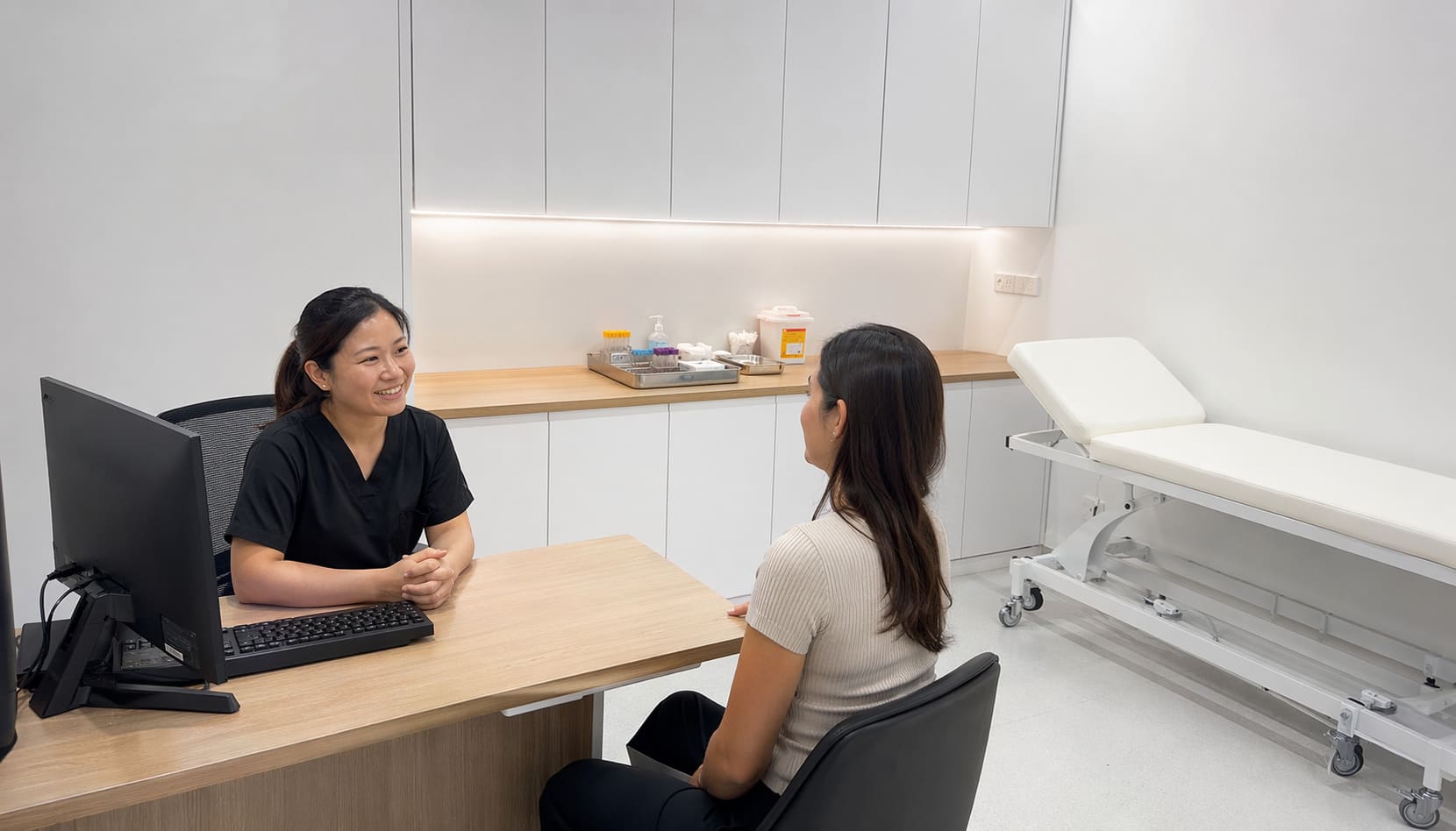
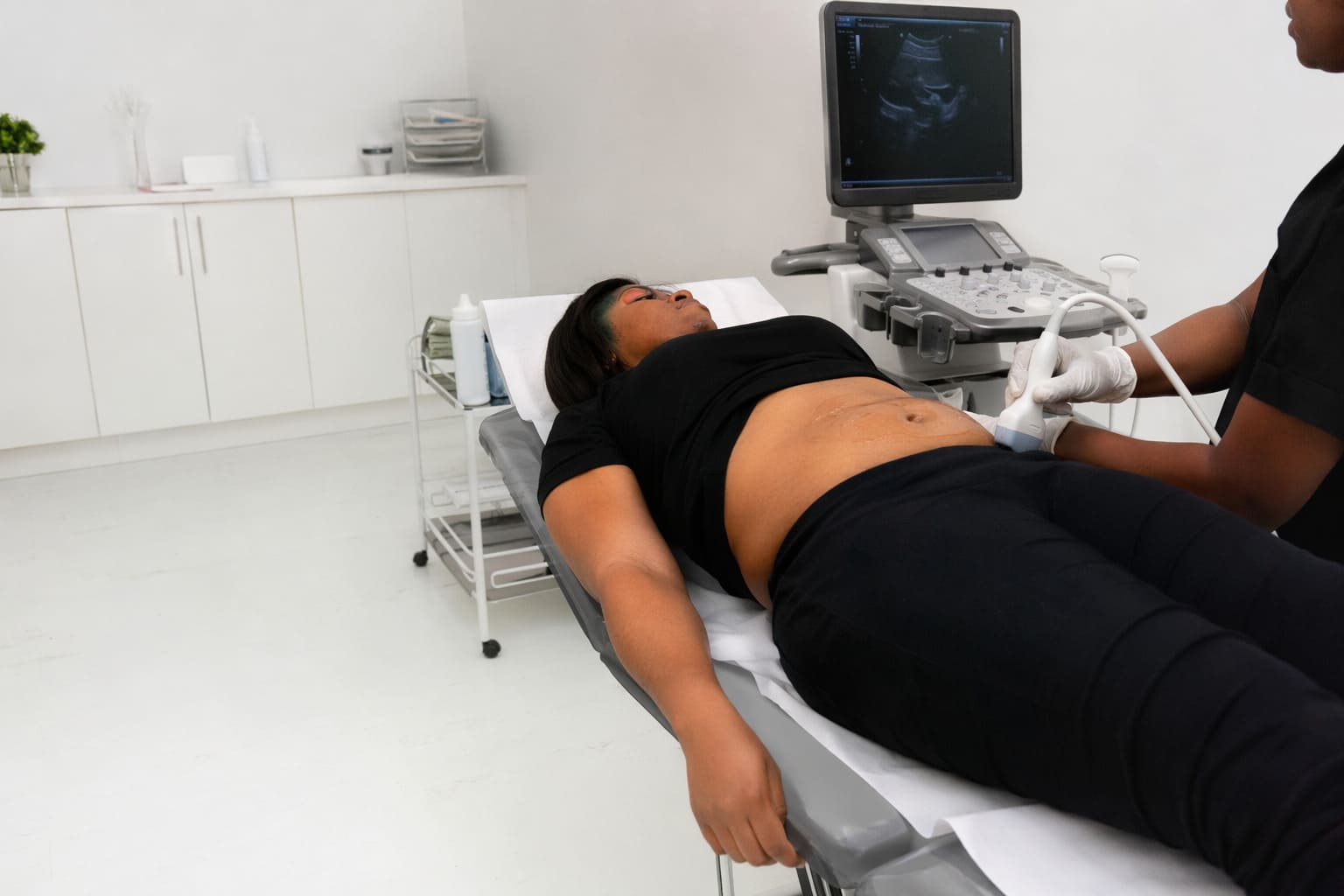
Women’s Health – Blood and Hormonal Test Room- Illustrative Image
Questions we get asked about fertility assessment costs in London
Is it cheaper to buy fertility tests separately?
Sometimes, if you need one or two specific tests and already know which. Packages tend to work out cheaper once you need a consultation and a proper results review as well, since those are the expensive parts when bought alone. Where packages stop being good value is when half the contents do not apply to you.
Do I need a GP referral for private fertility testing?
No, most private providers will see you directly. A GP consultation first is still often worth it, because it can establish which tests are actually relevant and stop you paying for a package built around a question you do not have.
Will a normal semen analysis rule out fertility problems?
No. It tells you the sperm measurements were within reference values on the day of testing, which is useful but partial. Results vary between samples, and other factors sit outside what the test measures.
Can I use fertility test results from another clinic?
Often, though each provider decides for itself. Ask which test types they accept and how recent results need to be, before you assume anything will be repeated or accepted.
Does an AMH test tell me whether I will conceive naturally?
No. It indicates how your ovaries are likely to respond to stimulation in assisted conception, which is a different question. Natural conception depends on far more than ovarian reserve, and NICE specifically advises against using AMH to predict it.
This is general information, not medical advice.
Reviewed by Fang He, BSc MSc, Advanced Nurse Practitioner and Chief Executive Officer at Future Care Medical, member of the Faculty of Sexual and Reproductive Healthcare.

Men’s Health – Assessment Consultation Room – Illustrative Image