How much does an executive health check cost in London?
Our Executive Health Check is £615, correct as of July 2026. Across the UK, comprehensive and executive private checks generally run from about £600 to £1,500 or more, so that figure sits at the lower end of the range. What decides whether any of them is good value is the clinical scope behind the price, not the number on the page.
We publish four health check levels, at £350, £450, £615 and £1,999. The £615 Executive Health Check sits third of the four. Seeing the tiers side by side is more useful than comparing one package against another provider’s, because it shows you what changes as the price goes up.
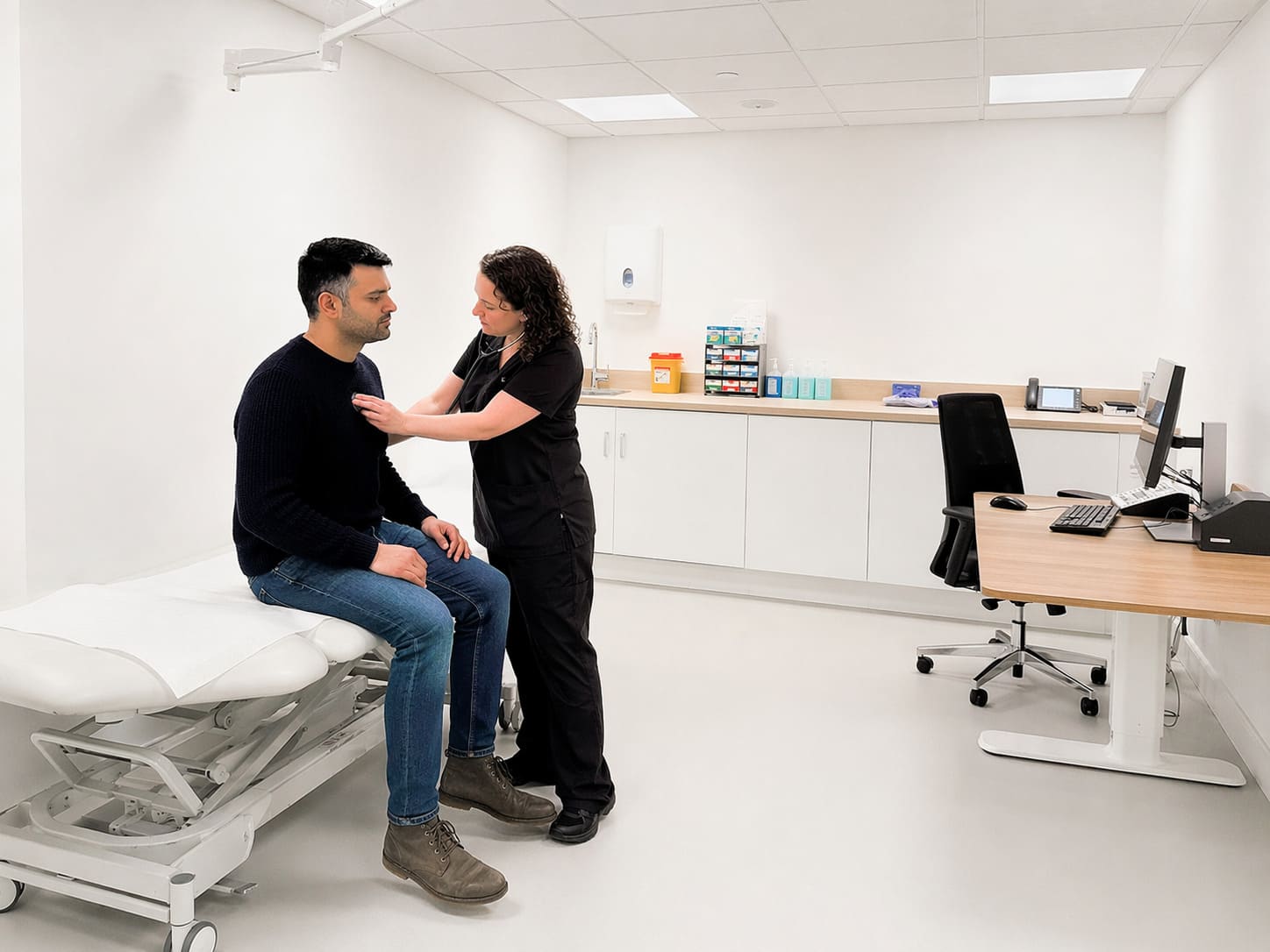
Comprehensive Health Check – Heart and Chest Check – Illustrative Image
What Is In This Article
A test list is not an assessment
Blood results on their own are data. They become an assessment when a clinician reads them against your medical history, your physical measurements and anything found previously.
That is the distinction worth holding when you compare private health checks. Two packages can list a similar set of blood markers and deliver quite different things, depending on whether anyone qualified is scheduled to sit down and interpret them with you.
| Package element | What to check before paying | Why it changes the value |
|---|---|---|
| Consultation and history | Whether clinician time is included, and how long | Results mean different things depending on your history, and someone has to make that connection |
| Blood collection and testing | Which markers are named, and what a repeat test costs | The number and type of markers vary enormously between packages at similar prices |
| ECG and physical measurements | Whether an ECG, a recording of your heart’s electrical activity, is in the stated scope | These sit at different tiers with different providers, so neither can be assumed |
| Written results and review | Whether a clinician explains the findings, and whether you get it in writing | A written record is what you take to any future appointment |
| Imaging and specialist input | Whether it is included, arranged if clinically indicated, or charged separately | This is where two similar-looking packages diverge most in price |
Imaging, specialist review, repeat tests, referrals, prescriptions and treatment can all sit outside a package fee. Any provider should tell you which of those apply before you pay, and we are happy to go through ours.
Three things push the price up
Private health check prices reflect layers rather than a single item. Blood testing is one layer. Clinician time, diagnostic input, reporting and follow-up make up the rest.
A higher fee often does buy a broader assessment. Whether that breadth is worth anything depends on whether it is relevant to you.
Tests and scans widen a package
The range of blood testing varies more than most people expect. HbA1c, for instance, gives an average of your blood glucose over the previous few months, and it appears in some packages and not others at similar prices.
Anything involving a scanner should be named explicitly in the package description rather than assumed. That covers ultrasound, MRI, which stands for magnetic resonance imaging, and CT, a computed tomography scan. Whether any of them suits you is a clinical judgement based on your history, your symptoms and your risk factors, not something a package tier decides in advance.
Clinical time is what makes results usable
A result with no context can worry you unnecessarily or reassure you wrongly. The clinical work around the testing is what prevents both.
That means a consultation where your history is taken properly, an interpretation of what the numbers mean for you specifically, a written report you keep, and a clear route if something needs following up. Ask whether that follow-up carries its own charge, because it often does elsewhere.

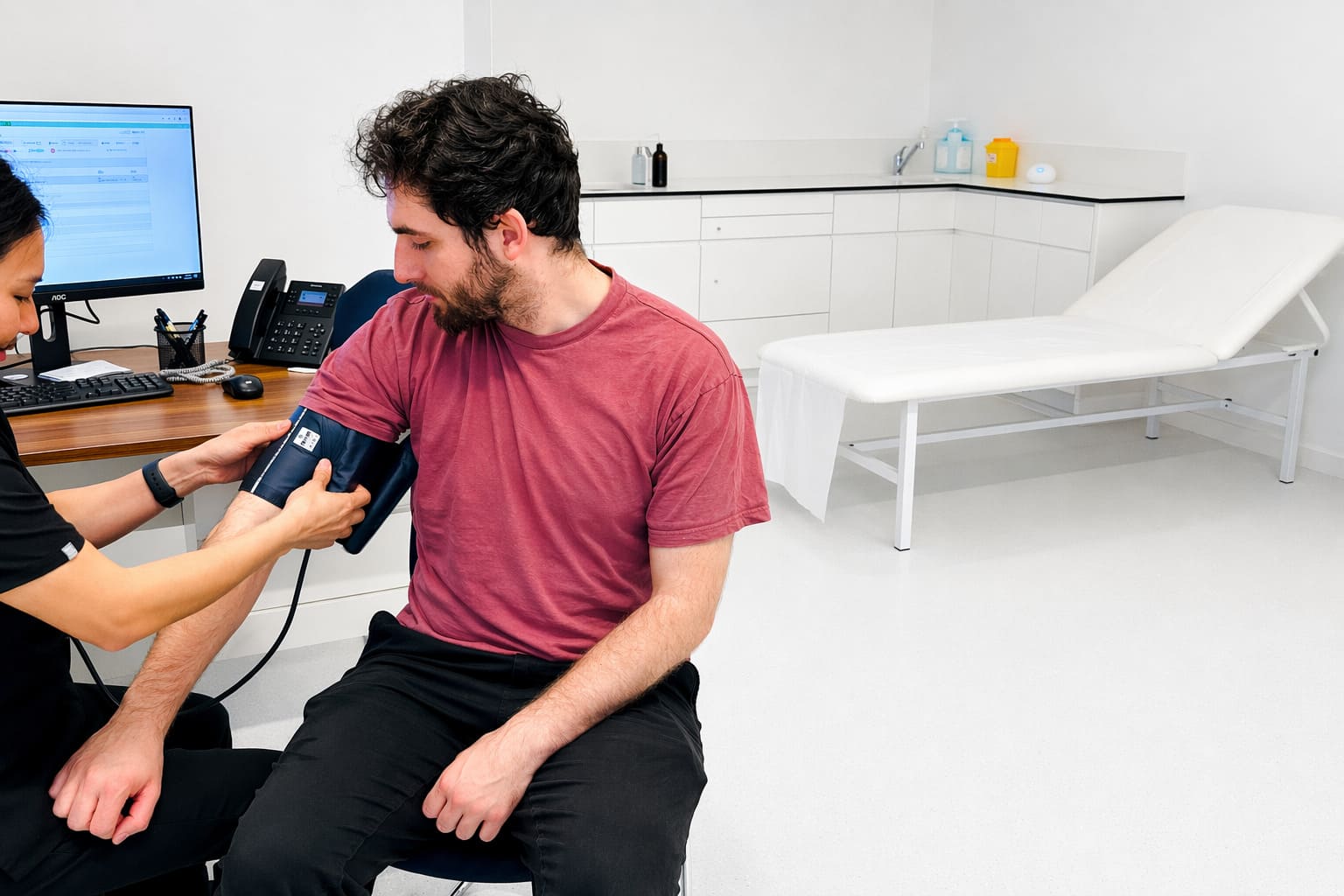
Comprehensive Health Check – Blood Pressure Check – Illustrative Image
Compare scope, then work out who pays
Start with what you actually need, then look at prices.
- Match the assessment to your health profile. Your age, history, risk factors, symptoms and any previous findings should drive the choice of tier.
- Read the clinical pathway end to end. Consultation, testing, interpretation, written report, follow-up. A gap anywhere in that chain reduces what the rest is worth.
- Get the extras priced up front. Imaging, specialist consultations, repeat tests, referrals, prescriptions, treatment.
- Compare named tests, not package titles. Executive, advanced and comprehensive have no fixed meaning across the market.
- Sort out payment before you book. Insurers set their own rules on preventative screening, so confirm cover with yours rather than assuming.
Employer funding is a route many people overlook. HM Revenue & Customs allows one health screening assessment and one medical check-up per employee per tax year under the relevant exemption. Treatment arising from what the check finds is not automatically covered by it, so your payroll team or a tax adviser is the right place to confirm how your employer’s arrangement works.
If you work around London Wall, Liverpool Street, Moorgate or Bank, our City of London location makes the practical side easier. Consultation, testing and results review can be fitted around a working day rather than costing you one.

Essential Health Check – Heart and Chest Check – Illustrative Image
The word executive guarantees nothing
The common assumption is that an executive package includes every major test, scan and specialist review as standard. It does not, anywhere, because the term has no agreed definition in private healthcare. One provider’s executive tier is another’s mid-range.
A cheaper assessment can be entirely right for a focused clinical question. A more expensive one earns the difference only when the extra testing, interpretation or follow-up does something for you specifically.
Clear pricing, named inclusions and a coherent clinical pathway tell you more than any package title ever will.

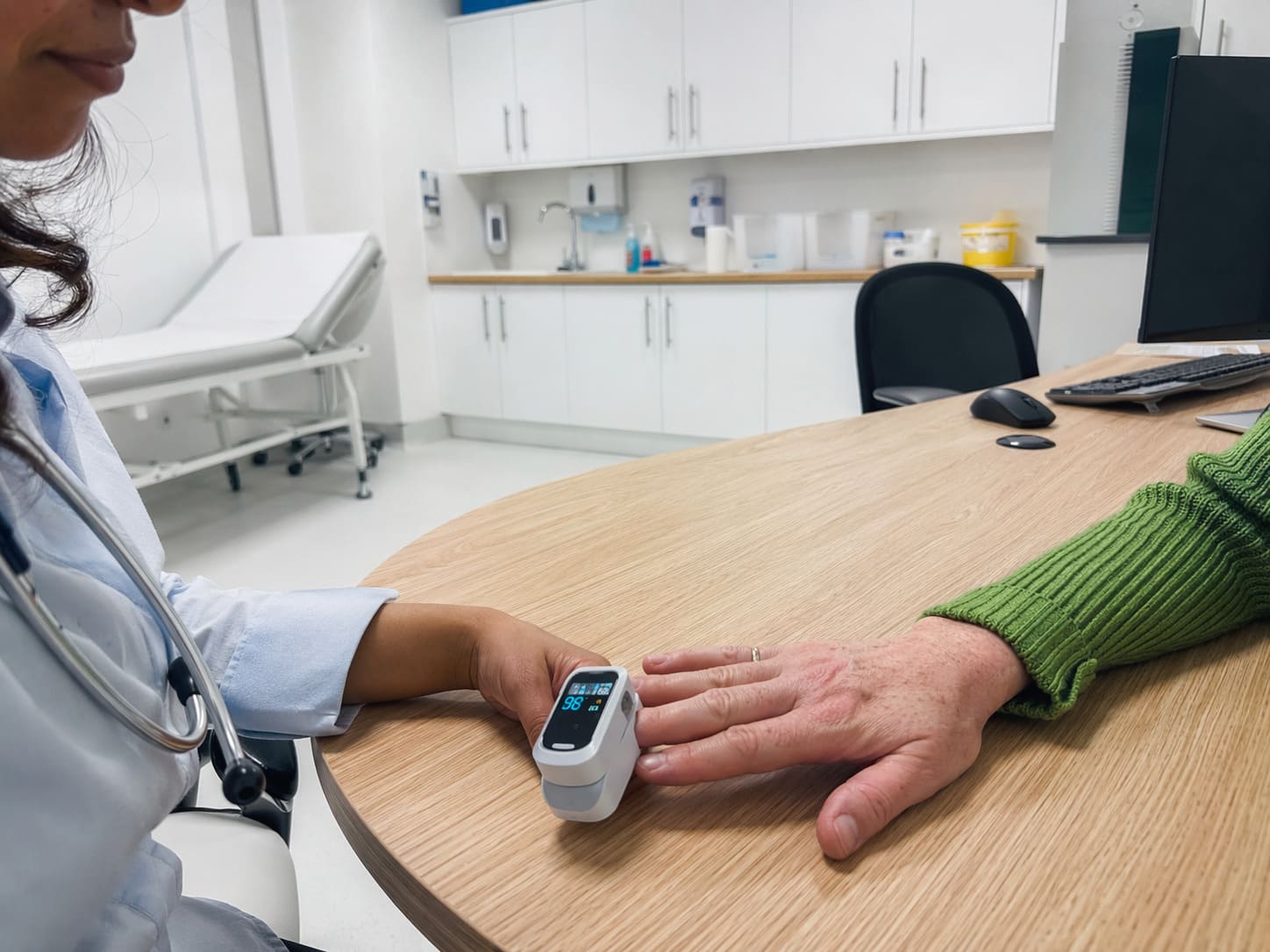
Comprehensive Health Check – Oxygen and Pulse Check – Illustrative Image
Questions we get asked about executive health check costs
What does a written results report actually add?
It records what was found, what it means and what should happen next. It is also the thing you can hand to any clinician you see in the future, which matters more than people expect a year or two later.
How should a company compare health checks for staff?
By clinical scope, results process and follow-up rather than test count. A package that produces twenty numbers and no interpretation generates work for your staff rather than answers.
Can a package fee include care after an abnormal result?
Usually not. Most packages cover the assessment itself, with further tests, referrals, prescriptions and treatment charged separately. Ask specifically what happens if something comes back needing attention, because that is the point at which costs differ most between providers.
Why do two checks with similar blood tests have different prices?
Because the tests are the cheap part. Consultation time, physical measurements, interpretation, written reporting and any diagnostic input account for most of the difference between two similar-looking test lists.
Does a higher price always mean a more suitable health check?
No. Suitability comes from the match between the scope and your own history, risks and symptoms. Paying more for testing that is not relevant to you buys reassurance you already had.
This is general information, not medical advice.
Reviewed by Fang He, BSc MSc, Advanced Nurse Practitioner and Chief Executive Officer at Future Care Medical, member of the Faculty of Sexual and Reproductive Healthcare.