What does a DVLA, HGV or taxi medical in London actually involve?
A DVLA, HGV or taxi medical in London is a structured driver medical assessment that reviews medical history, eyesight, blood pressure and any health issue that could affect safe driving. The exact standard depends on the licence type and licensing authority, with HGV drivers usually assessed against Group 2 medical standards and taxi drivers often assessed under local authority rules, including Transport for London requirements where relevant.
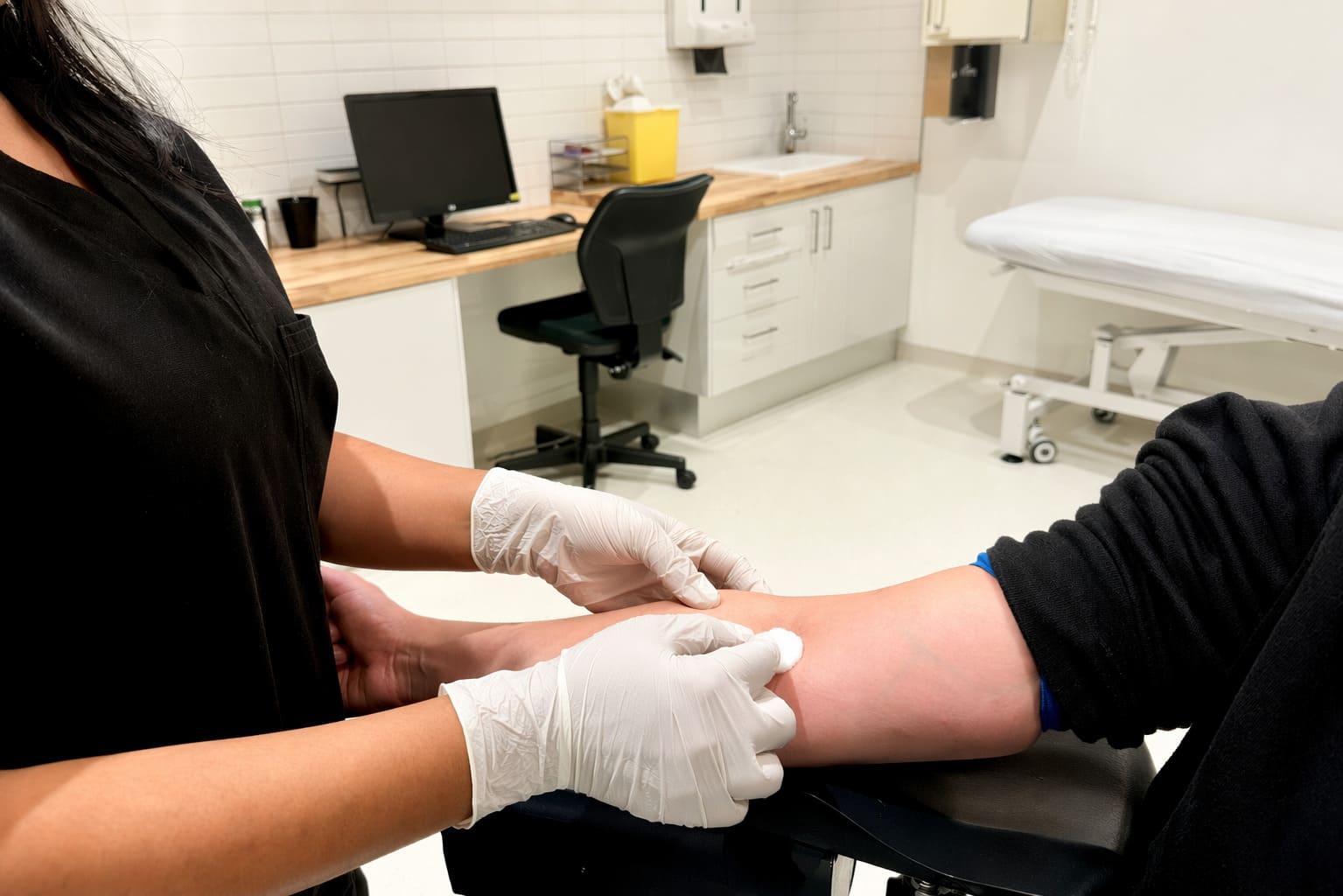
Women’s Health – Blood and Hormonal Test – Post Blood Draw Detail (2) – Illustrative Image
What Is In This Article
Medicals in Professional Driving
Many drivers assume these appointments are routine paperwork. The reality is more specific. A professional licence medical exists to assess medical fitness for work that carries direct responsibility for passengers, other road users and, in many cases, long hours behind the wheel.
A standard car licence does not carry the same medical threshold as an HGV or bus licence. Group 2 medical standards are stricter because the driving role carries greater public safety implications. Taxi driver medical requirements can also differ from ordinary licence checks because licensing authorities apply their own standards alongside wider DVLA rules.
Employers often view these assessments as part of occupational health and compliance. Individual drivers usually feel the pressure more directly, especially at renewal points or before a new role starts. In both cases, the medical is there to answer one question with precision: is the person fit to drive safely under the rules attached to that licence?
Assessment Standards and Criteria
The criteria are set by regulation and clinical guidance, not by the preference of the clinic carrying out the examination.
Vision sits near the top of the list for an obvious reason. A driver may need to meet specific eyesight test requirements, and corrective lenses must be declared where relevant. Reduced visual acuity, visual field problems or eye disease can all affect a licence decision because safe driving depends on consistent visual judgment.
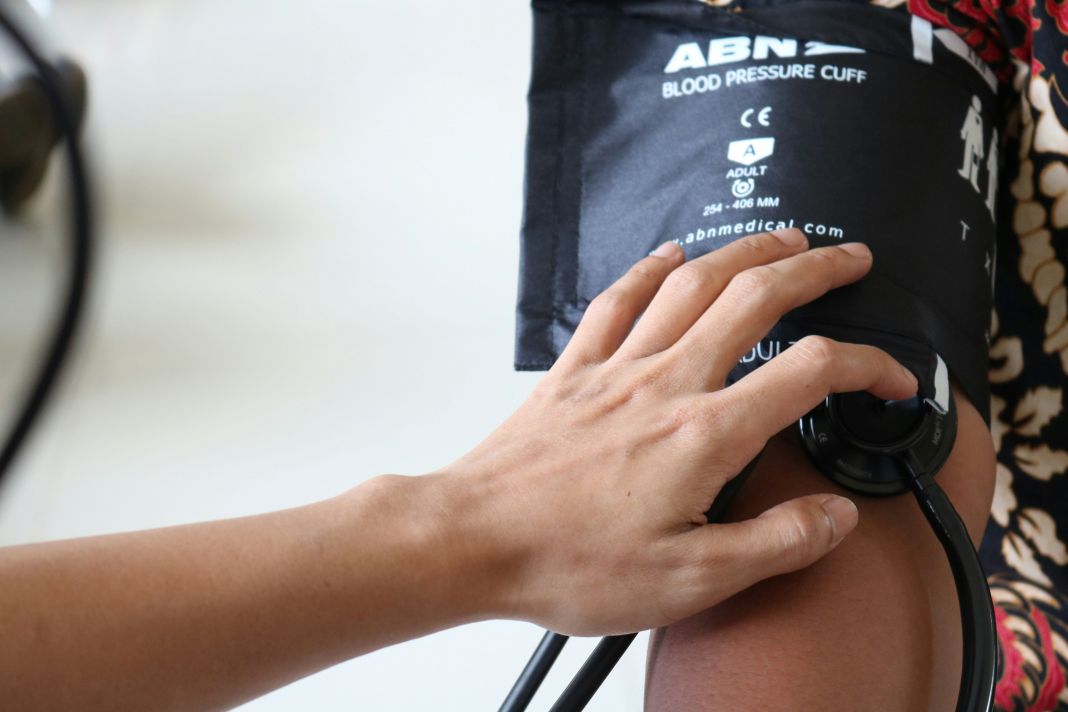
Cardiovascular health is also reviewed closely. Blood pressure is checked during the appointment, and the examiner may consider any history of chest pain, heart attack, arrhythmia, fainting or procedures involving the heart. A raised reading on the day does not automatically settle the matter, but it may require follow-up evidence before a form can be completed in full.
Chronic conditions matter because control is often as important as diagnosis. Diabetes management, medication review, sleep-related symptoms, epilepsy history and neurological conditions may all need careful declaration. Licensing bodies are usually interested in whether a condition is stable, monitored and compatible with safe driving over time, which means that incomplete disclosure creates more problems than the condition itself in some cases.
Taxi medical requirements can vary between licensing authorities. One authority may follow a Group 2 approach closely, while another may ask for a particular form or interval for reassessment. That is why drivers should avoid relying on general assumptions picked up from colleagues.
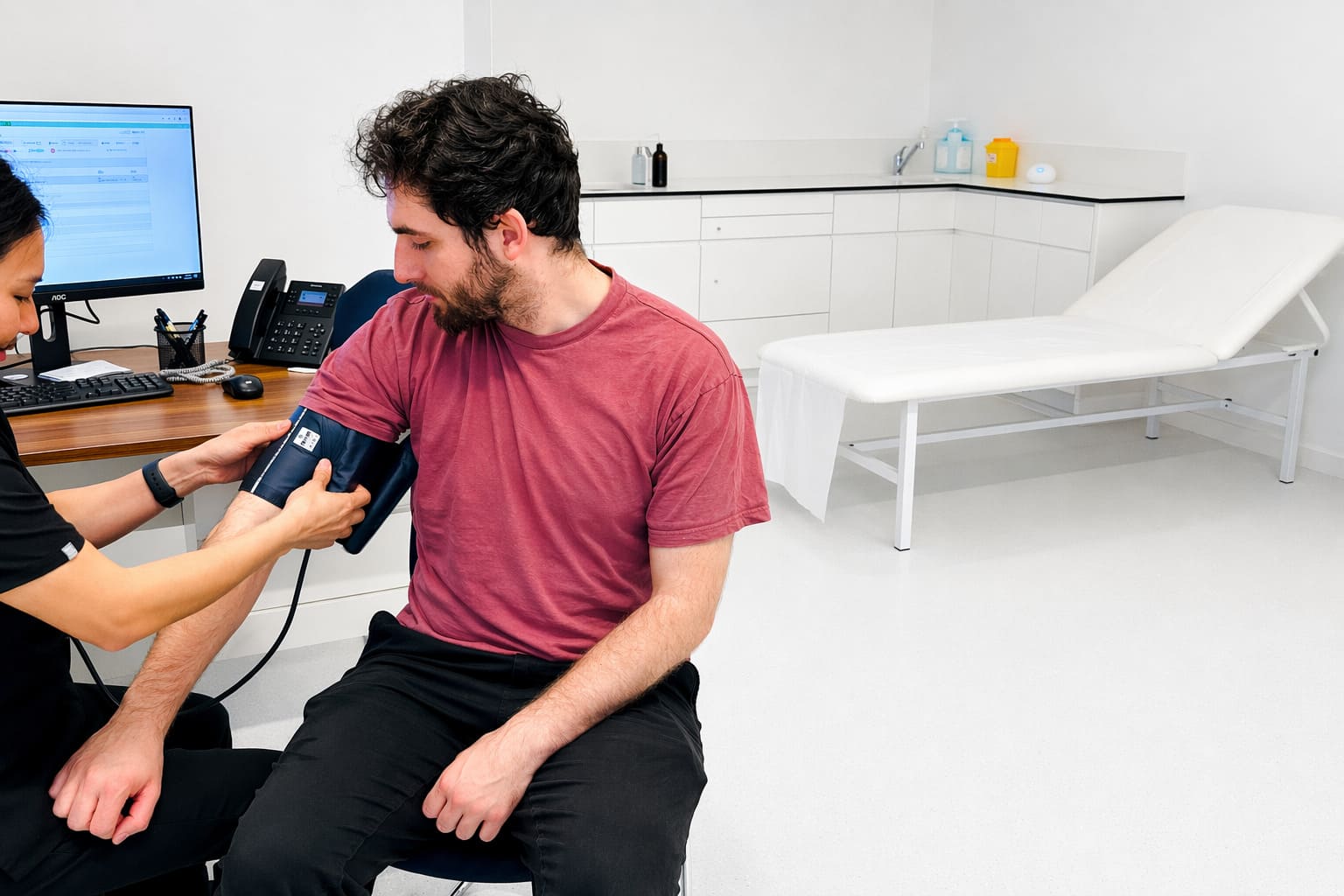
Essential Health Check – Blood Pressure Assessment – Illustrative Image
The Medical Assessment Process
The process is methodical from the moment the appointment is arranged.
Before the assessment, the driver usually needs the correct form for the relevant authority. HGV and bus drivers commonly need the D4 medical form. Taxi drivers may need a form issued by the local council or licensing body. The examining clinician completes the medical sections, but the driver remains responsible for providing accurate background information.
During the appointment, the medical examiner reviews the declared history, asks about past and current conditions, checks medication and carries out the physical elements required for the form. That often includes blood pressure measurement, an eyesight check and a general review of anything relevant to fitness-to-drive standards.
A typical appointment moves through these stages:
- Identity and paperwork check
- Review of medical questionnaire and history
- Physical examination, including blood pressure and vision requirements
- Completion of the relevant driver medical form
- Advice on any extra evidence needed before submission
Preparation makes the appointment smoother. Drivers should bring photo identification, the correct medical form, details of regular medication and any recent specialist letters or patient medical records that relate to declared conditions. Where a diagnosis has already been investigated, current documentation can save time and reduce the chance of a delayed outcome.
In a central clinic setting such as Future Care Medical, that process is usually kept concise and structured, which suits drivers trying to fit a medical around work in the City of London or nearby commercial routes.

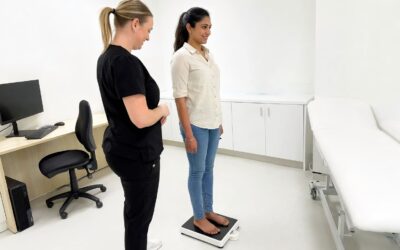
Men’s Health – Assessment Consultation Room – Illustrative Image
Location and Booking Considerations
A driver working near Liverpool Street or London Wall usually cares about one thing before anything else: whether the appointment can fit into a packed day without creating extra travel time.
Central London can make that easier. A clinic close to major stations and office districts reduces time away from work, particularly for drivers, operators and fleet staff moving between appointments, depots or licensing deadlines. City of London access also matters for self-employed taxi drivers who may need to book around active shifts rather than around a standard office week.
Provider choice should be practical. Look for clear appointment availability, familiarity with driver medical forms and a process that can handle related checks efficiently if further records are needed. Integrated private medical care can be useful in that setting because drivers sometimes need follow-up GP review or additional documentation linked to a declared condition, incidentally.
Pricing and Documentation
Documentation matters as much as the examination itself because an incomplete form or missing record can interrupt the whole process.
For this type of appointment, drivers should confirm the fee before attending. At Future Care Medical, a 30-minute GP consultation costs £160.00 and a 60-minute GP consultation costs £240.00. The appropriate length depends on the challenge of the medical history and the paperwork involved.
Bring the essentials in one set of documents:
- The correct D4 medical form or taxi licensing medical form
- Photo identification
- A current medication list
- Relevant medical records or specialist letters, if a condition has already been investigated
Results are usually issued through the completed form itself or through supporting documentation where extra evidence is needed. Accuracy matters here. A licence application can stall over something as simple as an omitted medication, an unsigned section or a form brought to the wrong appointment.

Women’s Health – Personalised Consultation Room – Illustrative Image
The Misconception of ‘Routine’ Medicals
The common misconception is that a driver medical is a rubber-stamp exercise that any reasonably healthy person will pass without much thought. That assumption causes trouble because these assessments depend on disclosure, defined medical standards and clinical judgement, not on whether someone feels generally well.
A driver can look fit, work full time and still fall short on eyesight, blood pressure control or reporting requirements. Licensing bodies and medical examiners are assessing risk, not rewarding confidence. The mistake is to think the medical is routine because it happens regularly. In fact, regularity is exactly why it matters.