What happens during a private cervical screening, and when is the right time to book one?
A private cervical screening usually involves a brief consultation, consent, a speculum examination, and cervical sample collection for HPV testing and, where indicated, cytology. The right time to book depends on your age, screening history, symptoms, and practical factors such as avoiding menstruation, because cervical screening is a preventive test with defined intervals rather than a test to use whenever concern arises.
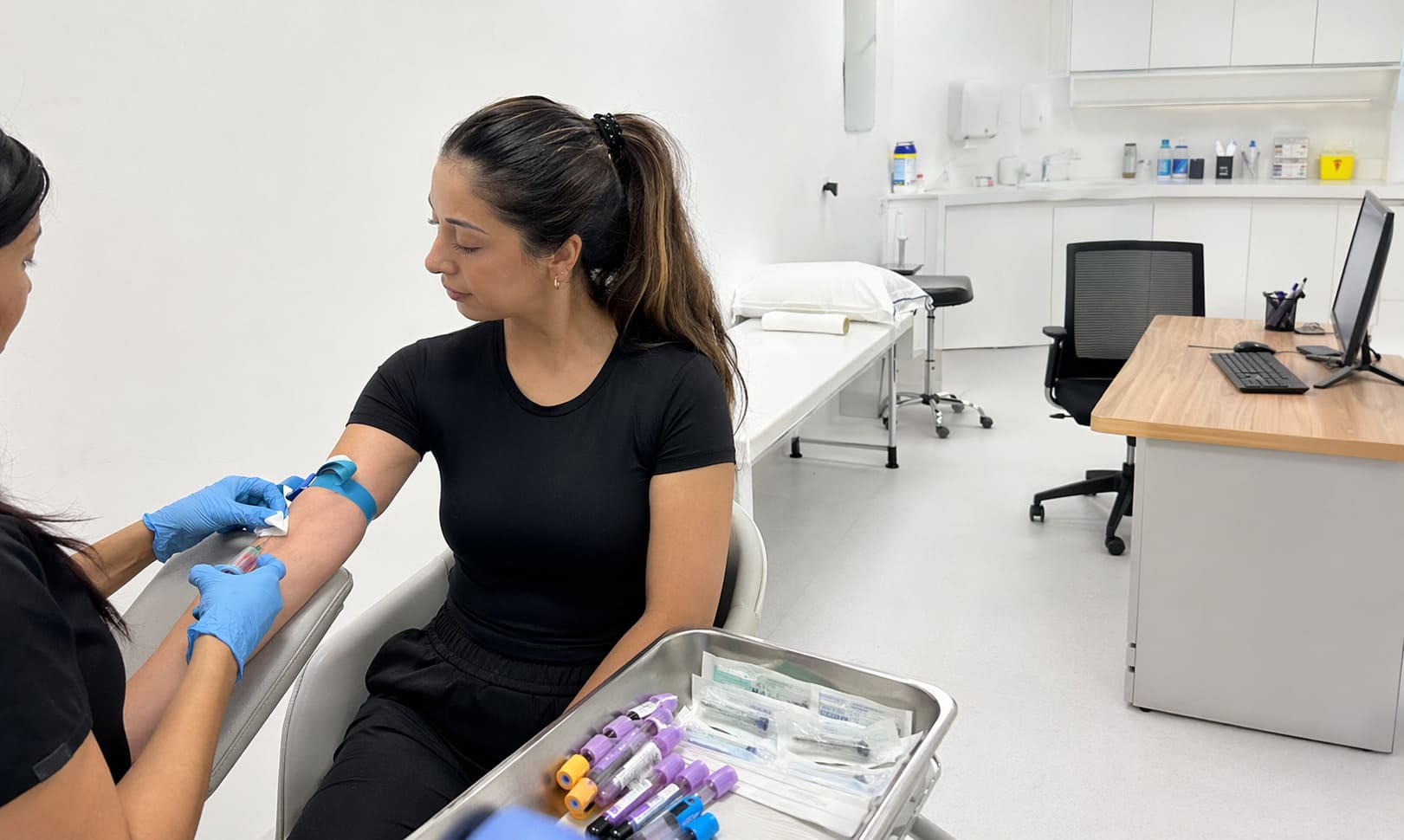
Women’s Health – Blood and Hormonal Test – Blood Test In Progress – Illustrative Image
What Is In This Article
The Clinical Rationale Behind Cervical Screening
Cervical screening exists to identify risk early, before cervical cancer develops. A cervical smear test does not diagnose cancer on its own. The purpose is to detect Human Papillomavirus (HPV) and, if needed, look for pre-cancerous changes in cervical cells.
That distinction matters. Screening is for people without symptoms, whereas symptomatic testing is used when someone has issues such as unexpected bleeding, bleeding after sex, or persistent pelvic pain. In that setting, a GP or women’s health clinician may recommend examination and investigation outside the usual screening pathway.
Across the UK, screening intervals are based on evidence reviewed through bodies such as the UK National Screening Committee and reflected in the NHS Cervical Screening Programme. Those intervals are set to balance benefit and burden. Testing too often can lead to unnecessary repeat procedures, while testing too rarely may miss an opportunity to identify changes at an earlier stage.
HPV testing has changed the way cervical cancer screening works. Most HPV infections clear without treatment, but some high-risk types can persist and increase the chance of abnormal cell changes over time. Screening therefore works as a form of risk stratification. It looks for people who need closer follow-up and separates them from those who can safely return to routine recall.
A few misunderstandings still cause confusion:
- A person can need cervical screening even if they feel completely well.
- A person can still need screening after HPV vaccination, because vaccination reduces risk but does not remove it.
- A person does not need to wait for symptoms to justify booking, because screening is intended to come before symptoms appear.
Seen in that light, women’s health screening in this area works a bit like a scheduled safety check. Its value lies in timing, method, and follow-through, not in reacting at the last minute.
The Process of a Private Cervical Screening: Step by Step
A private smear test is usually straightforward and brief, but the structure matters. Knowing each stage in advance often makes the appointment easier to follow.
- Before the appointment, the clinic will usually ask for basic background information, including age, menstrual history, prior cervical screening, relevant gynaecological history, pregnancy status, and current symptoms. Staff may also advise avoiding the days of heavier menstrual bleeding, because blood can affect sample quality.
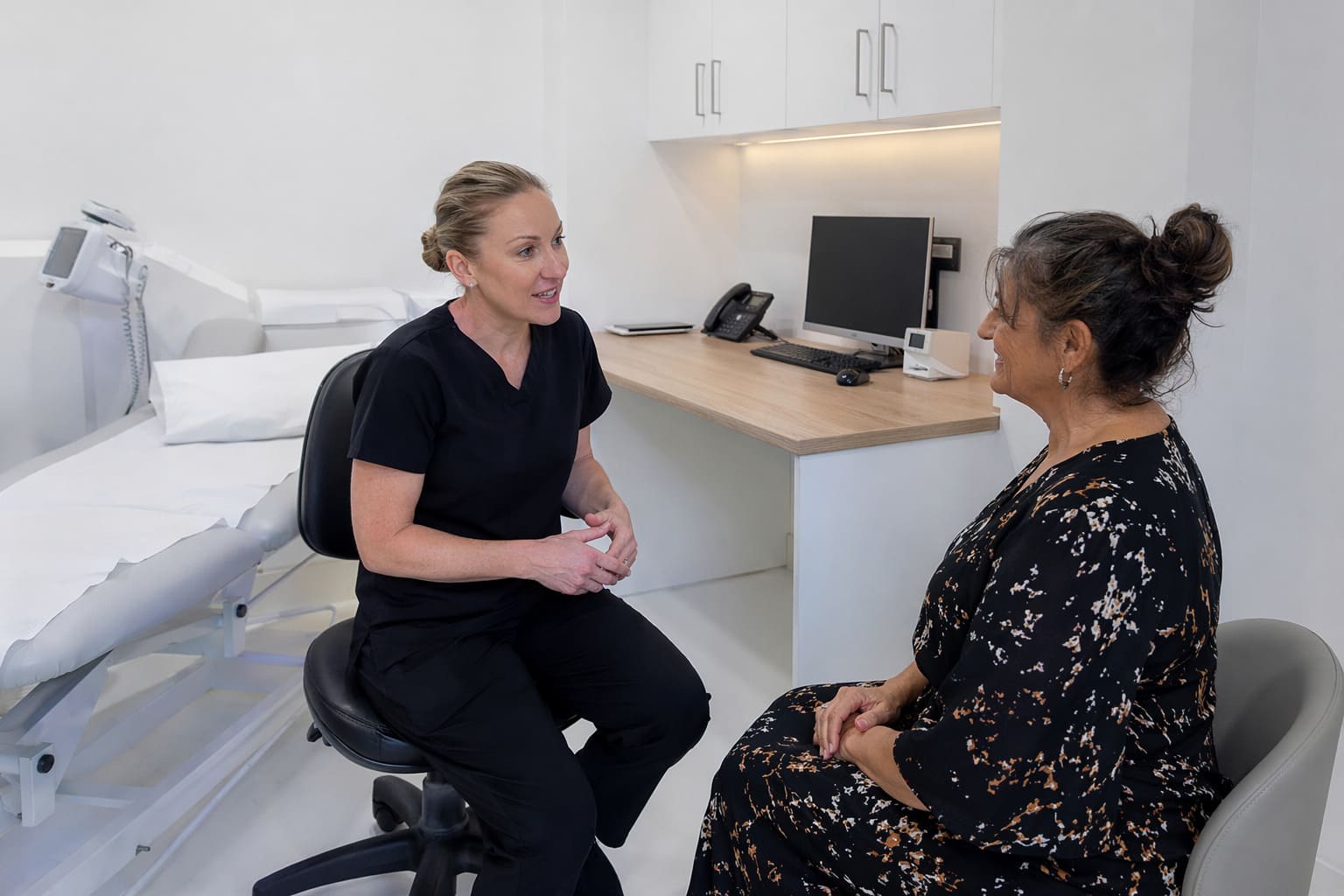
- At the start of the appointment, a registered nurse or doctor explains the cervical screening procedure, checks consent, and confirms that screening is appropriate. That conversation also creates space to mention discomfort with previous tests, vaginal dryness, anxiety about speculum examinations, or the wish to have a chaperone present.
- During the examination, you undress from the waist down in privacy and lie on the examination couch. The clinician inserts a speculum gently into the vagina so the cervix can be seen. A small soft brush is then used for cervical sample collection. The sample itself usually takes only a short time.
- After the sample is taken, the clinician removes the speculum and checks that you feel well before getting dressed. Some people notice mild spotting afterwards, which can happen after contact with the cervix.
- The sample is labelled, documented, and sent to laboratory services for HPV testing and, where required, cytology. Clinical notes are added to the medical record so that result handling and recall timing are clear.
At Future Care Medical, the appointment sits within a defined women’s health pathway rather than feeling like an isolated test. That usually means consent, privacy, sample handling, and result planning are all addressed during the same visit.
Comfort is handled practically, not vaguely. A smaller speculum may be appropriate for some patients, and a chaperone policy should be clear before the examination begins. Those details can make a real difference for someone attending their first cervical screening or returning after a difficult prior experience.
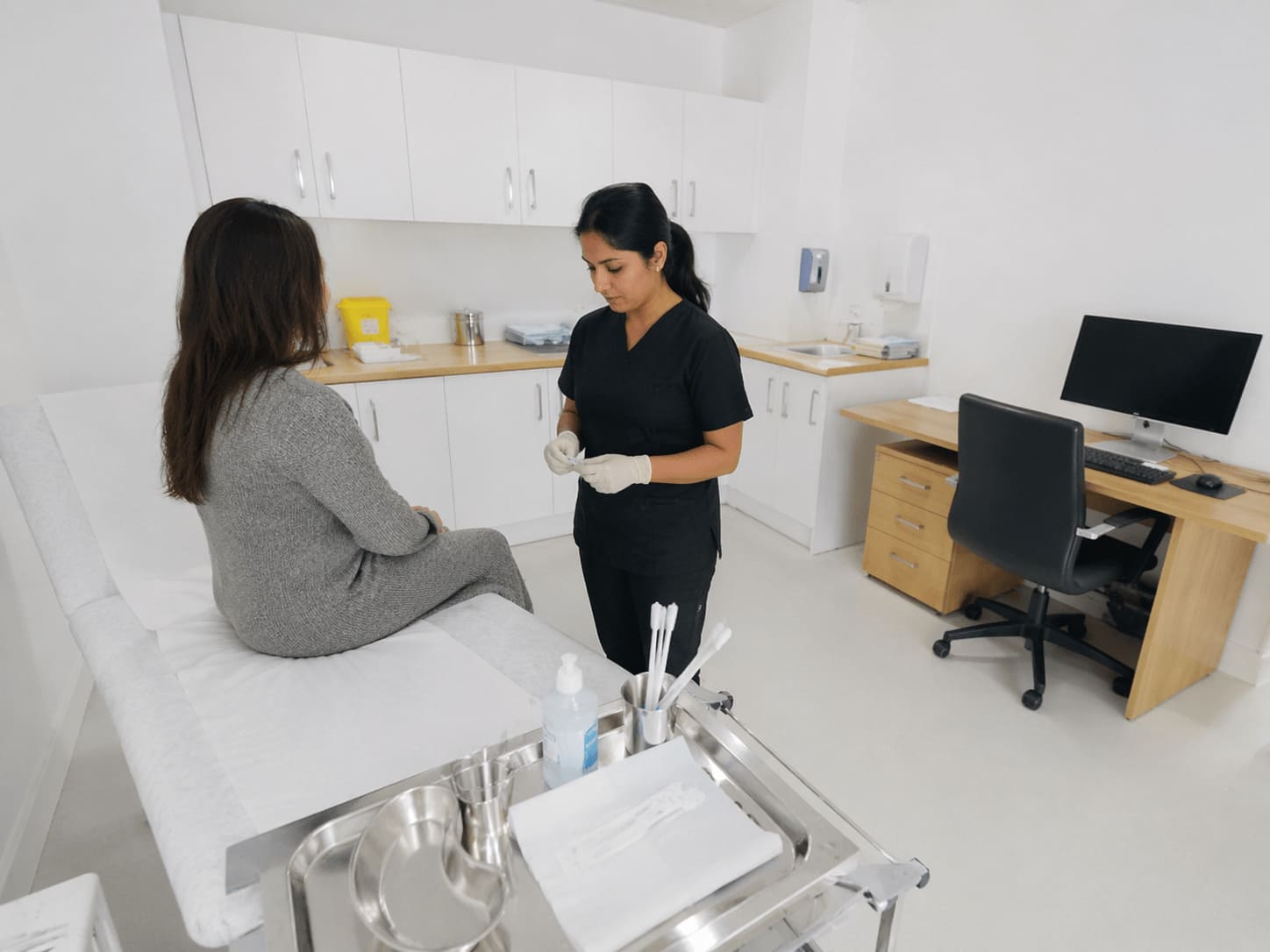
Sexual Health Screening Preparation – Illustrative Image
The Role of Results and Follow-Up in Private Screening
The test is only one part of the pathway. What happens next depends on what the laboratory finds and how that result is communicated.
Most private cervical screening results include HPV status first. If high-risk HPV is not found, the result is usually routine, and the next step is return at the appropriate recall interval. If high-risk HPV is found, cytology may then assess whether cell changes are present in the sample.
Results may be reported in terms such as these:
- HPV negative, with return to routine screening at the advised interval
- HPV positive, with no abnormal cells identified, which may lead to repeat testing after a defined period
- HPV positive with cell changes, which may lead to further investigation through a follow-up consultation or referral pathway
An abnormal result does not mean a cancer diagnosis. In practice, it means the screening has identified a reason to look more closely. Follow-up may involve repeat testing, specialist assessment, or colposcopy, depending on the report and clinical history.
Clarity in communication matters here. A cytology report can sound technical, and patients often need a plain-language explanation of what was found, what was not found, and what happens now. A good pathway also records the outcome properly so that the next recall point is not left vague or dependent on memory alone.
Within a private setting such as Future Care Medical, results are generally returned through an agreed channel, and follow-up can be arranged in a structured way if the report indicates it. That continuity is especially useful for patients balancing work in the City of London with limited time for repeated administration.
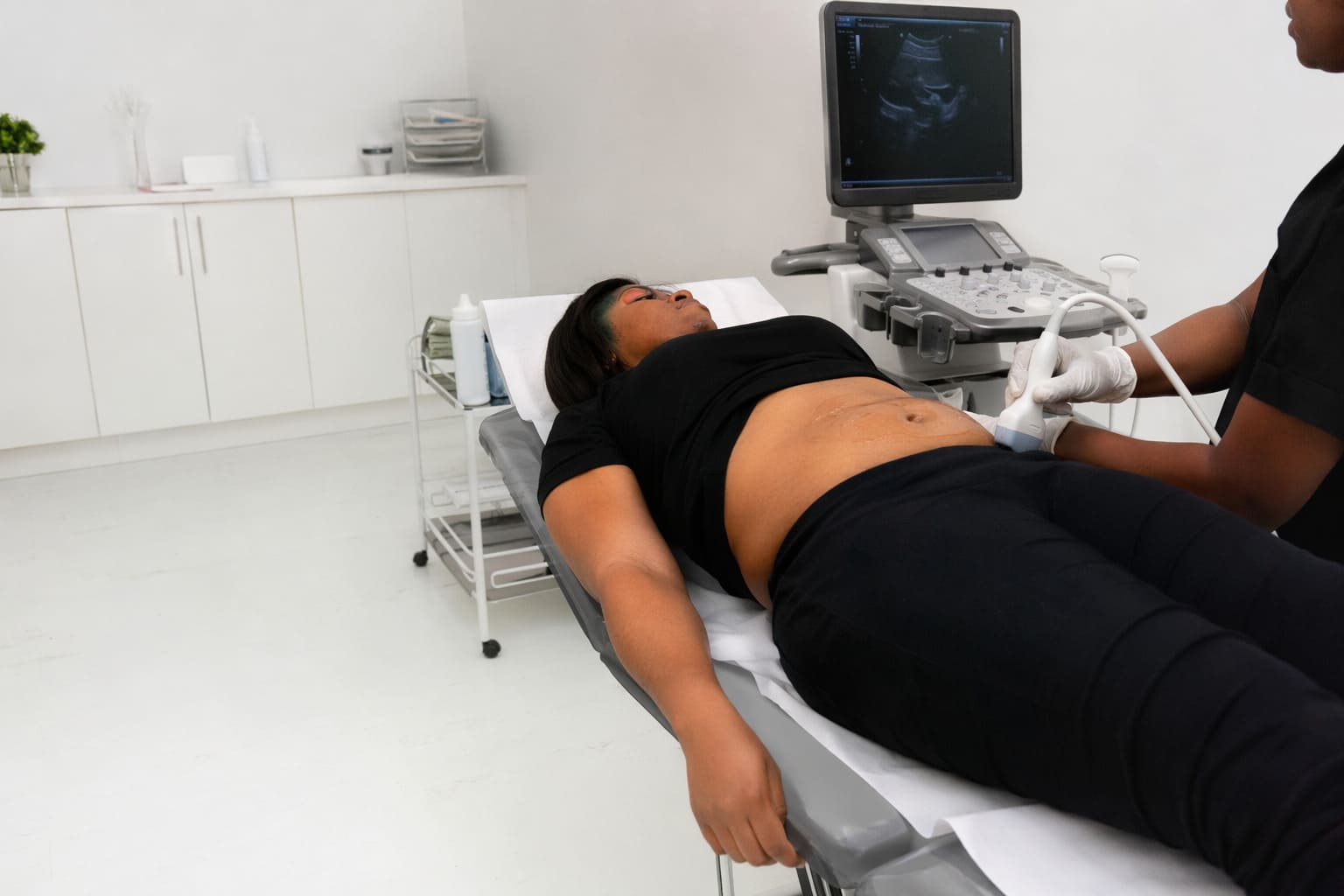
Ultrasound Scan in Progress – Illustrative Image
The Timing of Cervical Screening: Why Intervals and Age Matter
Cervical screening intervals are based on clinical reasoning, not habit. Age bands, HPV status, previous results, and individual history all influence when testing is useful.
In the UK, screening eligibility and recall schedules follow established frameworks. Private screening may be used by people who want an appointment outside standard access routes, but the logic of timing should still reflect accepted guidance rather than personal preference alone. More frequent testing is not automatically better, because screening works best when it is tied to the natural history of HPV infection and cervical cell change.
Exceptions do exist. Someone with symptoms needs assessment through a symptom-led pathway, not routine cervical cancer screening. Someone with a recent abnormal result, prior treatment for cervical changes, or advice from a specialist may need a different timetable. Pregnancy, recent childbirth, and some medical histories can also affect timing.
For booking purposes, a few practical points are worth keeping in mind:
- Try to avoid the days of active menstruation, particularly if bleeding is heavy.
- Mention any symptoms such as postcoital bleeding, unusual discharge, or pelvic pain when arranging the appointment.
- Tell the clinic if you are pregnant, recently postpartum, or have had previous abnormal smear results or colposcopy.
Busy schedules often shape booking decisions for people working around Liverpool Street, Moorgate, Bank, or London Wall, but convenience should sit alongside appropriateness. A well-timed test gives a clearer answer than an early or poorly timed one.
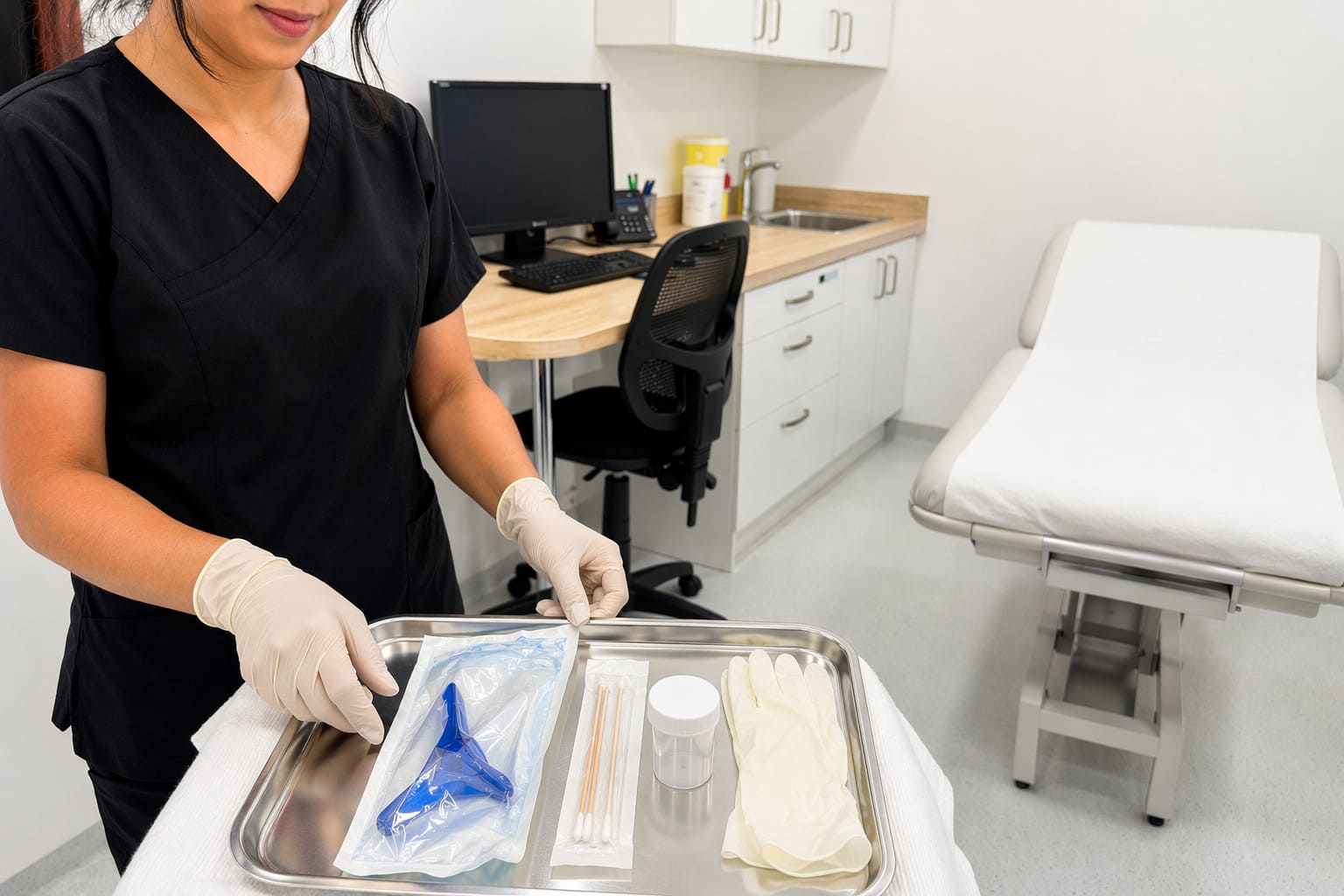
Women’s Health – Smear Test Equipment Detail – Illustrative Image
The Quiet Advantage: What Experienced Patients Wish They’d Known Sooner
Many people expect private cervical screening to feel different mainly because it is faster to arrange. What often stands out later is something quieter than speed.
Experienced patients often say they had not realised how much easier the process felt once every stage was explained in order. Consent, examination, sample handling, results, and follow-up can seem like separate pieces when viewed from the outside. Inside a structured clinical pathway, they make more sense together.
Some had assumed the procedure itself would be the main challenge. In reality, uncertainty is often the harder part: not knowing whether the appointment is really screening or symptom assessment, not knowing what the laboratory is checking for, and not knowing what an HPV result actually changes. Clear clinical communication removes much of that background noise.
Others wish they had known earlier that continuity of care is a quiet advantage. When records, results, and recall timing sit within one coherent medical pathway, the test stops feeling like a one-off task and starts feeling like a manageable part of routine health maintenance.
That is what experienced people in this space often wish they had known sooner: the real benefit is not urgency or novelty, but the calm precision of a process that tells you what is happening, what it means, and what comes next.