What health screening should men have in their 30s, 40s and 50s?
Men in their 30s often benefit from baseline checks such as blood pressure, cholesterol, weight, and selected blood tests if clinically indicated. In their 40s, screening usually becomes more targeted, with closer attention to cardiovascular risk, blood glucose, and prostate health where appropriate. By their 50s, bowel screening, ongoing monitoring for hypertension and diabetes, and broader age-related risk assessment often become more relevant, depending on personal history, family history, and current health.
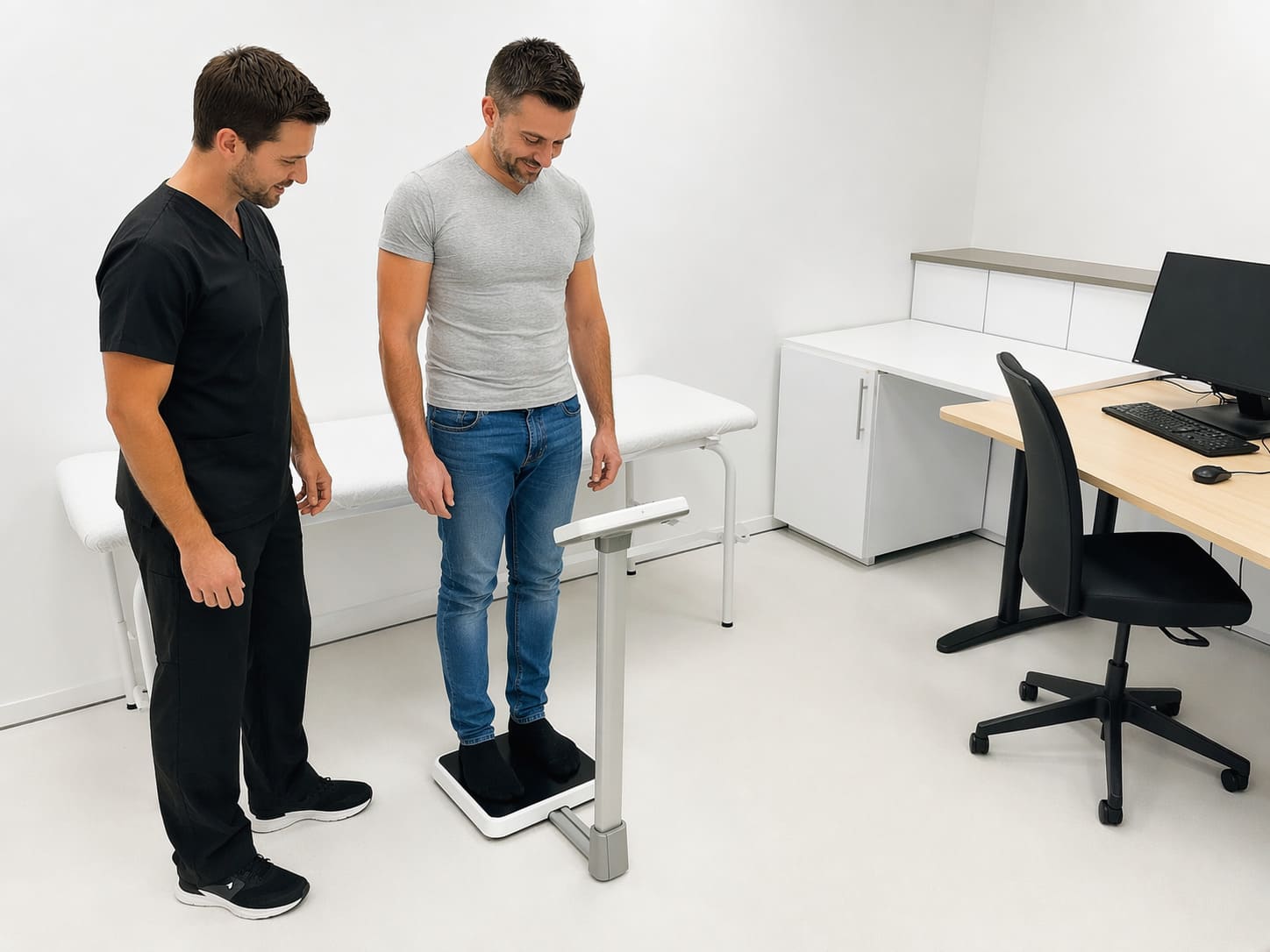
Men’s Weight Check Appointment – Illustrative Image
What Is In This Article
Why health screening matters in your 30s, 40s and 50s
Many men first seek medical advice when symptoms start to interfere with work, sleep, exercise, or day-to-day routines. Screening serves a different purpose. Screening looks for risk factors or early signs of disease before a problem becomes obvious.
Feeling well does not always tell you much about blood pressure, cholesterol, blood glucose, or inherited risk. Several common conditions can develop quietly for years. A structured review helps separate what needs monitoring from what can simply be recorded as a useful baseline.
Age also changes the conversation. A man in his 30s may need a first set of measurements and a review of family history. A man in his 40s may need a more detailed cardiovascular risk assessment. A man in his 50s may need regular follow-up for conditions that become more common with time, including bowel and prostate concerns where clinically indicated.
NICE guidance and NHS screening programmes provide an important framework, but private medical clinics can add convenience, continuity, and broader risk assessment for men who want a more structured review. In a place such as the City of London, that often matters to people balancing long working hours, commuting, and limited appointment flexibility.
A simple way to think about age-specific health checks is this:
- In your 30s, the focus is usually baseline measurement and lifestyle risk factors.
- In your 40s, the focus often shifts to earlier identification of cardiovascular and metabolic change.
- In your 50s, screening tends to widen further to include age-related disease risk and regular monitoring.
At Future Care Medical, that type of assessment sits within a clinical pathway rather than as a stand-alone test menu.
Health screening essentials for men in their 30s
For many men, the 30s are the right time to establish a clear record of current health. Even if nothing appears wrong, baseline screening gives future tests something meaningful to compare against.
Typical checks in this decade may include:
- Blood pressure monitoring
- Weight, BMI, and lifestyle risk evaluation
- Cholesterol testing
- Blood glucose or HbA1c if diabetes risk is present
- Baseline blood tests where symptoms, family history, or medication make them relevant
- Sexual health screening if there is a change in partners, symptoms, or specific exposure risk
Blood pressure deserves attention early because raised readings may cause no obvious symptoms. Cholesterol testing can also be useful in the 30s, especially if there is a family history of heart disease, smoking, excess weight, or low physical activity. A GP may also consider blood tests linked to liver function, kidney function, or thyroid function if there is a medical reason to do so.
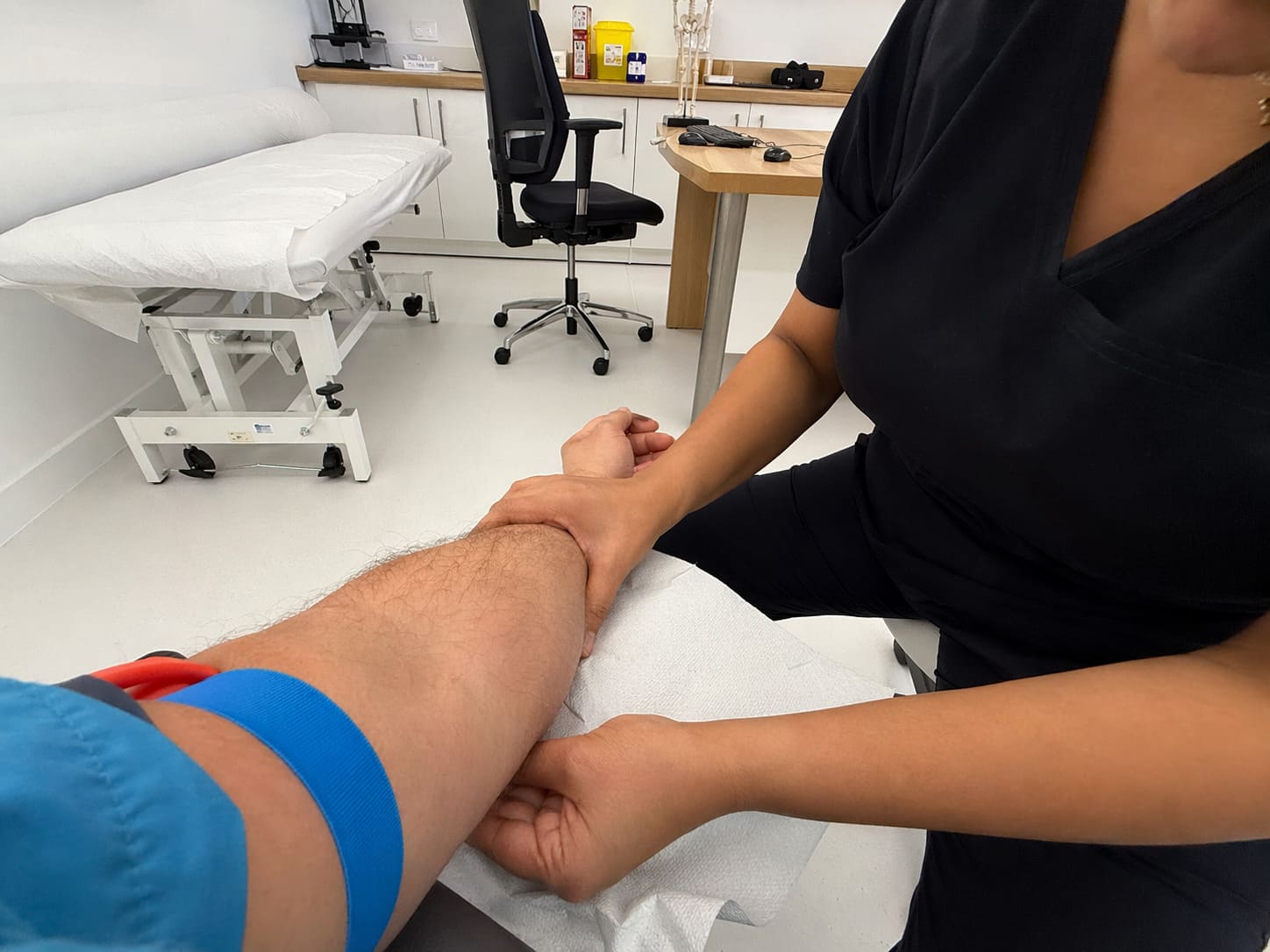
Family history often changes the timing of screening. If close relatives developed heart disease, diabetes, or certain cancers at a younger age, earlier review may be sensible. That is one reason a consultation matters as much as the blood draw itself. Phlebotomy services can collect samples efficiently, but test selection should still be based on individual risk.
Sexual health is another area that men sometimes leave too late. Men’s STI screening is relevant at any age when risk changes, and it is especially useful if there are no symptoms but recent exposure is possible. A negative result can clarify matters quickly. A positive result can be treated or managed before complications develop.
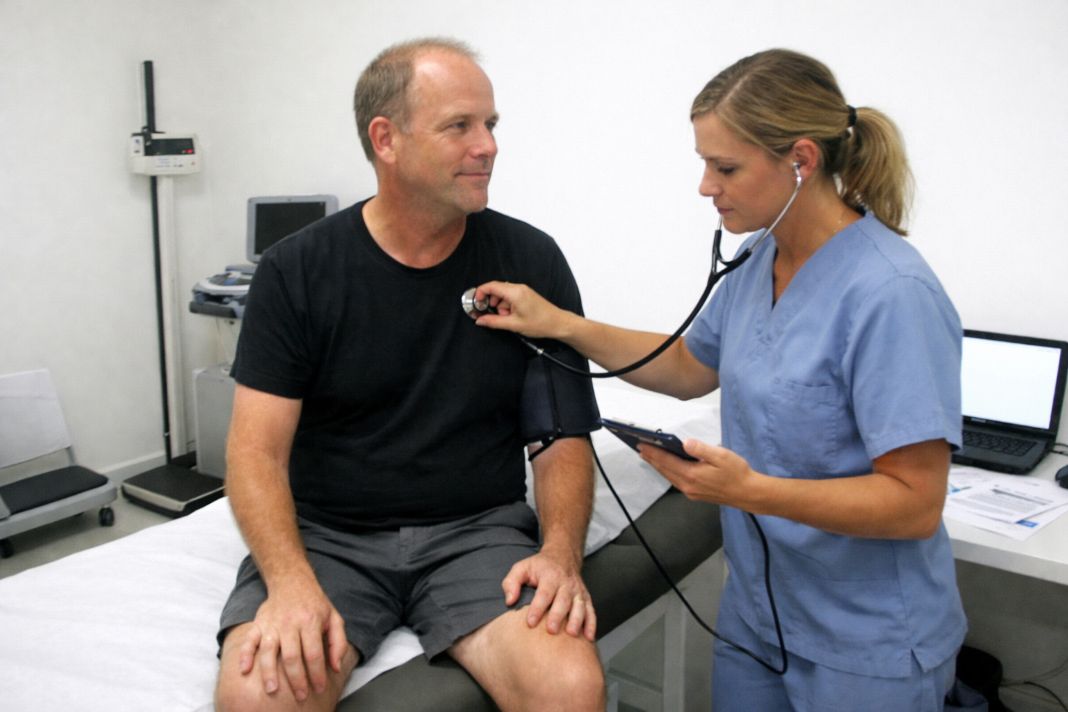
Private Health Men’s MOT Assessment – Illustrative Image
Key health screenings for men in their 40s
By the 40s, screening often becomes less about establishing first numbers and more about tracking change over time. Small shifts in weight, blood pressure, sleep, alcohol intake, and exercise can start to show up in measurable ways.
Several checks commonly become more relevant in this decade:
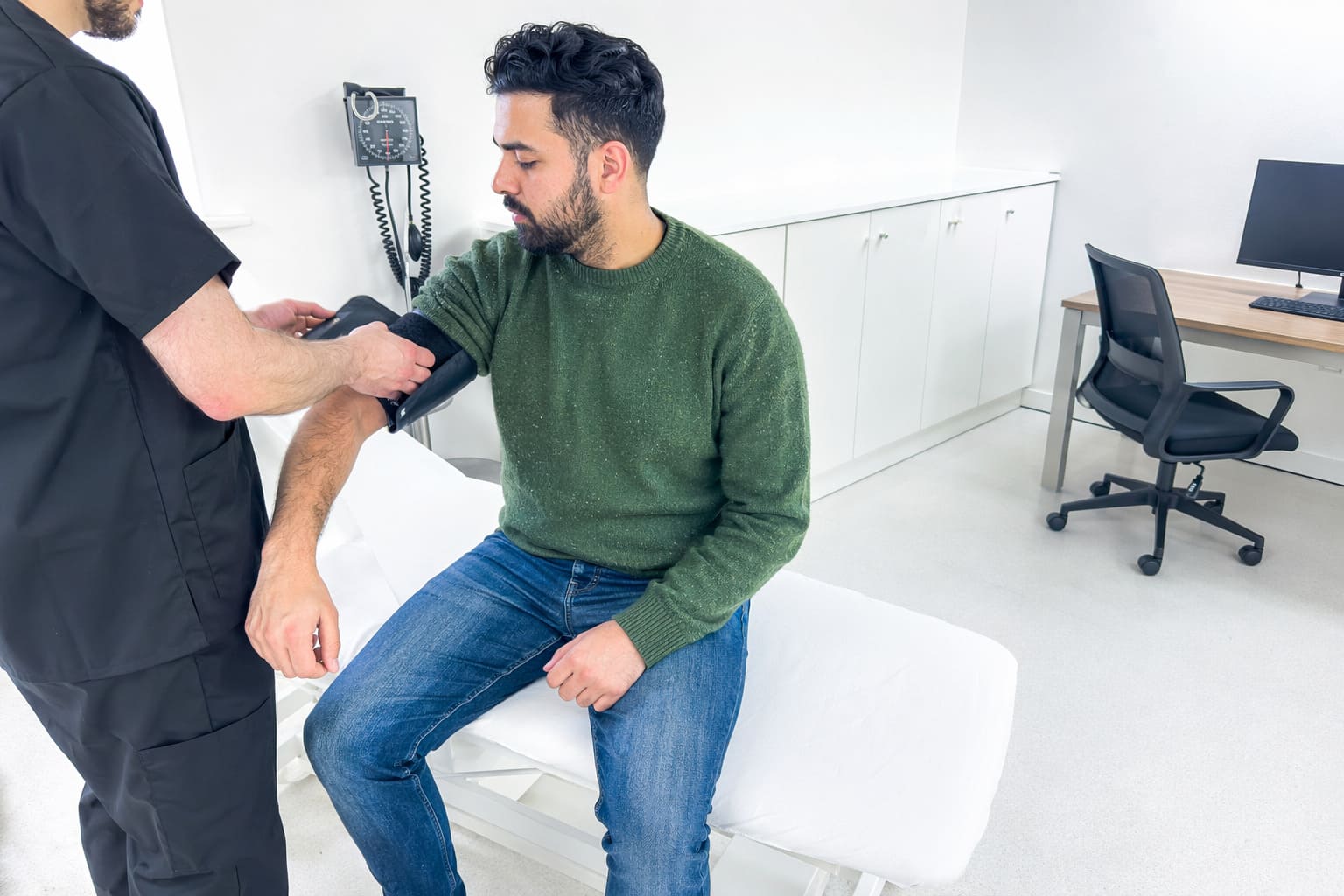
- Cardiovascular risk assessment A GP may review blood pressure, cholesterol profile, smoking status, weight, and family history together rather than as isolated findings. Cardiovascular risk calculators can help place these results in context.
- Diabetes screening Blood glucose or HbA1c testing may be appropriate if there is excess weight, a family history of diabetes, raised blood pressure, or previous abnormal results.
- Cholesterol monitoring A one-off normal result in your 30s does not mean cholesterol never needs revisiting. Frequency depends on earlier findings and overall risk.
- Prostate discussion and PSA testing PSA testing is not a universal screening test for every man in his 40s, but it may be discussed if symptoms, family history, ethnicity, or personal concern make it relevant.
- Review of stress-related health risks Long hours, sedentary work, poor sleep, and sustained pressure can influence blood pressure, weight, alcohol use, and metabolic health. Those factors are common in busy central London working patterns and can shape what testing is useful.
Cancer screening in the 40s is usually risk-based rather than routine across the board. Prostate questions may start earlier for some men, especially with a strong family history. Bowel screening usually becomes more central later, but symptoms such as rectal bleeding, altered bowel habit, or unexplained weight loss require assessment regardless of age.
Future Care Medical offers health checks that can bring these strands together in one review, including GP assessment, blood testing, and onward investigation where indicated, which means that men are less likely to treat each result in isolation.
Important health screenings for men in their 50s
Once men reach their 50s, the screening picture often broadens. Risks that were once theoretical may now be measurable, and conditions such as hypertension, diabetes, and bowel disease become more relevant.
Common areas of focus include:
- Ongoing blood pressure monitoring
- Cholesterol and broader cardiovascular review
- Diabetes screening
- Prostate assessment, including PSA testing where clinically appropriate
- Bowel cancer screening through national programmes or further assessment if symptoms or history suggest it
- Weight, waist measurement, and metabolic review
- Bone health review in selected cases, including bone density scanning if there are risk factors
Bowel cancer screening deserves particular attention in this age group because routine invitations and age-based pathways become more relevant. A man who ignores bowel symptoms because he feels otherwise fit can miss an important early warning sign. Screening and symptom-led investigation are related but different, and both matter.
Prostate health can also become a more frequent topic in the 50s. PSA testing has limits and needs careful interpretation, so it works best as part of a wider clinical discussion that includes urinary symptoms, family history, ethnicity, and examination where needed.
Bone density scanning is not routine for every man in his 50s, but it may be considered after long-term steroid use, low-trauma fracture, hormonal issues, or other risk factors. In the same decade, metabolic screening often picks up gradual changes that built over years rather than months. A fasting blood result may be less informative on its own than a full review of weight trend, blood pressure pattern, and previous readings.
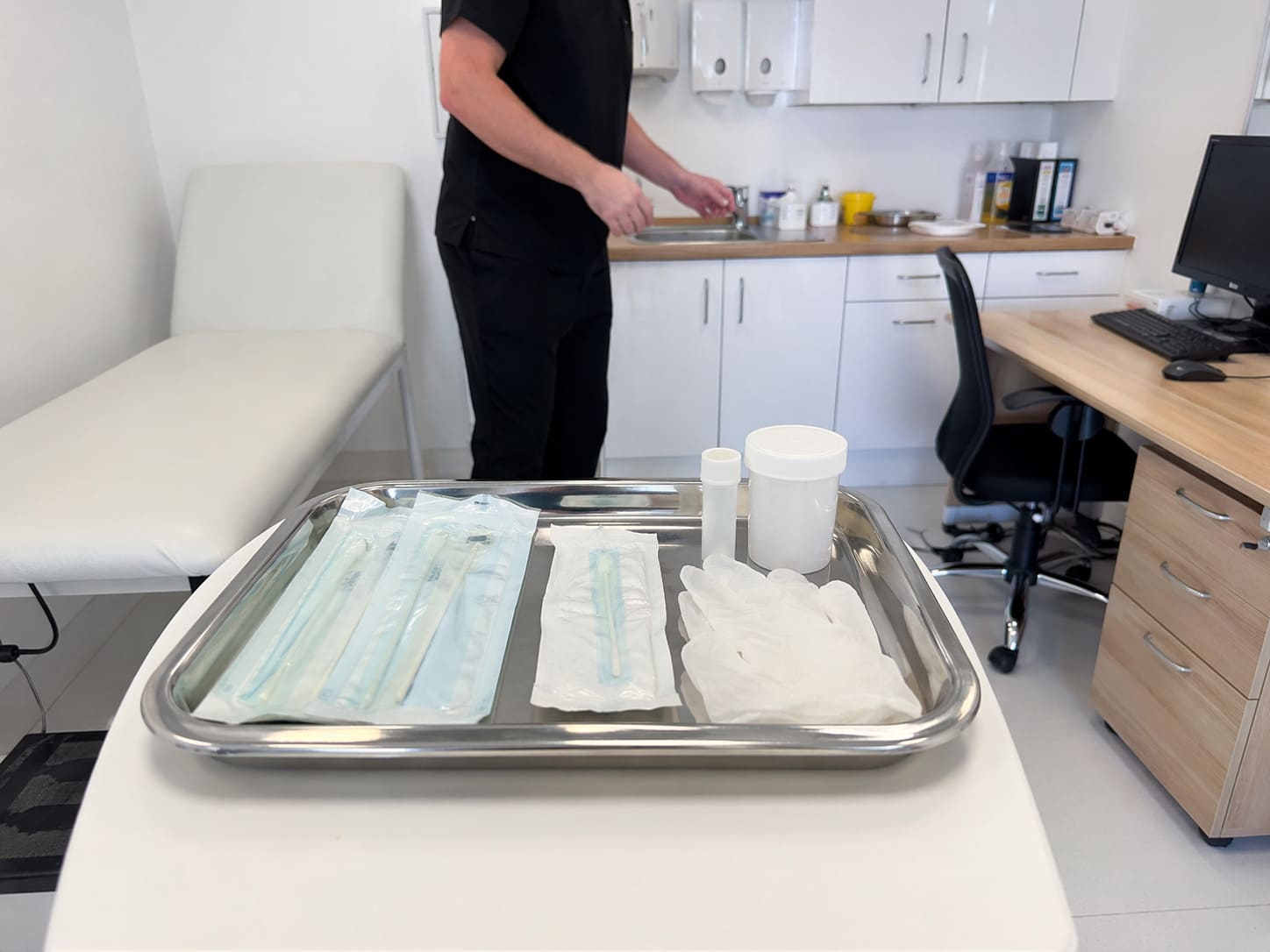
Men’s Health – Sexual Health Testing Preparation – Illustrative Image
What to expect from a private health screening in Central London
A private health screening appointment is usually more straightforward than many people expect. For time-limited professionals in the City of London, the main advantage is often coordination. Consultation, blood testing, and selected diagnostics can be organised in a more joined-up way.
A typical process often looks like this:
- Initial booking and selection of the right level of health check.
- GP consultation with review of medical history, family history, symptoms, medication, and lifestyle risk.
- Measurements and tests, including blood pressure, weight, ECG, blood tests, and other investigations if included or clinically indicated.
- Results review with explanation of what is normal, what needs follow-up, and what should be repeated later.
- Referral or imaging if the findings point to a need for further assessment.
Health check packages at Future Care Medical are priced as follows:
- Important: £350.00
- Full: £450.00
- Executive: £615.00
- Signature: £1,999.00
If a separate GP consultation is needed, current prices are £105.00 for 15 minutes, £160.00 for 30 minutes, and £240.00 for 60 minutes.
Package differences usually relate to the depth of testing and the extent of review rather than a simple good, better, best model. An important screen may suit someone who wants a focused update on basic health markers. An executive or signature assessment may be more appropriate where there is a need for broader testing, consultant input, or additional diagnostics such as imaging.
In central London, convenience often shapes the decision as much as medical detail. A clinic near Liverpool Street, Moorgate, Bank, or London Wall can fit around the working day more easily than a multi-site process spread across different providers, especially if bloods, ECG, and follow-up are arranged within one system.

Mens Health – Sexual Health Guidance Consultation – Illustrative Image
Common misconceptions about men’s health screening
Men’s health screening is often delayed by assumptions that sound reasonable on the surface but do not hold up well clinically.
- “I feel healthy, so I do not need screening.” Many risk factors are silent at first. Raised blood pressure, high cholesterol, and early glucose changes may cause no symptoms.
- “Screening is the same as diagnostic testing.” Screening looks for risk or early change before a diagnosis is established. Diagnostic testing investigates a symptom, abnormal finding, or known concern.
- “Health screening is only for older men.” Age matters, but so do family history, weight, smoking, ethnicity, sexual health risk, and previous results. Men in their 30s may still benefit from baseline screening.
- “Private screening just means extra tests I probably do not need.” Good private screening should be based on clinical judgment, not on testing for its own sake. The useful part is the link between history, examination, test choice, and follow-up.
- “A normal result means I am fine for years.” A normal result reflects a point in time. Screening frequency depends on age, findings, and risk profile, incidentally, those factors can change with work, weight, medication, and family history updates.
Misunderstandings often arise because public screening programmes, GP reviews, and private checks serve slightly different functions. Once that distinction is clear, the value of preventative screening becomes easier to judge on practical terms.
Looking ahead: how screening supports long-term health
Good screening is rarely a one-off event. Health changes with age, but it also changes with work pattern, sleep, medication, family history, and the cumulative effects of habits that once seemed manageable.
A useful result does more than confirm that a test is normal. It helps build a clearer record of what your normal looks like, when it was measured, and what should be checked again later. That matters because future decisions are easier when they are based on trend as well as snapshot.
Preventative medicine works best when risk reassessment keeps pace with real life. A man who needed only baseline blood pressure and cholesterol checks at 33 may need glucose monitoring and prostate discussion at 46, then bowel screening and broader chronic disease review at 55.
Clinical pathways support that shift by turning isolated tests into ongoing health monitoring. With regular review, screening becomes less about reacting to age and more about staying alert to change before it narrows your options.