Which travel vaccines might you need for a summer holiday, and when should you arrange them?
The vaccines you need depend on where you are going, how long you are staying, what you will be doing, and your existing immunisation record. Many travellers should review travel vaccines at least 4 to 8 weeks before departure, because some vaccines need time to work and some are given in more than one dose.
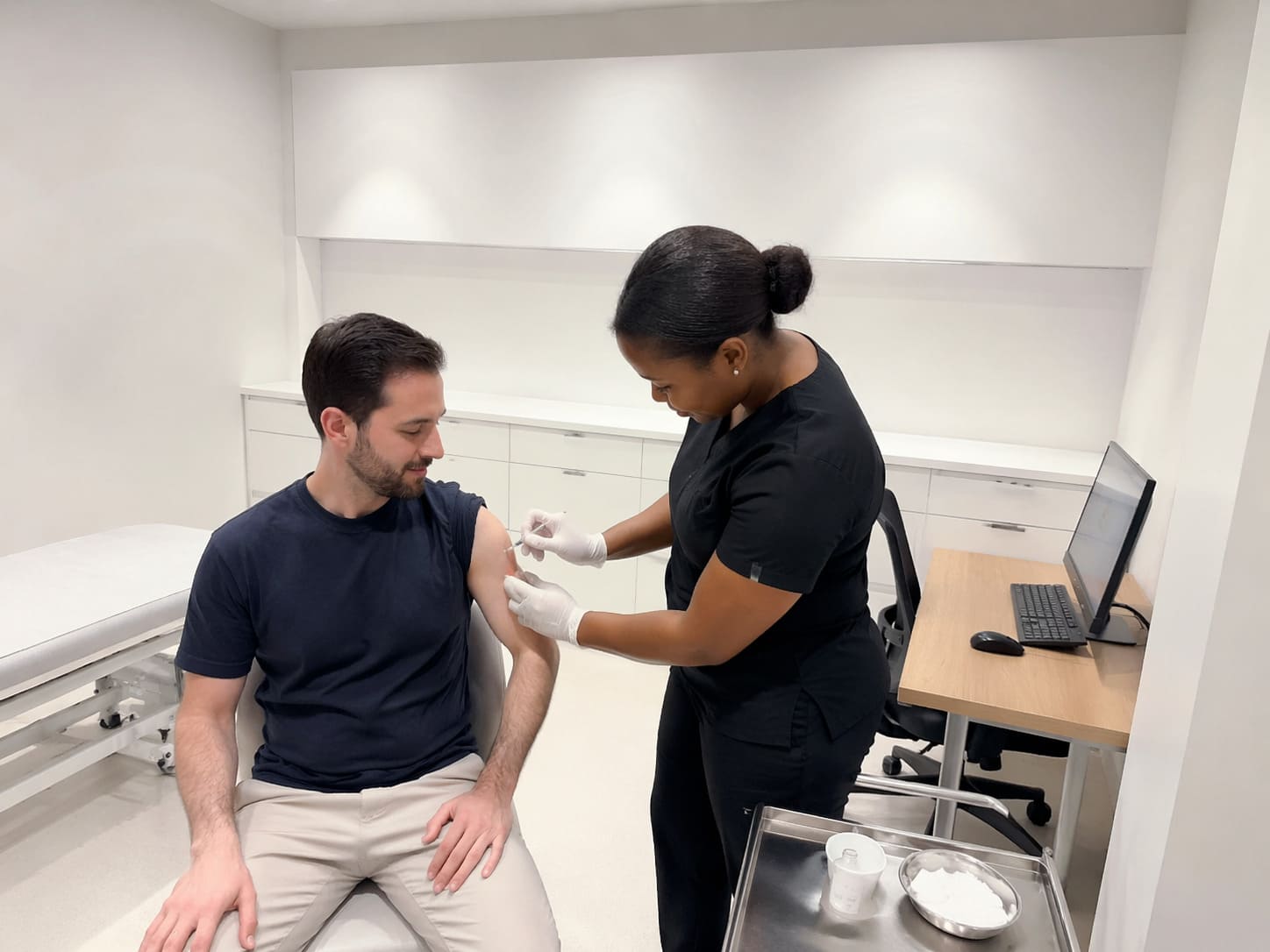
Travel Vaccination in Progress – Illustrative Image
What Is In This Article
Why travel vaccines matter for summer holidays
A summer trip can look straightforward on paper, yet travel health risks often depend on details that are easy to miss. A beach holiday, a family visit, a city break with day trips, or a stopover in another country can each change which travel immunisations are worth considering.
Routine vaccines and travel-specific vaccines are not the same thing. One protects your usual baseline health at home, and the other may be advised because of destination-related exposure.
- Routine immunisations usually include vaccines already offered through the UK schedule, such as tetanus, diphtheria, polio, and MMR.
- Travel vaccines are assessed in relation to the countries on your itinerary, local disease patterns, length of stay, and planned activities, including rural travel or close contact with animals.
Many people assume that popular holiday destinations carry little risk. That assumption can be wrong. Food and water exposure still matters in well-known tourist areas, and local outbreaks can alter guidance at short notice. WHO, NHS Fit for Travel, and the UK Health Security Agency all publish travel health information because preventable diseases abroad remain a real consideration, even on short trips.
Public health also sits in the background. Vaccination protects the individual traveller, but it also reduces the chance of bringing infection back into workplaces, households, and wider communities after the flight home.
Important travel vaccines: what you might need
No single travel vaccine list applies to every summer holiday. Recommendations are shaped by destination, season, accommodation, medical history, and the practical reality of the trip itself.
Some of the most commonly considered vaccines include the following:
| Vaccine or preventive measure | Often considered for | Notes |
|---|---|---|
| Hepatitis A | Destinations where food or water hygiene may be uncertain | Commonly discussed for many holiday destinations |
| Typhoid | Areas where food and water borne infection risk is higher | May be relevant for longer stays or more varied eating patterns |
| Tetanus, diphtheria and polio booster | Travellers whose routine cover is incomplete or out of date | Usually checked as part of travel review |
| Yellow fever | Countries with transmission risk or entry requirements | Some travellers need an official certificate |
| Rabies | Longer trips, remote areas, animal exposure, certain work or activity patterns | Often considered if medical care may be hard to access quickly |
| Japanese encephalitis | Specific parts of Asia, usually depending on season, location, and trip length | More likely for rural exposure than short urban stays |
| Malaria tablets | Areas where malaria is present | This is not a vaccine, but it often forms part of the same travel health discussion |
A business traveller spending three days in a major European city may need little beyond checking routine immunisations. A family heading to a resort in Spain might still need to confirm that standard vaccines are up to date, especially for children. A traveller planning time in South or South East Asia, particularly with internal travel or rural excursions, often needs a more detailed review.
Required vaccines and recommended vaccines are different categories. Required vaccines are tied to entry rules for certain countries, whereas recommended vaccines reflect clinical risk. Yellow fever is the clearest example, because some destinations ask for proof of vaccination even if the traveller is only transiting through a listed country.
Europe sometimes gets treated as vaccine-free in casual conversation, yet that is too broad. Routine immunisation status still matters, and disease exposure does not disappear because a destination feels familiar.
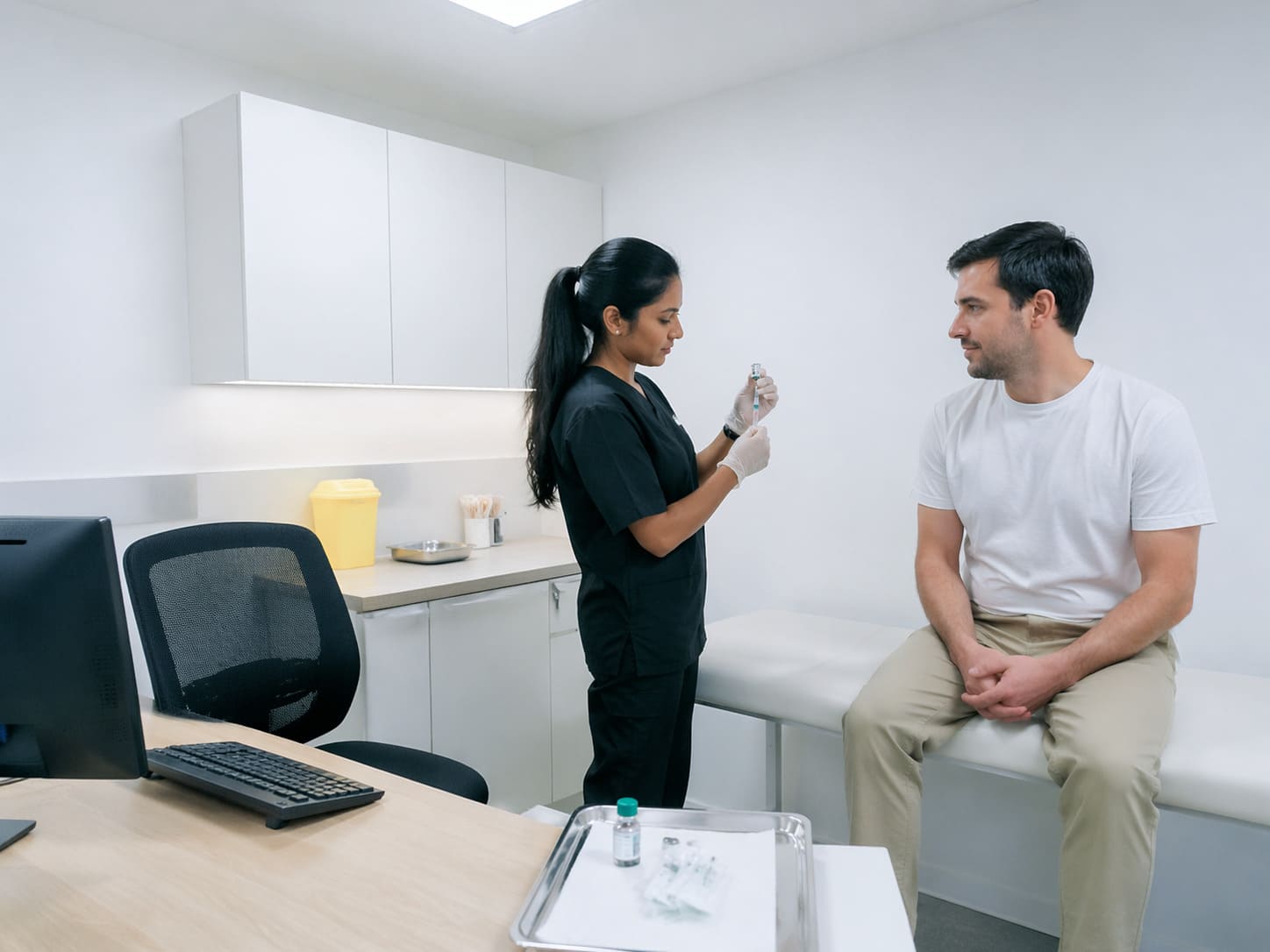
Travel Vaccination Consultation Room – Illustrative Image
How far in advance should you book travel vaccines?
Most people should book a travel health appointment 4 to 8 weeks before departure. That window gives enough time for assessment, vaccine supply, immunity development, and any follow-up doses that may be needed.
A practical way to think about timing is this:
- 8 weeks before travel: ideal for complex itineraries, multi-country trips, or vaccines that may involve a course.
- 6 weeks before travel: sensible for many long-haul holidays where destination-specific vaccines may be advised.
- 4 weeks before travel: often still workable for common travel vaccines, though options may narrow.
- Less than 4 weeks: still worth seeking advice, because some protection may be better than none, but planning becomes tighter.
Some vaccines start working within a shorter period, but others need more time or a staged schedule. Multi-dose courses, destination changes, and a need for documentation can all complicate late bookings. Summer also tends to be a busy travel period, which means appointment availability can become more limited as school holidays approach.
If your holiday starts in July, aiming for a review in May is usually a sensible rule of thumb. Clinics such as Future Care Medical can be useful for people working around Liverpool Street, Bank, Moorgate, or the wider City of London who need appointments that fit around a working day.
Late planning does not always mean that travel has to be cancelled. It does mean that the final recommendation may need to balance time limits, vaccine schedules, and what level of protection can realistically be achieved before departure.
What happens during a travel vaccine appointment?
A travel vaccine appointment is usually straightforward and structured. The main aim is to match your travel health advice to your itinerary, existing immunisation record, and personal medical factors.
A typical appointment often follows these steps:
- Review of your destination, dates, stopovers, and planned activities.
- Check of your past vaccines, medical history, allergies, pregnancy status if relevant, and current medicines.
- Assessment of which vaccines are indicated, which are optional, and whether malaria prevention or other precautions should be discussed.
- Consent and vaccine administration if you decide to proceed.
- Recording of what has been given, with follow-up advice if another dose or certificate is needed.
Clinicians usually ask more than just where you are flying. They may want to know whether you will stay in cities or rural areas, whether you are backpacking or using hotel accommodation, and whether your trip includes trekking, animal contact, or visiting friends and relatives. Those details often matter more than the country name alone.
Documentation can also form part of the visit. Some travellers need a record of vaccines received, and some need formal certification, including the International Certificate of Vaccination where applicable. Future Care Medical, like other private clinics offering travel health services, would be expected to record vaccines clearly and explain any next steps linked to timing or documentation.
Side effects are usually discussed before the injection is given. Common reactions can include temporary soreness at the injection site, mild fatigue, or a short-lived feverish feeling, depending on the vaccine. Specific aftercare advice should be based on the vaccine received and your own health background, rather than on generic travel advice.
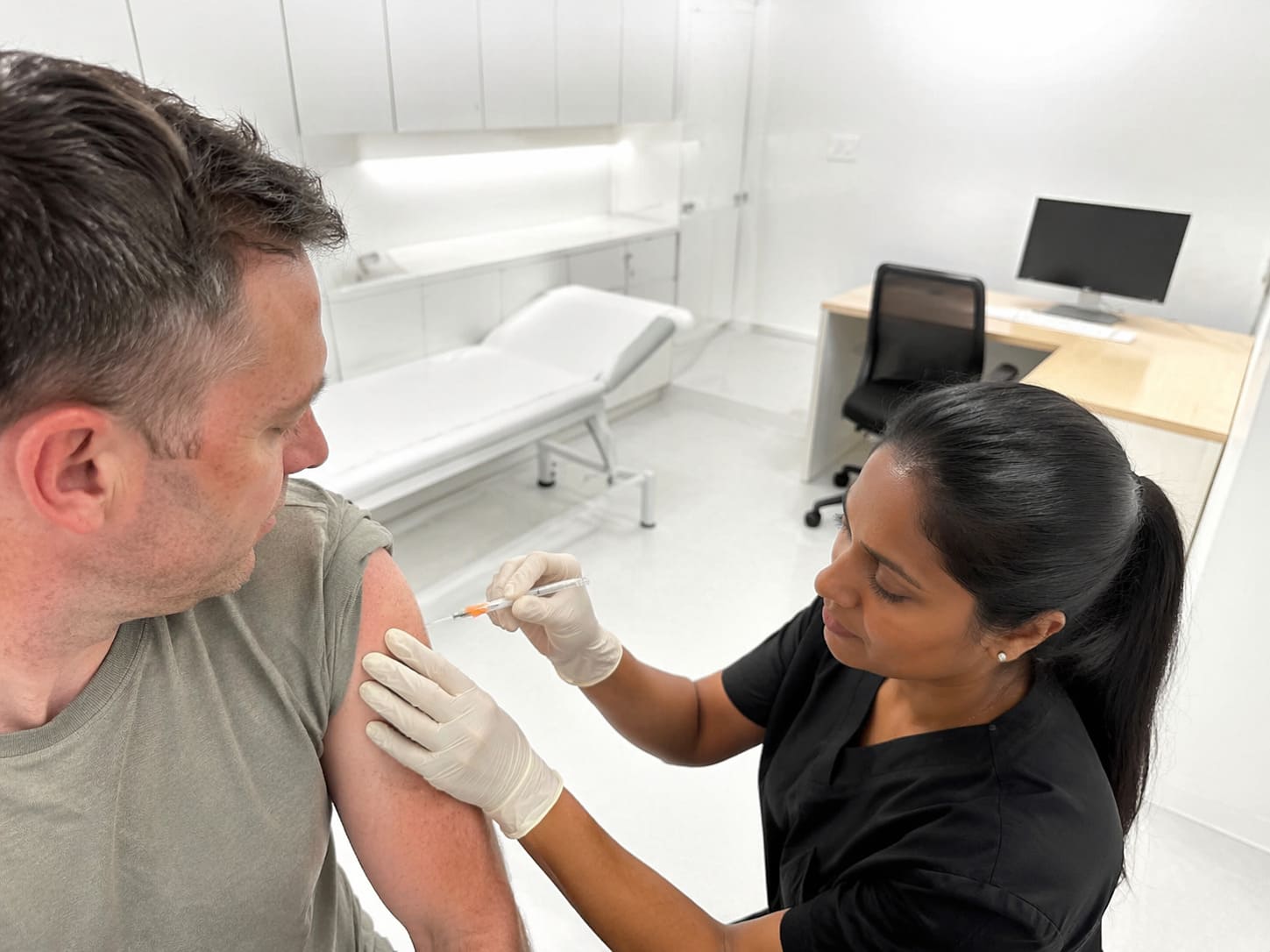
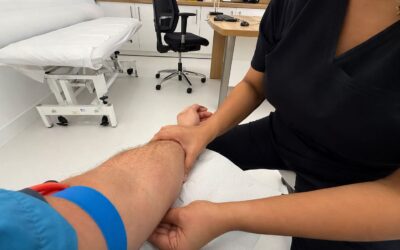
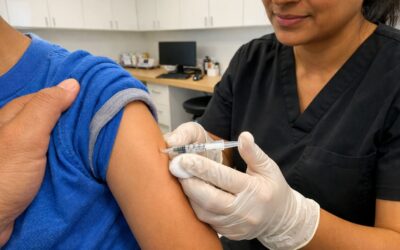
Travel Vaccine Application Detail – Illustrative Image
Costs and practicalities of private travel vaccination in Central London
Private travel vaccination works best when the practical side is clear from the start. That usually means understanding whether you are paying for a consultation, the vaccine itself, or both.
Future Care Medical lists GP consultation prices at:
| Appointment | Price |
|---|---|
| 15-minute GP consultation | £105.00 |
| 30-minute GP consultation | £160.00 |
| 60-minute GP consultation | £240.00 |
Travel vaccine costs can vary because different vaccines have different purchase and administration costs, and some travellers need more than one. For that reason, the total fee often depends on the outcome of the travel health consultation and the final vaccine plan.
Location can matter as much as price for busy professionals. A clinic near London Wall with access from Liverpool Street, Bishopsgate, Broadgate, Moorgate, or Bank can make same-week planning easier, especially for people fitting appointments around office hours, commuting, or international travel schedules.
Private travel clinics may also be useful where timing is tight, where documentation is needed, or where the itinerary is more complicated than a single destination holiday. The practical point is simple: ask what the consultation includes, whether vaccine fees are separate, and whether any follow-up dose is likely to be needed before you leave.

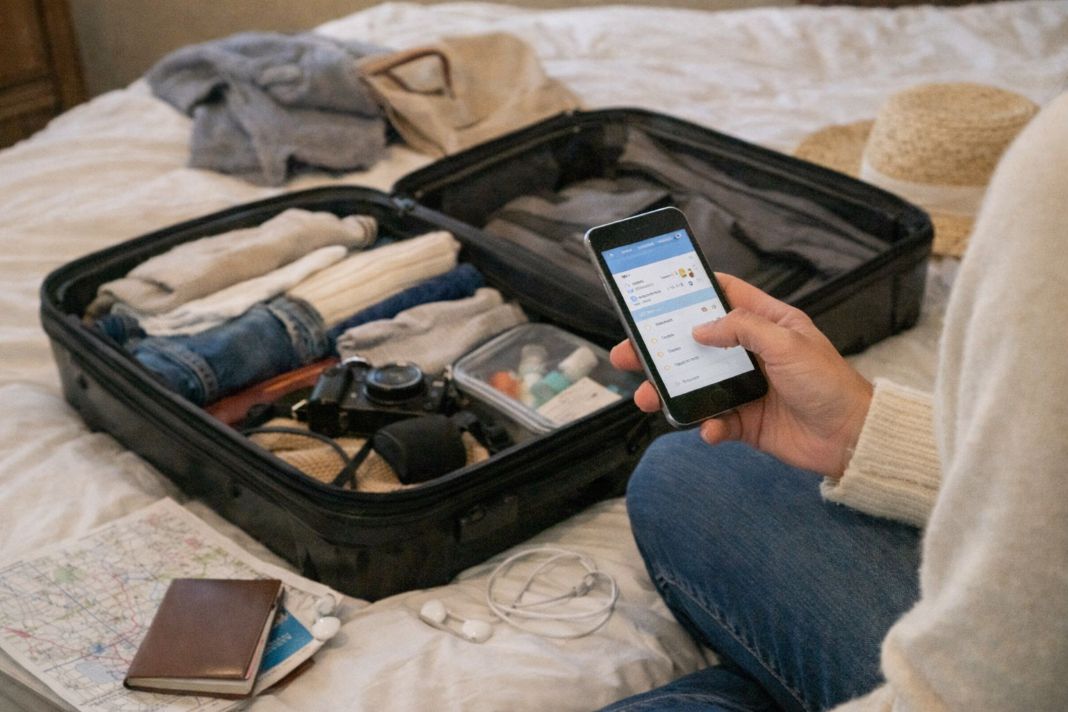
Travel Vaccination Preparation – Illustrative Image
Common misconceptions and overlooked risks
Travel vaccine advice often gets tripped up by assumptions. A few misconceptions appear again and again.
- Short trips do not need vaccines. A four-day trip can still involve food, water, insect, or animal exposure. Duration matters, but so do destination and activities.
- A stopover does not count. Transit through certain countries can affect vaccine requirements, particularly for yellow fever certification. Entry rules should be checked for the full route, not just the final stop.
- Recommended means unnecessary. A recommended vaccine is still based on assessed travel health risk. It is different from a legal entry requirement, but it is not casual advice.
- Western Europe means no vaccine review at all. Routine immunisation status still deserves a check, especially if boosters are overdue or children are travelling.
- Package holidays are automatically low risk. Resort travel can reduce some exposures, yet excursions, local food, day trips inland, and individual medical history can all alter the picture.
One overlooked point is multi-country travel. A route that starts in a low-risk destination and then moves elsewhere may need a completely different assessment from a single-centre holiday. Another is visiting friends and relatives abroad, where longer stays, home-prepared food, and closer community contact can change exposure patterns.
Looking ahead: the changing landscape of travel health
Travel health guidance can shift with outbreaks, seasonal patterns, and changes in entry requirements. WHO updates, UK Health Security Agency notices, and NHS Fit for Travel guidance all matter because a destination profile is never fixed permanently.
Digital vaccine records and formal certificates are becoming more relevant as travel documentation becomes easier to verify across borders. That does not remove the need for early planning, because the record is only useful if the right vaccine was given at the right time.
Frequent travellers sometimes assume that each summer will look much like the last. In practice, new advisories, revised country rules, or altered disease patterns can change what is sensible before departure. The most reliable habit is to treat travel vaccination as part of trip planning itself, right alongside flights, passports, and insurance.