What signs suggest your heart health should be checked before 50?
Four signs deserve proper attention before 50: unexplained shortness of breath or fatigue, persistently high blood pressure, a family history of early heart disease, and an irregular heartbeat or palpitations. These do not always mean a heart problem is present, but they do justify a structured cardiovascular assessment, especially if symptoms are new, worsening, or out of proportion to your usual level of activity.
A lot of people in their forties put heart symptoms down to stress, poor sleep, commuting, or getting older. That can delay useful checks. A heart health review before 50 is often less about reacting to illness and more about identifying risk clearly, while there is still time to act on it.
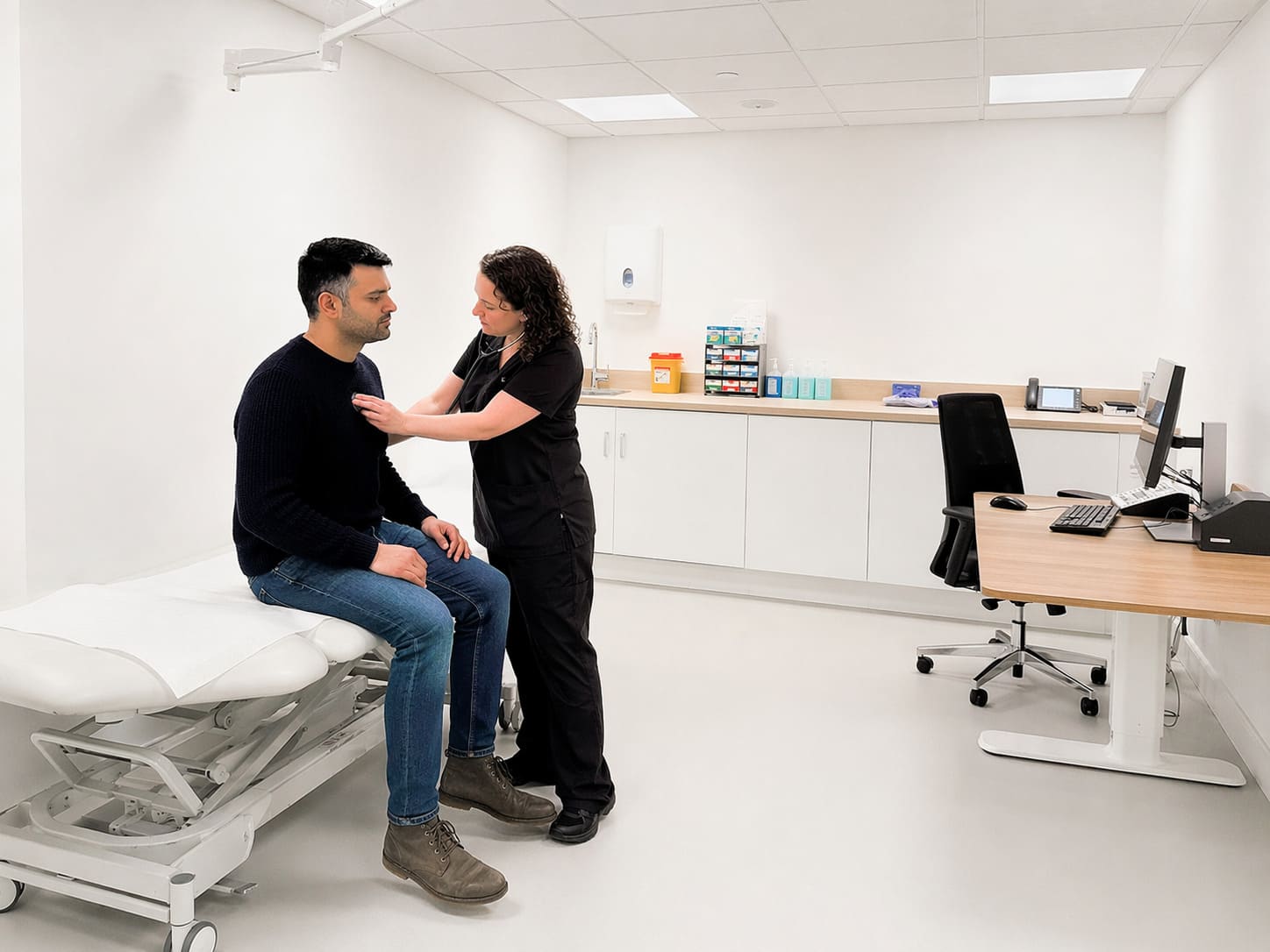
Comprehensive Health Check – Heart and Chest Check – Illustrative Image
What Is In This Article
Unexplained shortness of breath or fatigue
A brisk walk to the station should not suddenly feel harder than it did six months ago. Climbing one flight of stairs at work should not leave you unusually winded if your normal routine has not changed. Shortness of breath and unexplained fatigue can have many causes, but the heart is one of them.
Cardiac-related fatigue often feels different from a late night or a demanding week. Some people notice reduced activity tolerance first. They can still get through the day, but routine effort starts to feel heavier, and recovery takes longer than expected. Clinicians may describe this pattern as exertional fatigue or dyspnoea, which means breathlessness linked to effort.
Normal tiredness usually improves with rest, sleep, or a quieter few days. More concerning symptoms tend to follow a different pattern. They may appear during ordinary tasks, progress gradually, or sit alongside a sense that your baseline has changed.
Warning signs include:
- breathlessness during routine activity that used to feel manageable
- unexplained fatigue that persists despite rest
- needing to stop more often during short walks or stairs
- a noticeable drop in exercise or activity tolerance
- symptoms that are gradually becoming more frequent
Busy professionals often overlook these changes because they arrive slowly. The British Heart Foundation and NHS guidance both support taking persistent symptom progression seriously, particularly if daily function has shifted in a way that does not make sense from workload alone.
Persistent high blood pressure
High blood pressure often produces no obvious symptoms. That is why hypertension is easy to miss in people who otherwise feel well and keep functioning at a high level.
Readings are given as systolic over diastolic pressure. The first number reflects pressure when the heart pumps, and the second reflects pressure when it relaxes between beats. One isolated high reading does not always confirm a problem, since pain, caffeine, poor sleep, and anxiety can affect the result. Repeated elevated readings matter more than a single spike.
Pressure at work may influence blood pressure, but hypertension is not simply a stress issue. Family history, weight, alcohol intake, kidney function, sleep problems, and age can all play a part. NICE guidance supports regular monitoring where readings are raised, especially if other cardiovascular risk factors are present.
Consider a blood pressure check if any of the following apply:
- you have not had a recent reading and you are approaching 50
- previous readings have been borderline or raised
- a close family member had heart disease or stroke at a relatively young age
- you have diabetes, high cholesterol, or carry excess weight around the waist
- headaches, flushing, or feeling tense have led you to rely on home readings without formal review
Home blood pressure monitors can be useful, but the method matters. Cuff size, resting time, body position, and repeated measurements all affect accuracy, so abnormal results should be interpreted as part of a broader cardiovascular risk assessment, not in isolation.

Essential Health Check – Heart and Chest Check – Illustrative Image
Family history of early heart disease
A significant family history usually means heart disease in a first-degree relative, namely a parent, brother, sister, or child, at an earlier than expected age. Many clinicians pay close attention if that disease appeared before 60, especially if more than one close relative was affected.
Inherited risk does not mean a heart problem is inevitable. It does mean that your baseline risk may differ from someone of the same age who has no such history. Symptoms may be absent, blood pressure may seem fine, and fitness may appear reasonable, but genetic risk can still influence what screening is appropriate.
Useful details to gather include:
- which relative was affected
- the age at diagnosis or event
- whether it involved a heart attack, angina, rhythm problem, or sudden cardiac issue
- whether several relatives on the same side of the family were affected
- whether high cholesterol, diabetes, or high blood pressure also runs in the family
That information helps with risk stratification, which means placing your risk in context rather than treating every patient the same. A family history can change the timing and depth of cardiovascular screening protocols, particularly before symptoms develop.

Women’s Health Consultation – Illustrative Image
Irregular heartbeat or palpitations
Palpitations can feel like fluttering, pounding, racing, skipped beats, or a sudden awareness of your heartbeat. Some episodes are brief and harmless. Others point to an arrhythmia, which means an abnormal heart rhythm that may need proper evaluation.
Coffee, alcohol, poor sleep, anxiety, fever, and some medicines can trigger palpitations. Even so, frequency, pattern, and associated symptoms matter. A single isolated flutter after a bad night is different from repeated episodes with dizziness, breathlessness, or chest discomfort.
An ECG, short for electrocardiogram, records the heart’s electrical activity and can help identify rhythm disturbances such as atrial fibrillation and other arrhythmias. If the episode is intermittent, a symptom diary can also be useful. Timing, duration, triggers, and how the episode felt can all help shape the next diagnostic step.
Seek assessment if you notice:
- repeated palpitations over days or weeks
- an irregular heartbeat that feels new
- episodes linked with light-headedness or faintness
- rhythm changes accompanied by chest pain or breathlessness
- a racing heart that occurs without obvious trigger
At Future Care Medical, a heart rhythm check may include a GP review, blood pressure measurement, and ECG as part of a structured diagnostic pathway. For someone working around Liverpool Street, Moorgate, or the wider City of London, that kind of organised assessment can fit more easily into a normal working day than many people expect.
What a heart health check involves before 50
A heart health check before 50 is usually straightforward. The aim is to build a clear picture of symptoms, risk factors, and any early signs that need follow-up, instead of relying on one test alone.
In practice, the process often includes:
- A consultation covering symptoms, family medical history, smoking status, alcohol intake, exercise pattern, and any relevant medicines.
- Basic measurements such as blood pressure, pulse, weight, and sometimes waist circumference.
- Blood tests where indicated, including cholesterol, blood sugar, and other markers linked to cardiovascular risk.
- An ECG if palpitations, chest symptoms, or rhythm concerns are part of the picture.
- A review of results with recommendations based on your individual risk profile.
Some people need only a focused cardiovascular review. Others benefit from a broader private health assessment if heart risk sits alongside metabolic concerns such as raised cholesterol, borderline blood sugar, or weight gain around midlife.
Future Care Medical offers health screening packages priced at £350 for Important, £450 for Full, and £615 for Executive. Pricing matters here mainly because many readers want to know whether a structured check is likely to involve a brief GP appointment, a broader screening package, or targeted diagnostics based on symptoms.
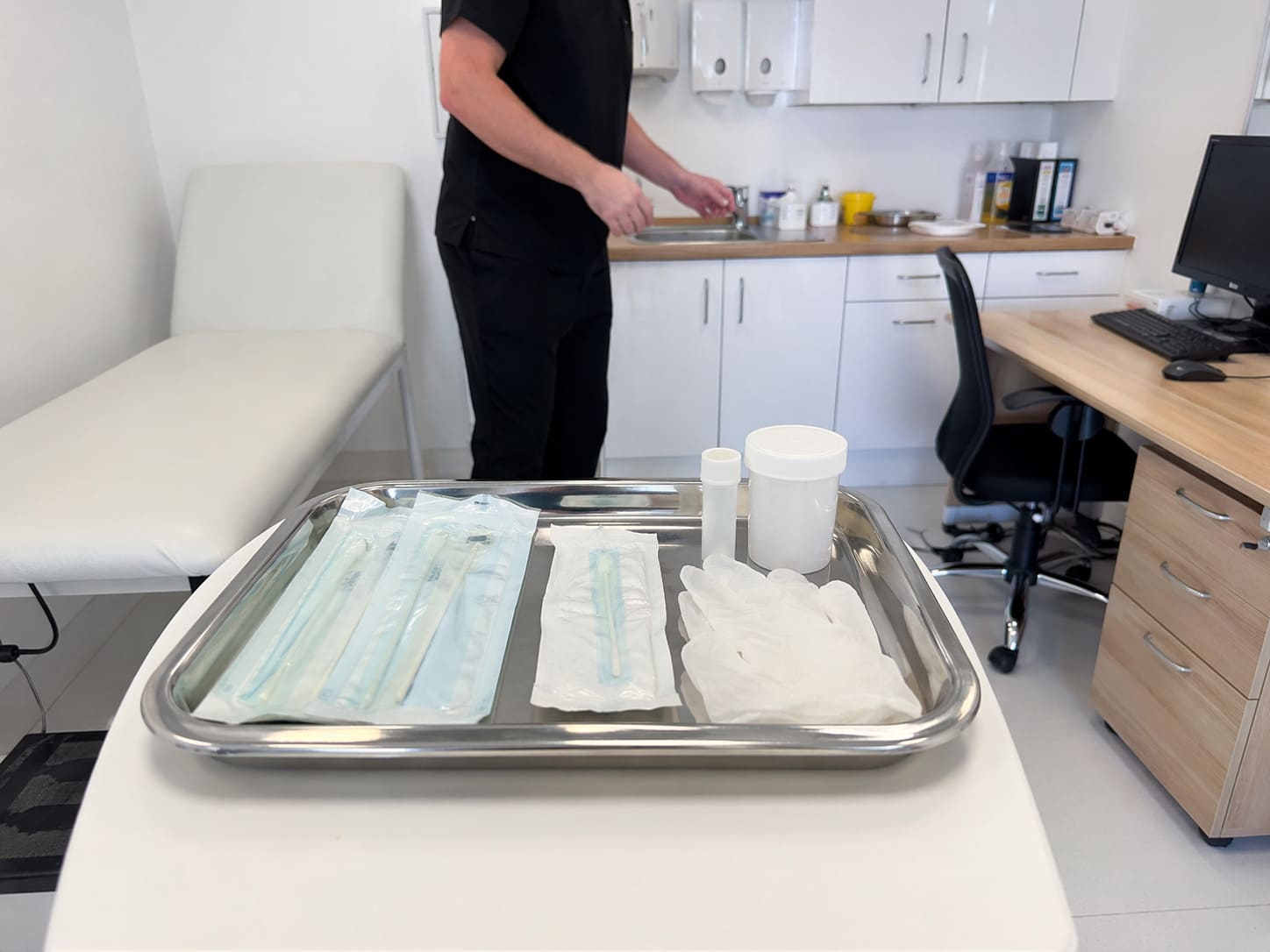
Men’s Health – Testing Preparation – Illustrative Image
Why early heart health checks matter and what people often overlook
Heart disease is often imagined as something that arrives later, loudly, and without warning. Real life is usually less neat. Risk often builds quietly through blood pressure, cholesterol, inherited factors, and subtle symptom changes that are easy to dismiss when work is busy and daily life is full.
Many people delay checks because they feel functional. They can still commute, still work long hours, and still get through meetings, so the threshold for taking breathlessness, fatigue, or palpitations seriously becomes higher than it should be. Feeling generally well is not the same as being low risk.
Public health campaigns have long tried to move heart care closer to prevention, yet screening uptake still tends to lag behind awareness. Part of the issue is perception. A cardiovascular risk assessment can sound like something reserved for older age or obvious illness, when in fact it is often most useful before either of those things is true.
Before 50, the most useful shift is often a simple one: treat heart checks as part of routine health maintenance, in the same way you would review eyesight, dental health, or blood tests after a noticeable change. That mindset leaves more room for measured decisions, clearer risk planning, and fewer assumptions based on age alone.