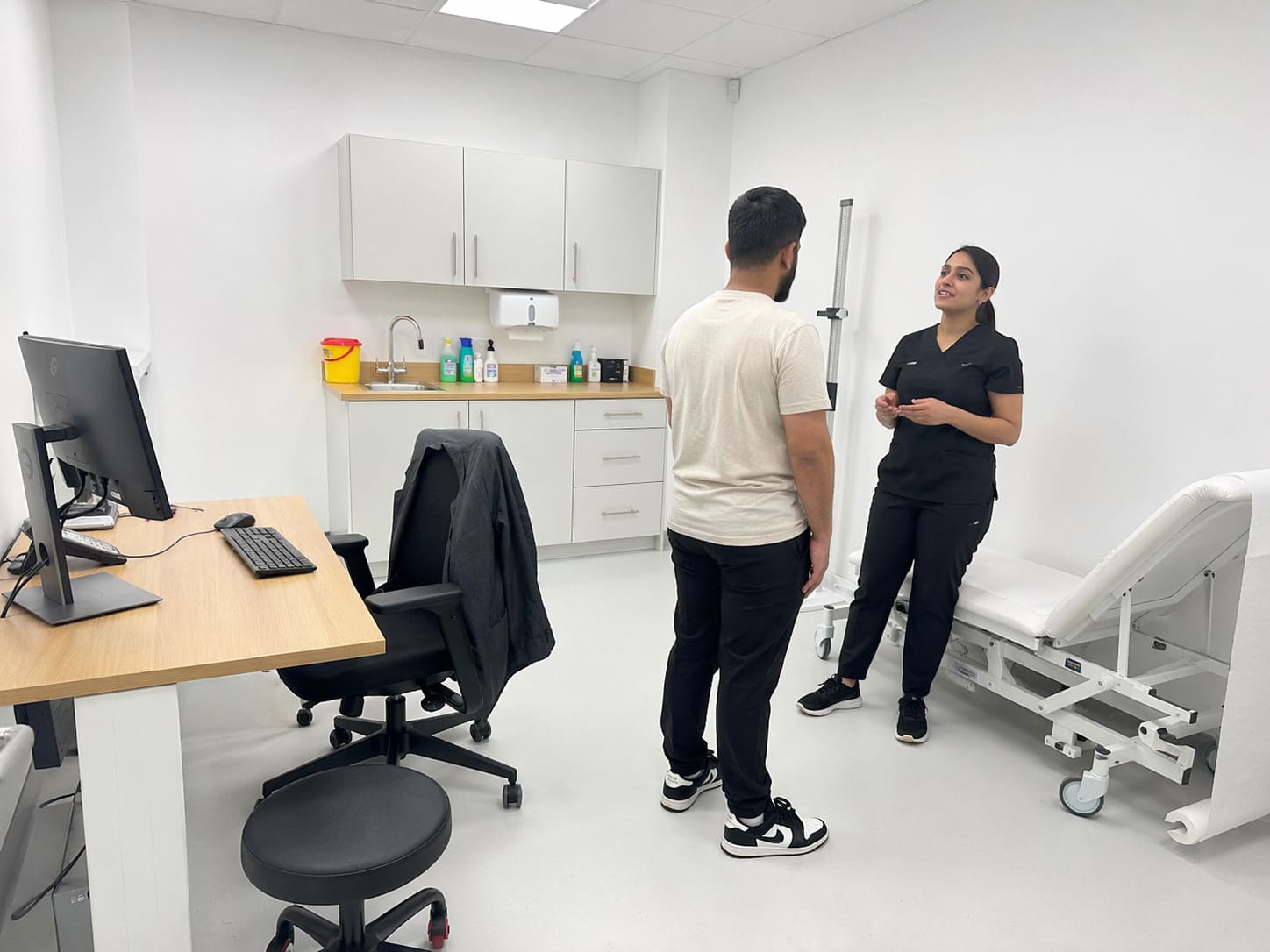
Should you get a health check if you feel healthy?
Yes, a health check can be worthwhile when you feel well if it is chosen based on your age, family history, lifestyle and previous results. The aim is to define your risk profile, especially for silent cardiovascular and metabolic risks, rather than collect the largest possible set of tests.
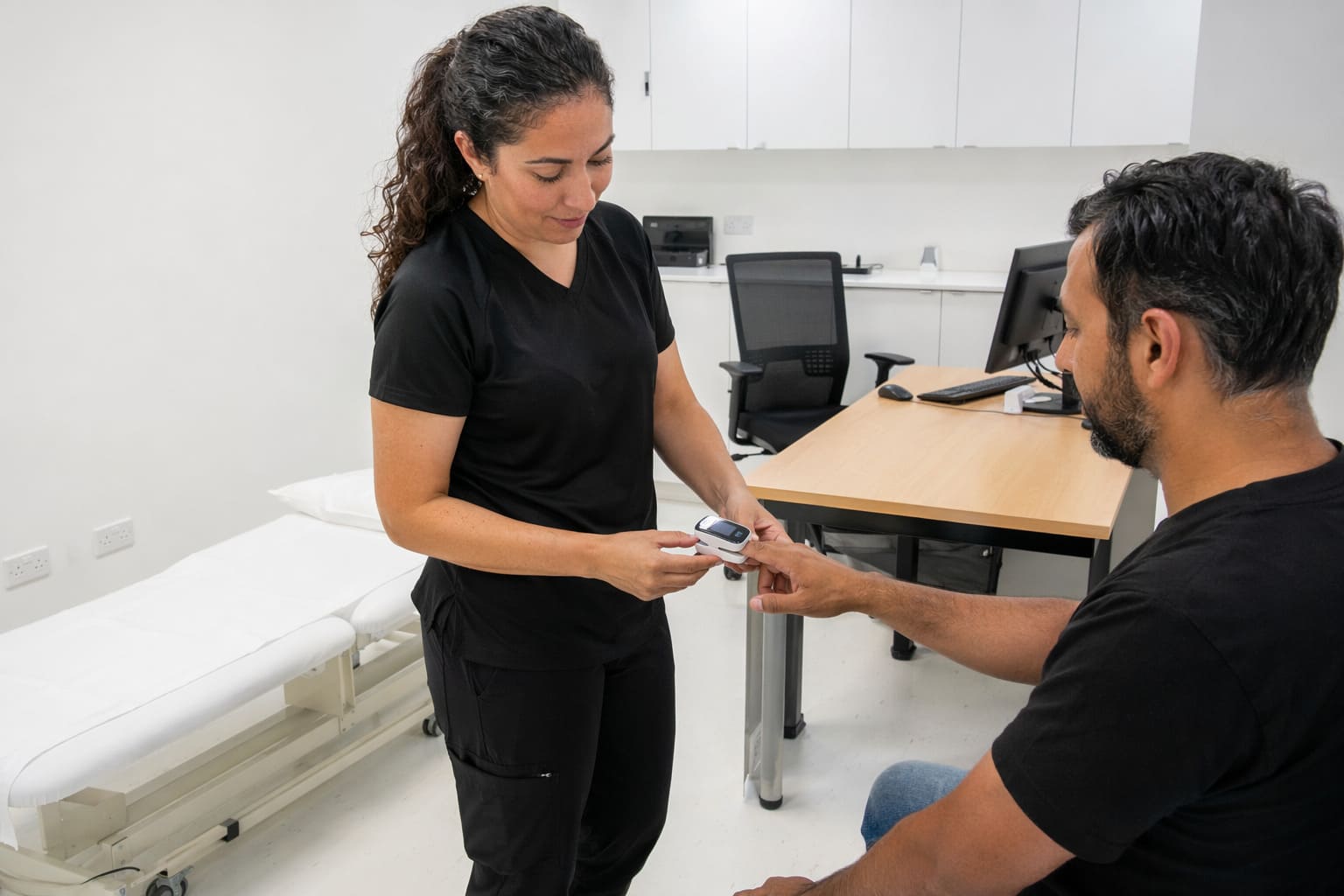
Comprehensive Health Check – Oxygen and Pulse Check – Illustrative Image
What Is In This Article
Feeling well can still leave your risk profile unknown
Feeling fine is useful information, but it is not a risk assessment. Blood pressure, cholesterol and blood sugar can move in the wrong direction without giving you a clear warning day to day. That is why a health check when feeling well can make clinical sense.
Prevention works best when each test has a reason. Blood pressure testing can show raised pressure that you would not otherwise notice. Cholesterol testing can identify a risk factor that affects your future cardiovascular risk score. Blood sugar testing can point to metabolic risk before you have obvious symptoms.
Screening also has a limit. A normal result can be useful at that point in time, but it does not prove that you are protected for the future. Any private health check without symptoms needs proper selection and interpretation, because more tests can also create more uncertainty.
Screening, NHS checks and diagnostic tests do different jobs
Screening, risk assessment and diagnostic testing answer different questions. Mixing them together is one of the main reasons health checks become confusing.
A National Health Service (NHS) Health Check is an established cardiovascular risk check for eligible people aged 40 to 74 who do not already have certain pre-existing conditions, with invitations normally every 5 years. It can help assess risk of heart disease, diabetes, kidney disease and stroke. Diagnostic testing, by contrast, investigates a symptom, examination finding or abnormal screening result.
| Type of check | Who it is for | What it can and cannot tell you |
|---|---|---|
| Population screening | People in a defined group who appear well | It looks for higher risk in a group. It does not diagnose every condition. |
| NHS Health Check | Eligible adults in a set age range without specified existing conditions | It assesses cardiovascular and related risk. It does not replace symptom-led medical assessment. |
| Targeted private health assessment | Someone who wants a risk profile based on their age, history and current measurements | It can add convenience and broader assessment where clinically indicated. It still needs clear reasons for each test. |
| Diagnostic testing | Someone with symptoms, signs or an abnormal result | It investigates a specific concern. It is not the same as general screening. |
NHS screening programmes, including cervical, breast and bowel screening, sit in their own pathways. The United Kingdom National Screening Committee (UK NSC) advises on screening programmes where the benefits are judged to outweigh the harms for the group being offered the test.
Private health screening in the United Kingdom can sit alongside these programmes, but it should not be treated as a blanket replacement. A good private health assessment explains what each test is meant to answer, what a normal result means, and what will happen if a result needs follow-up.

Comprehensive Health Check – Blood Pressure Check – Illustrative Image
The useful checks are tied to your actual risk
A 39-year-old office worker in the City of London can feel completely well and still have no recent blood pressure reading, no cholesterol result and a family history that changes the value of screening. That person does not need a random menu of tests. They need the right questions first.
Test choice should be shaped by the details that change clinical risk:
- Age and sex affect which checks are relevant and which NHS screening programmes already apply.
- Family history matters most when close relatives have had cardiovascular disease, diabetes or certain cancers.
- Smoking, alcohol and physical activity help place blood results in context, because the same result can mean different things in different people.
- Medication, previous results and current measurements stop a health check from starting from scratch when useful information already exists.
- Body mass index (BMI), which relates weight to height, and waist measurement can add context to metabolic and cardiovascular risk.
For many busy professionals around London Wall, Liverpool Street, Moorgate and Bank, convenience is part of the decision. Speed has value when it makes assessment easier to fit around work, but convenience should never replace clinical judgement.
Future Care Medical lists structured health check packages from £350 for Essential to £1,999 for Signature. That range matters less than fit. A smaller, well-chosen assessment can be more useful than a larger panel that produces results no one has clearly linked to your age, history or risk profile.
Extra testing earns its place when it answers a defined clinical question. Without that question, a longer report can leave you with data and no decision.

Essential Health Check – Heart and Chest Check – Illustrative Image
Normal and abnormal results both need interpretation
Tests produce numbers, categories and flags. Clinical judgement turns those findings into decisions.
A normal screening result usually means lower risk at that time, not a promise about the future. A higher-risk screening result does not always mean the condition is present, because diagnostic testing may be needed to confirm what is going on. Screening tests are not perfect, and false positive or false negative results are possible.
A sensible health screening follow-up pathway is simple enough for a patient to understand:
- Review the result against your age, history, medication and previous tests.
- Interpret whether the finding is normal, borderline, abnormal or unclear.
- Confirm significant findings with diagnostic testing where appropriate.
- Set a monitoring or treatment plan if the result changes your risk.
- Record what needs repeating and what can be left alone.
A borderline cholesterol result, for instance, does not mean the same thing for every person. The relevance depends on the wider cardiovascular risk score, family history and other measurements taken at the same assessment. That is why a general practitioner (GP) review is part of a useful health screening follow-up, not an optional add-on.
Testing without interpretation leaves you doing the hardest part alone. Proper follow-up gives each result a place in a decision.
Risk tracking beats test collecting
Longer-term value comes from interpretation and tracking. A single health check can establish a baseline, but repeated comparable results are often more useful than a larger one-off report that no one uses again.
Future Care Medical fits this model as a central London clinic where health checks sit within a wider clinical pathway, including GP review and further assessment where clinically indicated. For a time-limited City professional, that structure matters because the work does not stop when the blood test is taken.
One approach is to buy the broadest test bundle available and hope the size of the panel equals prevention. The better long-term approach is to use a targeted health check to define your risk, decide what needs watching and avoid chasing results that do not answer a clear question. Prevention works best when it creates a record you can act on.
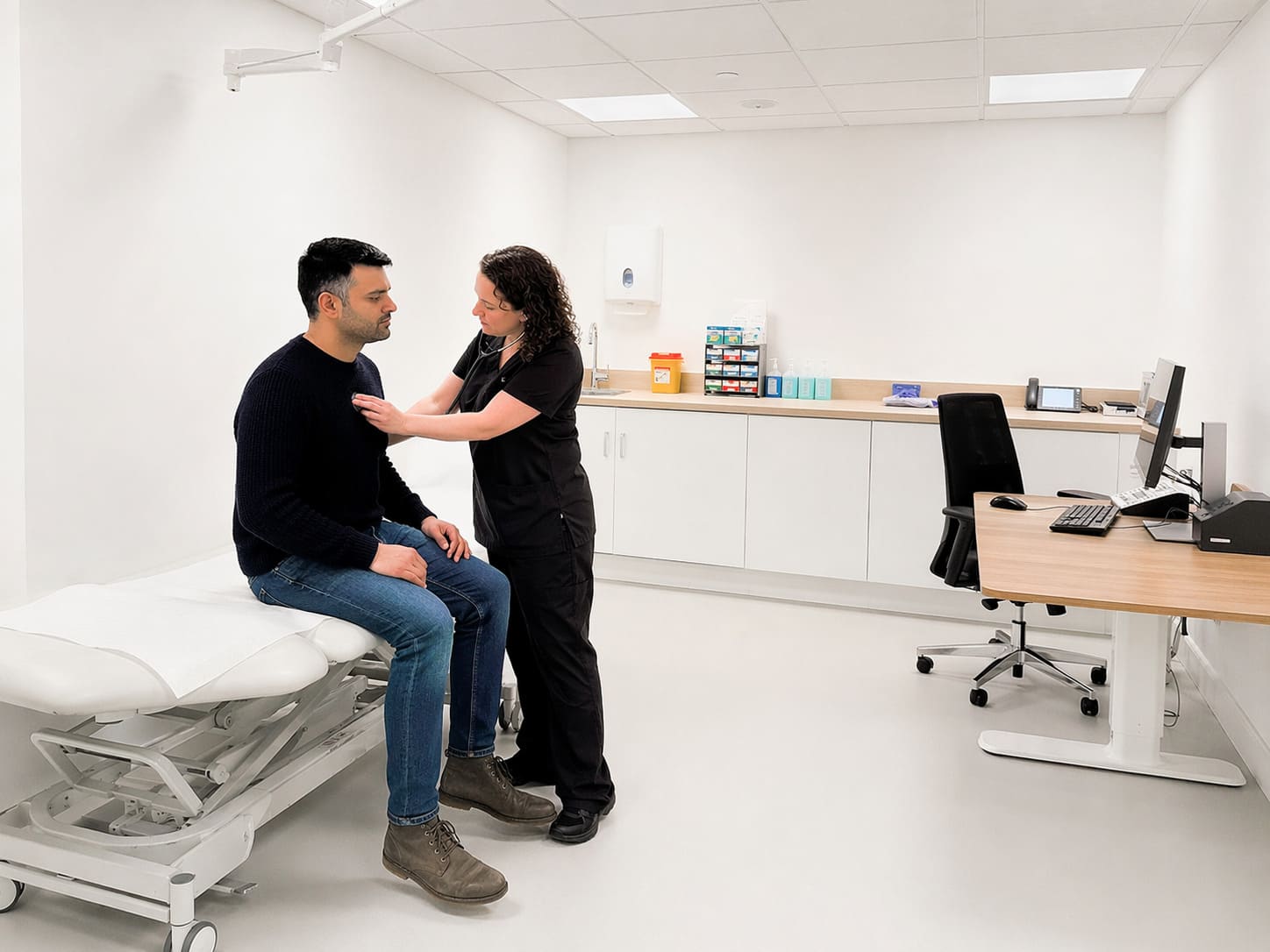
Comprehensive Health Check – Heart and Chest Check – Illustrative Image
Common questions about health checks when you feel well
Can a health check detect cancer?
A health check can include some cancer-related screening or tests where they are clinically appropriate, but it cannot rule out cancer. Age-based NHS screening programmes and symptom-led assessment remain separate parts of safe care.
How often should you have a routine health check in the United Kingdom?
The right interval depends on your age, risk factors, previous results and whether you are already in an NHS screening pathway. Eligible people aged 40 to 74 are normally invited for an NHS Health Check every 5 years.
Do you need to fast before a private health check?
Some blood tests require fasting and others do not. The clinic or clinician arranging the health check should tell you beforehand if fasting is needed for your specific tests.
What should you bring to a health check appointment?
Bring a list of current medication, any recent test results and details of relevant family history. Those details help the clinician interpret results properly instead of treating each number in isolation.
Is a private health check worth it if you already use NHS screening?
A private health check can be worthwhile if it answers a question that your current screening pathway does not cover, such as a personalised cardiovascular or metabolic risk review. It should work alongside NHS screening, not duplicate it without a reason.
This is general information, not medical advice.