How much does private allergy testing cost in London?
A targeted blood test runs from about £50 to £150. Skin prick testing is more, at roughly £150 to £350, and the same again for a broad blood panel. Specialist component testing reaches £500. On top of the test itself, expect a consultation fee, commonly £150 to £300 privately, and check whether blood collection, laboratory work and someone actually explaining the results are inside that or billed separately.
Our own GP consultations are £105 for fifteen minutes, £160 for thirty and £240 for an hour. Testing and any specialist referral sit outside that.
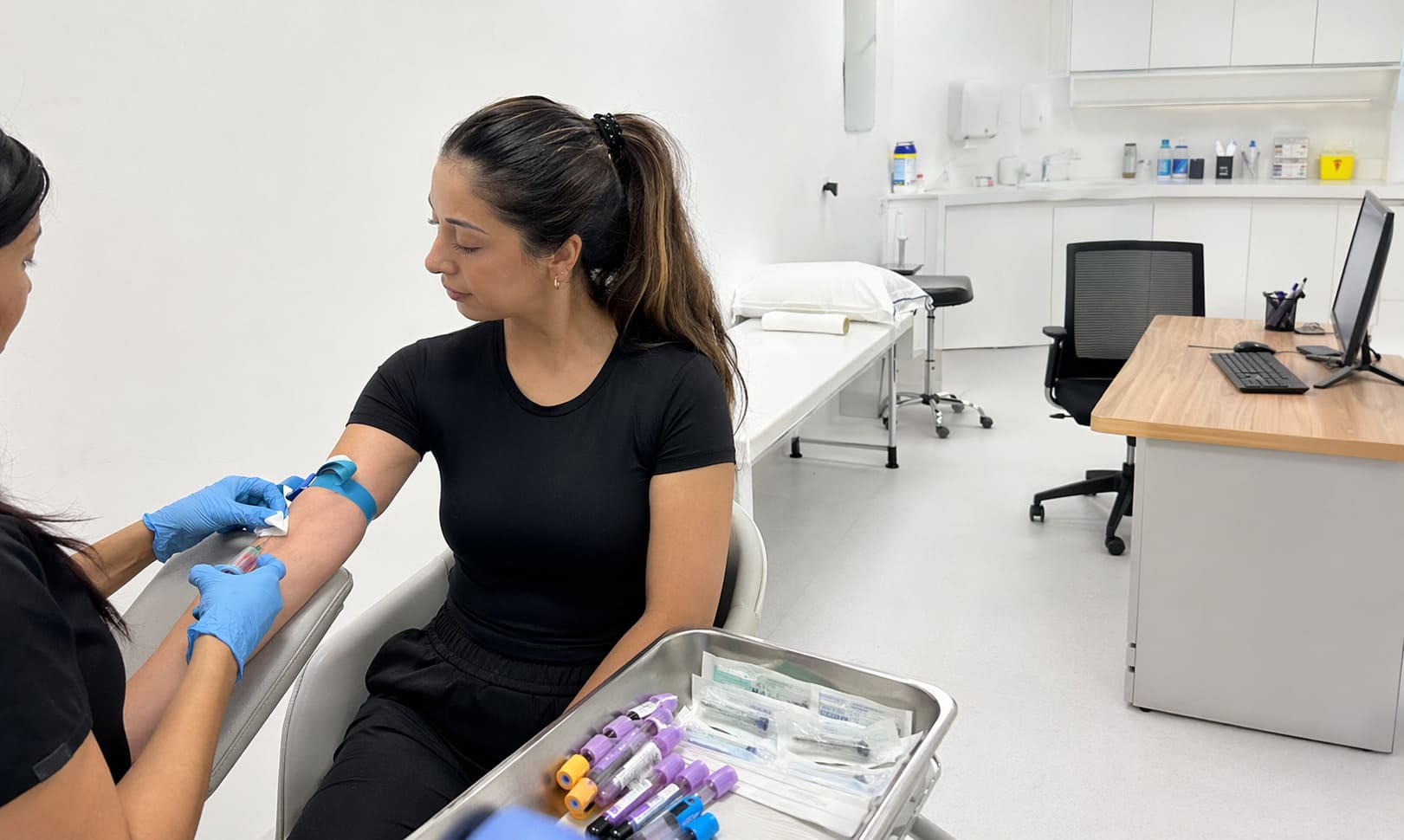
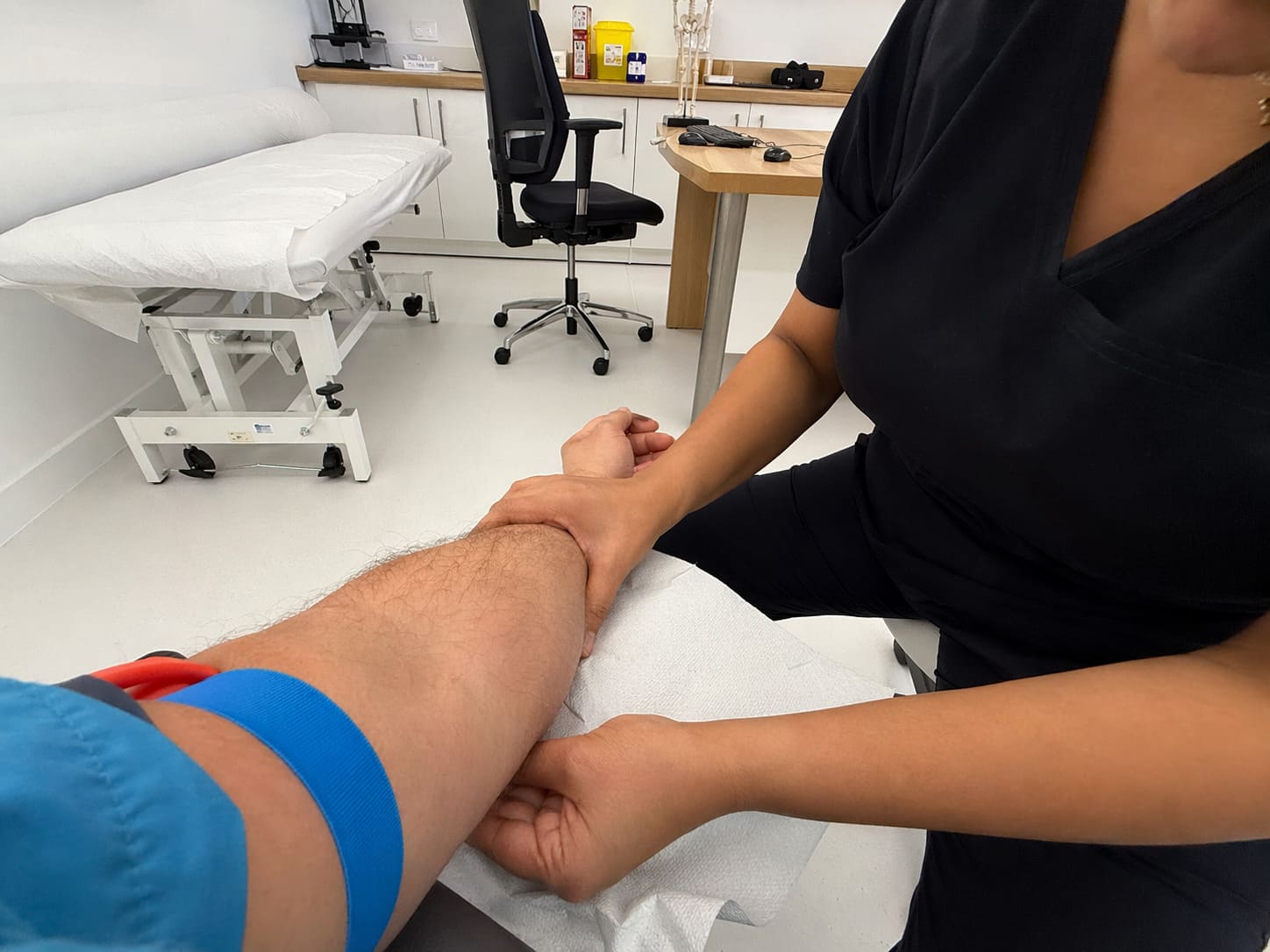
Women’s Health – Blood and Hormonal Test – Blood Test In Progress – Illustrative Image
What Is In This Article
What the test price leaves out
The number in the advert is usually the laboratory cost. It is rarely the cost of finding out what is wrong with you.
| Test type | Indicative price | What is often extra |
|---|---|---|
| Specific IgE blood test | £50 to £150 | Blood collection, laboratory handling, and the appointment where results are explained |
| Skin prick testing | £150 to £350 | The consultation before it, and the review afterwards |
| Broad blood panel | £150 to £350 | Consultation and follow-up advice, which matter more here than anywhere, because broad panels generate the most results needing interpretation |
| Component-resolved diagnostics | £200 to £500 | Specialist assessment, since this is rarely ordered without one |
Those are indicative UK market figures rather than fixed prices, and they move between providers.
Ask for it itemised. A quote that covers consultation, phlebotomy, meaning the blood draw itself, laboratory analysis and a results review is a quote you can compare. One that says “allergy test, £95” is not.
A good history decides which test is worth doing
No test is worth ordering until someone has established what they are looking for. The Royal College of Pathologists uses a four-part framework called STAR:
- Symptoms. What actually happened. Hives, swelling, wheeze, vomiting, diarrhoea.
- Timing. How long after exposure it started. Immediate, IgE-mediated reactions typically begin within minutes to about an hour of exposure.
- Allergen. The suspected food, pollen, animal or other trigger.
- Reproducibility. Whether the same thing happened again after the same exposure. This is the one people forget, and it is often the most informative.
A targeted test answers a defined question. A broad panel returns a longer list of results, some of which will be positive for things that have never caused you a symptom in your life, and those are the results that lead to unnecessary food avoidance.
The Royal College of Pathologists advises against routine broad screening where the history does not point at likely triggers, and says total IgE on its own adds little to routine allergy investigation.
Worth noting too: allergy and food intolerance are different conditions with different diagnostic routes. An allergy test cannot answer an intolerance question, which is why so many people come away from broad panels no clearer about their digestive symptoms.
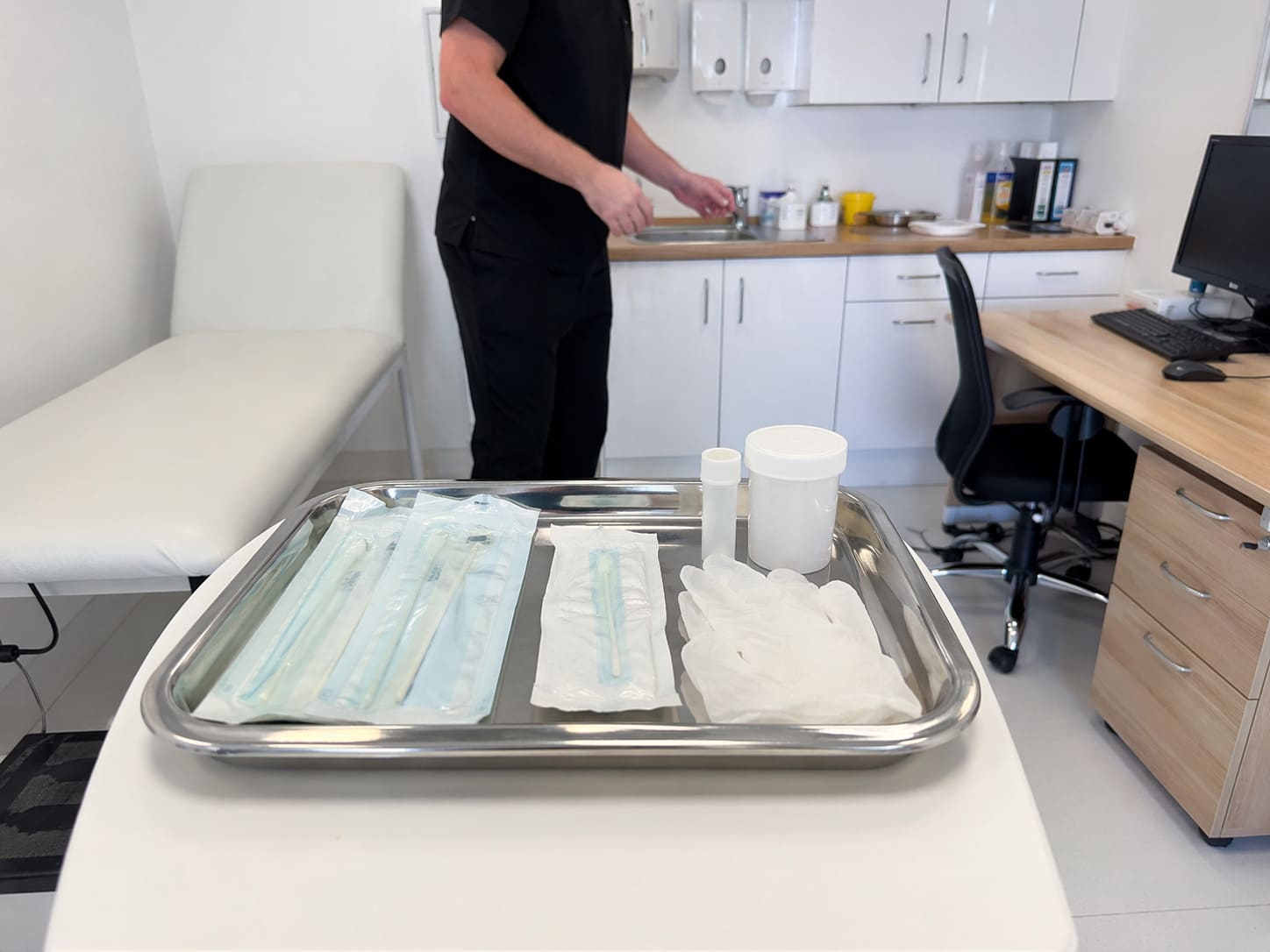
Men’s Health – Sexual Health Testing Preparation – Illustrative Image
Three testing routes, three different questions
Skin prick testing. Small amounts of selected allergens are placed on the skin, usually the forearm, and the clinician looks for a raised area called a wheal, read about fifteen minutes later. It needs an appropriately equipped clinical setting because of the small risk of a reaction.
Specific IgE blood testing. A blood sample measures antibodies to selected allergens. Results usually come back within several days to a week. This is the route when skin prick testing is unsuitable or unavailable, including when someone cannot stop their antihistamines. You may still see it called RAST, which is the older name for the same idea.
Specialist investigation. An oral food challenge gives small, increasing amounts of the suspected food under medical supervision across several hours, and it remains the most definitive answer available where real doubt persists. Component-resolved diagnostics look at responses to individual allergen proteins, which can separate a true allergy from cross-reactivity in complicated cases.
We provide GP assessment and refer on for specialist investigation where the history and the results point that way.
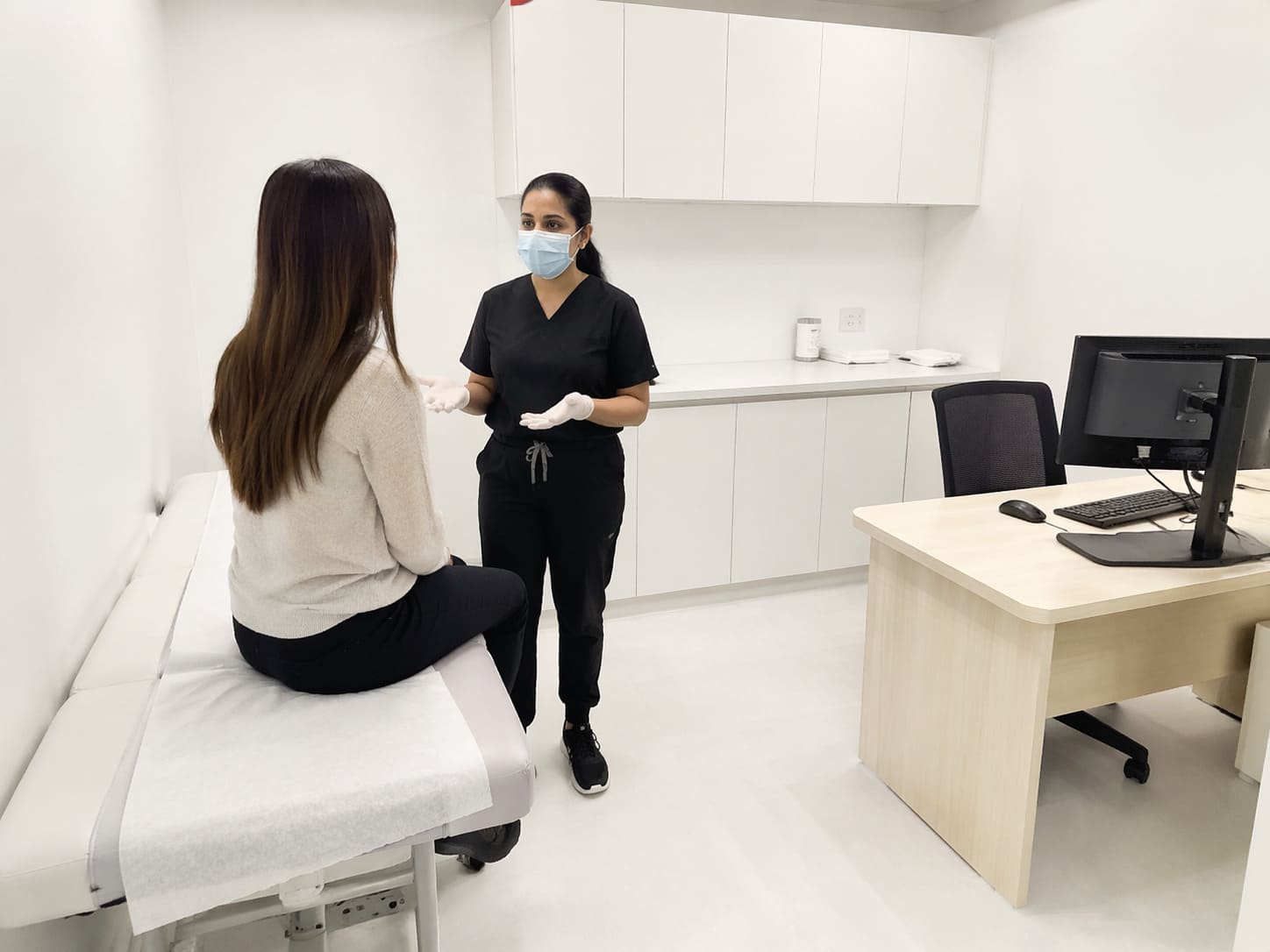
Women’s Health – Smear Test Preparation – Illustrative Image
A positive result is not the same as an allergy
This is the part that costs people money and unnecessary dietary restriction.
Sensitisation means the test found specific IgE antibodies to something. That is all it means. Plenty of people are sensitised to foods they eat happily every week.
Clinical allergy means those antibodies come with a repeatable symptom pattern after the relevant exposure. Allergy is a clinical diagnosis supported by testing, not a diagnosis made by testing, and a positive result only counts when it lines up with what actually happened to you.
The number attached to a positive result does not reliably predict how severe a future reaction will be. A clinician judges that from your previous reactions and the wider picture, not from the class or the value on the report.
Where the result and the history do not match, that is a reason for specialist assessment rather than for guessing. A supervised food challenge often resolves it.
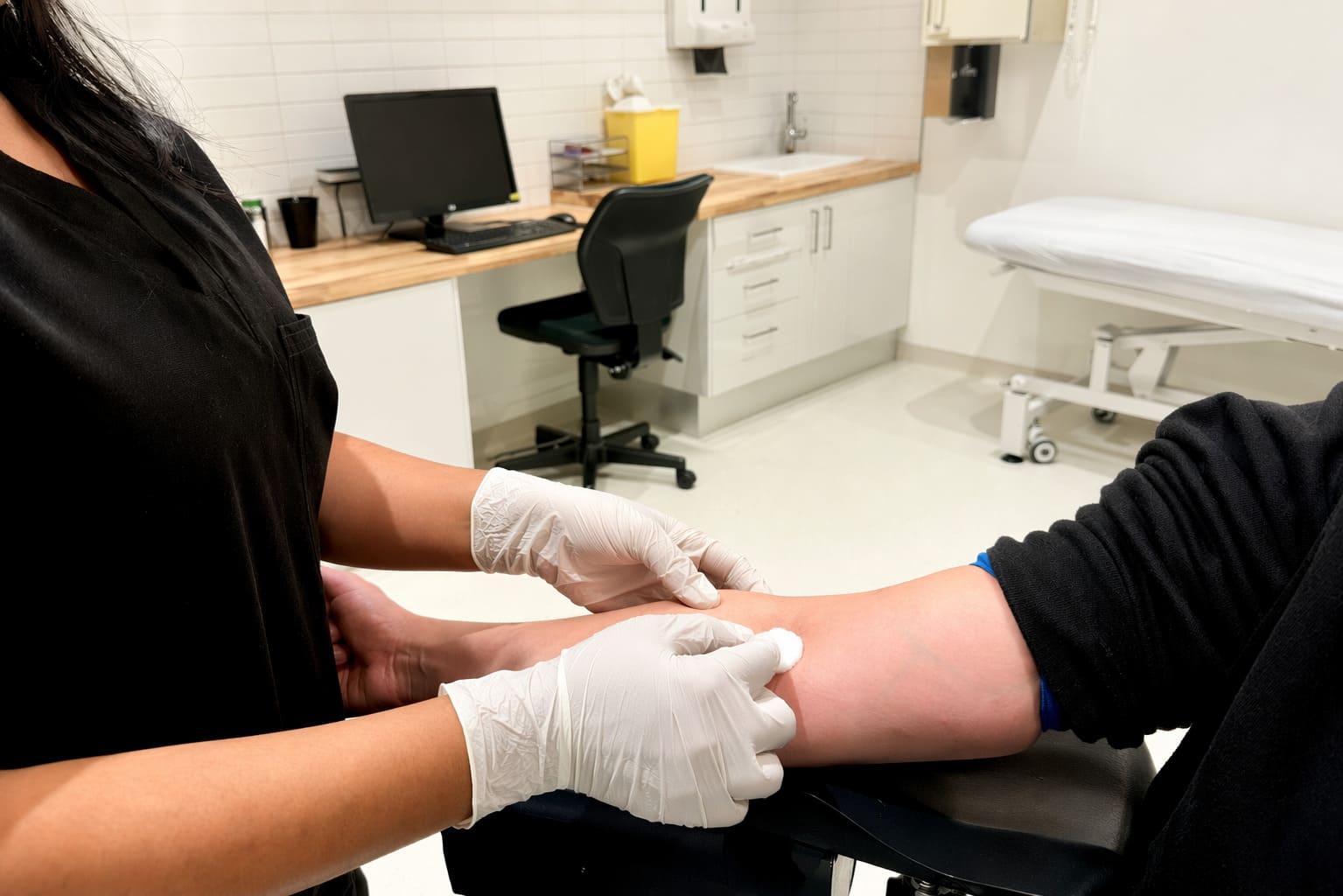
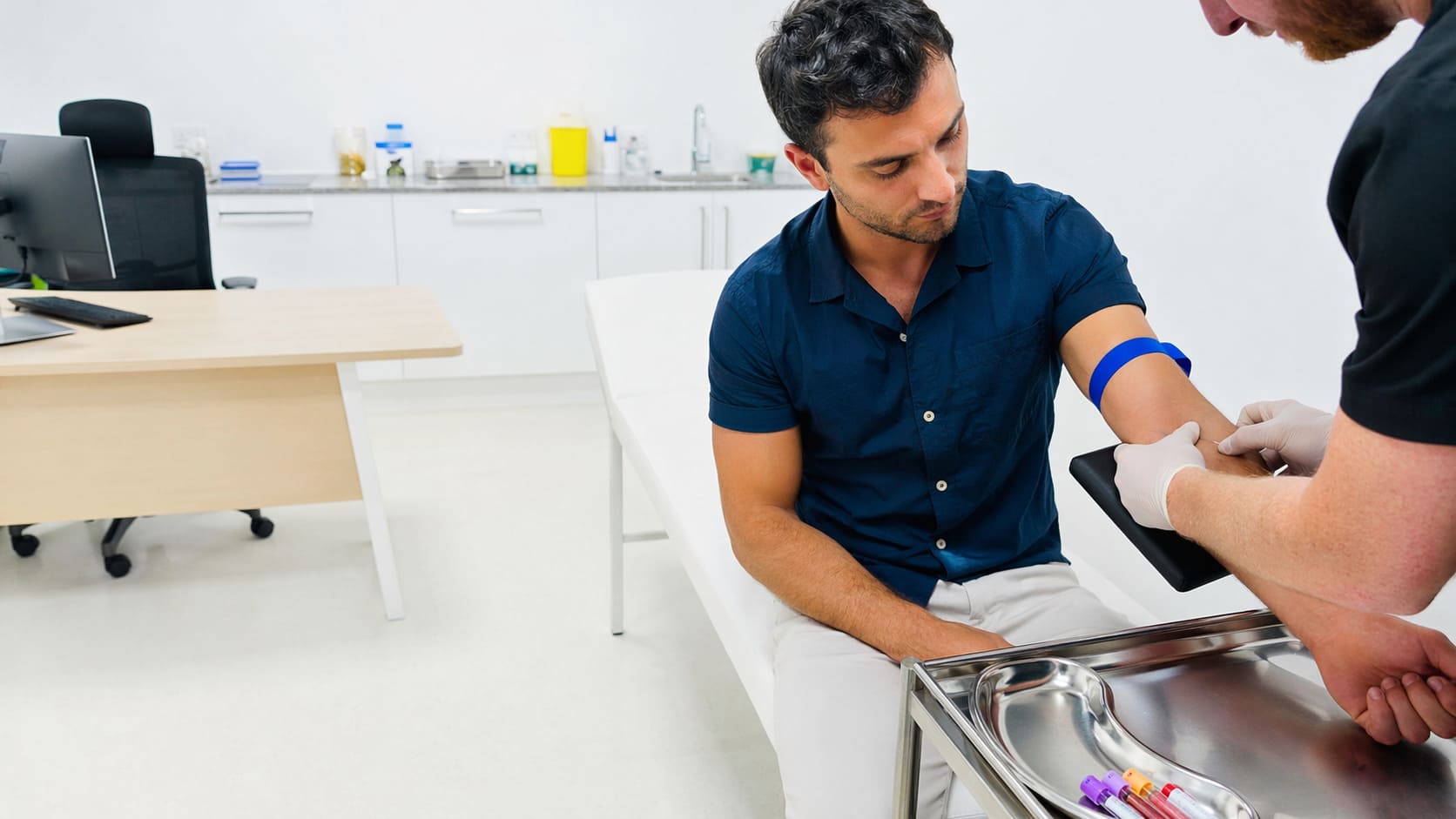
Women’s Health – Blood and Hormonal Test – Post Blood Draw Detail (2) – Illustrative Image
Questions we get asked about allergy testing
Do I need to stop antihistamines before allergy testing?
For skin prick testing, yes, usually for several days beforehand, because antihistamines suppress the skin response and can produce a falsely negative result. For blood tests, no, they make no difference. Get the exact timing from whoever is arranging the test, since it varies by medication.
How long do allergy blood test results take?
Usually several days to about a week from the sample being taken, depending on the laboratory. Ask at the point of testing how and when the results will be reviewed with you, rather than sent to you.
Can I arrange private allergy testing directly?
Yes. You do not need a referral to book a private consultation, and you can come to us directly. Whether testing is the right next step is what the consultation establishes, which is a better starting point than choosing a panel yourself.
Can allergy testing diagnose food intolerance?
No. Allergy tests measure an immune response that intolerance does not involve. Intolerance is worked out from symptoms, timing and sometimes structured dietary changes, which is a different process entirely.
Can a positive allergy test predict how bad my next reaction will be?
No. The size of the result does not forecast severity. Past reactions, and what happened during them, tell a clinician far more about future risk.
This is general information, not medical advice.
Reviewed by Fang He, BSc MSc, Advanced Nurse Practitioner and Chief Executive Officer at Future Care Medical, member of the Faculty of Sexual and Reproductive Healthcare.