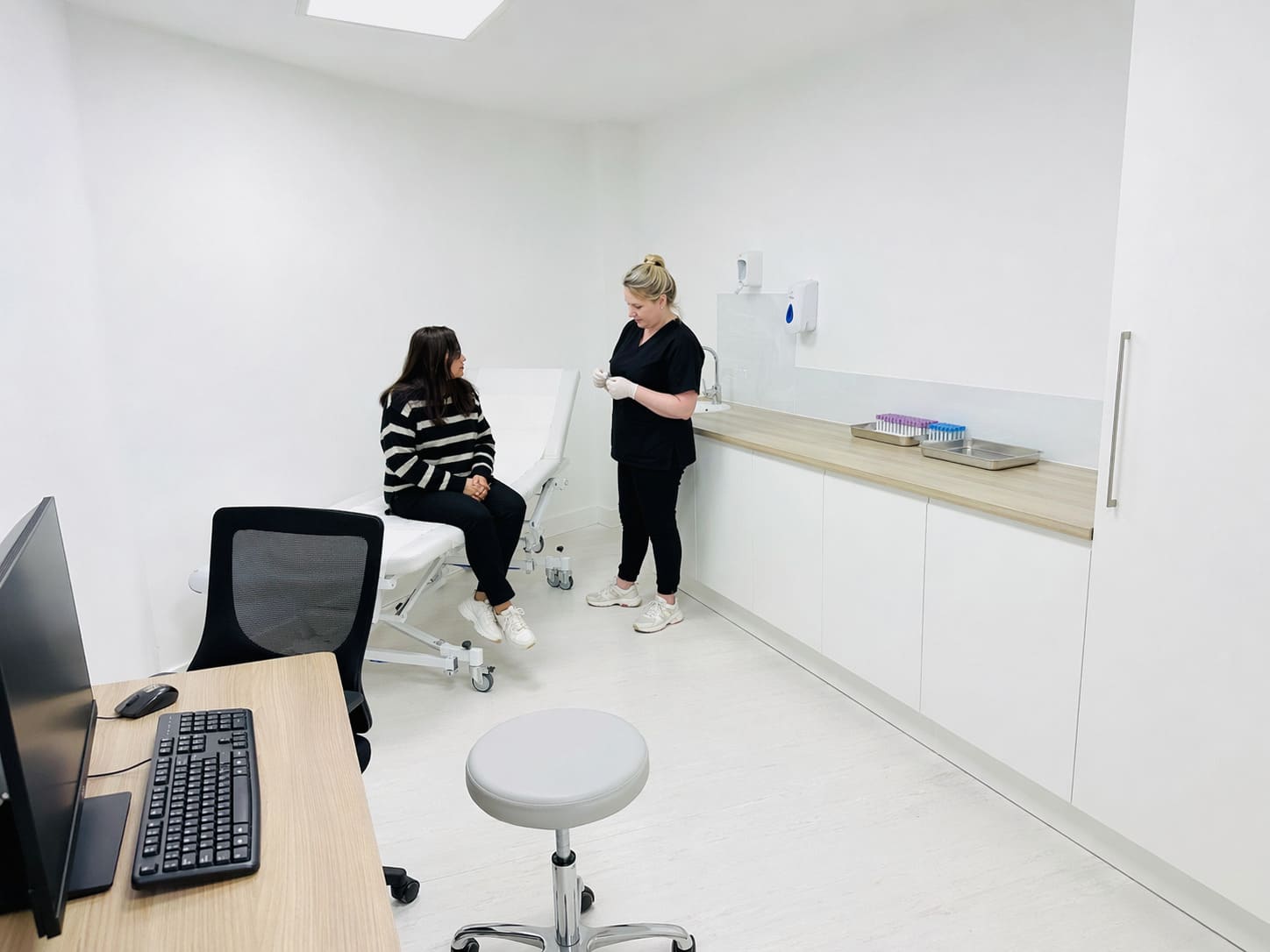
Can a private GP make an NHS referral happen faster?
A private GP can sometimes shorten the time it takes to be assessed, examined, and referred, but a private appointment does not automatically move you up an NHS waiting list. NHS referrals are usually prioritised by clinical urgency, local pathways, and the receiving service’s triage process. In practice, private and NHS care can work alongside each other, but they do not operate as a shortcut around NHS eligibility or waiting times.
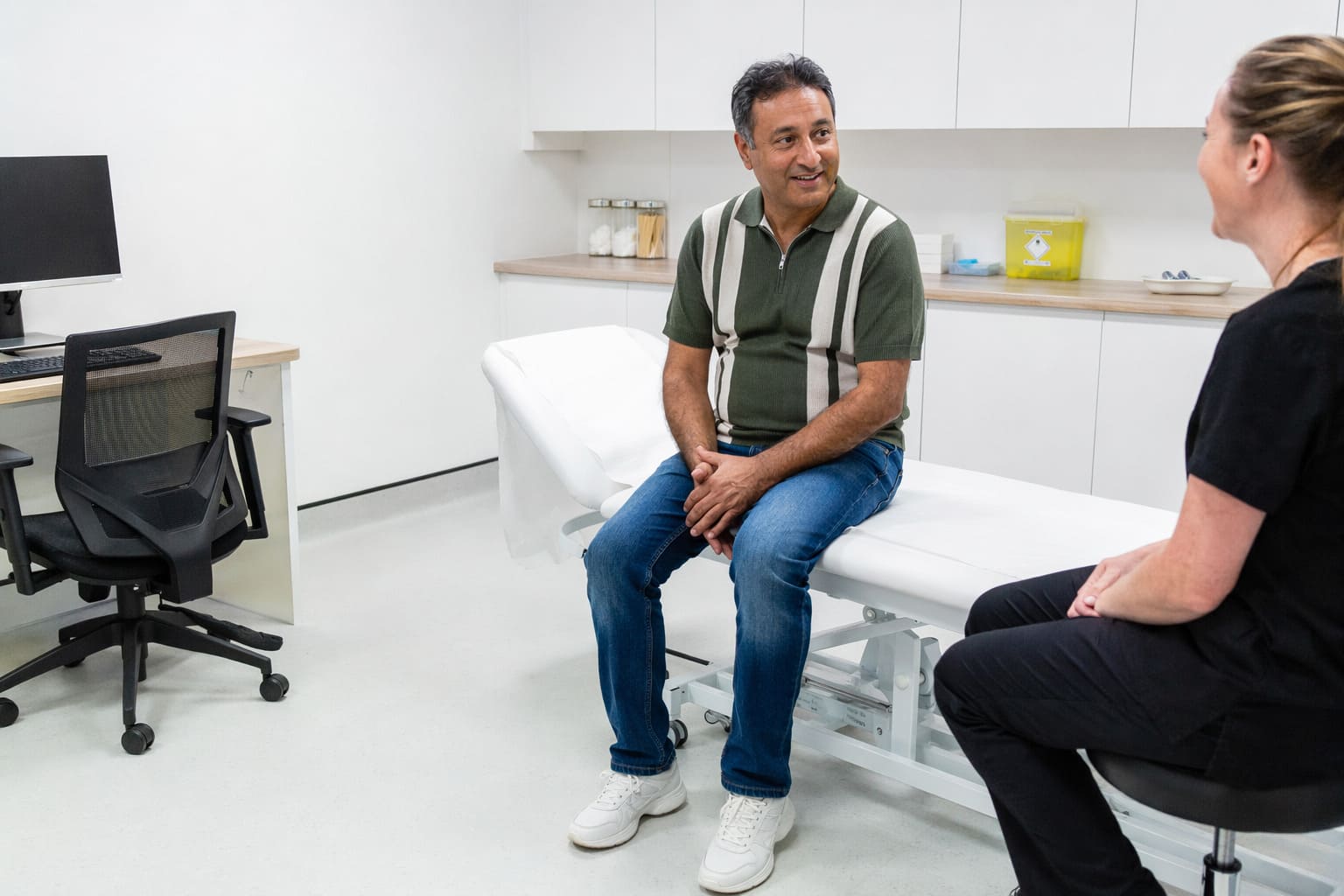
Prescription Advice Consultation – Illustrative Image
What Is In This Article
Understanding NHS referrals and private GP services
A common situation starts with a symptom that needs more than routine advice. Someone might have persistent abdominal pain, a new skin lesion, or ongoing fatigue and want a specialist opinion. At that point, the main question is often whether to book an NHS GP appointment, a private GP appointment, or both.
Within the NHS referral process, a patient is usually assessed by an NHS GP first. If the GP believes specialist input is clinically indicated, they send a referral letter into the relevant NHS pathway. That referral then goes to an NHS Trust or service for review, where it may be accepted, redirected, or triaged according to local rules and clinical information.
Private GP services have a different role. A private GP can assess symptoms, review medical history, arrange tests, write prescriptions where appropriate, and produce a referral letter. A private GP may refer you to a private specialist directly, and in some cases they may also write to an NHS service or advise your NHS GP on the next step.
The difference lies in access and process. A private GP appointment can often be arranged sooner, which may speed up the point at which a problem is identified and documented. An NHS referral, though, still enters an NHS system that applies its own rules on eligibility, urgency, and waiting times.
Several misconceptions come from the idea that a referral itself guarantees a place in a faster queue. In reality, the referral letter is one part of a larger pathway that includes triage, service capacity, and the quality of the clinical information provided.
Can a private GP accelerate your NHS referral?
The short answer is sometimes, but only in limited ways.
A private GP may reduce delays at the front end. If you are struggling to get a GP appointment, a private consultation can mean earlier assessment, earlier examination, and earlier referral documentation. That can matter if the issue clearly needs specialist review and time has already been lost before anyone has assessed it properly.
Even so, an NHS specialist appointment is not usually booked simply because the referring doctor worked privately. Once the referral reaches the NHS service, triage teams review the details against NHS guidelines and local thresholds. Clinical priority usually has more influence than the source of the referral.
Certain situations may make a practical difference:
- A private GP identifies a problem promptly and sends a clear, detailed referral letter with relevant test results.
- A patient uses a private GP because they cannot secure a timely GP appointment through their usual route.
- A referral is for an urgent concern where strong documentation helps the NHS service triage the case appropriately.
Other situations are less likely to change timing. A routine problem referred privately into a high-demand NHS service may still join the same waiting list as any other routine referral. Paying for the consultation does not alter the waiting list rules.
Medical urgency also matters. If symptoms suggest a condition that needs prompt review, the key issue is whether the referral meets urgent criteria, not whether the initial consultation was private. A well-written referral can support triage, but it does not create urgency where the clinical picture does not justify it.
At clinics such as Future Care Medical, the practical benefit is often speed of assessment and documentation rather than a guaranteed faster NHS specialist slot. That distinction is worth keeping in mind before booking any private GP NHS referral route with a fixed expectation.

Referral Consultation Wide View – Illustrative Image
How private and NHS systems work together in practice
Moving from private care into NHS care is usually possible, but it works best when the paperwork is clear and the patient knows what information needs to travel with them.
In straightforward cases, the process looks like this:
- A private GP assesses the symptoms, reviews relevant history, and decides whether specialist input is clinically indicated.
- The GP prepares referral documentation, which may include examination findings, test results, medication history, and the reason for referral.
- The referral is sent either to the appropriate NHS service, where accepted, or back to the patient’s NHS GP if the local pathway requires NHS GP involvement.
- The receiving NHS team or NHS Trust reviews the documents and triages the case according to urgency and service criteria.
- The patient may then be offered an appointment, asked for further information, or redirected to a different pathway.
Record sharing is one of the main practical issues. Private and NHS systems do not always have automatic access to each other’s patient records. A private GP may need your existing history, medication list, or recent results to write the most useful referral. In the same way, NHS teams may need copies of private consultations or investigations to avoid repeating work.
Continuity of care depends heavily on documentation. If a patient has had blood tests, imaging, or a detailed examination privately, keeping copies of results and letters can make later NHS appointments more efficient. A specialist who receives only a brief note may need to ask for more information before deciding how to proceed.
Administrative arrangements also vary between services. Some NHS pathways accept referrals directly from private GPs, while others may require routing through the patient’s NHS GP. Future Care Medical can provide referral letters and consultation records, but the receiving NHS service still decides how the case enters its own system.
Patients sometimes expect a single shared pathway, yet the reality is closer to linked systems with points of transfer. That is why complete records, accurate personal details, and a clear account of what has already happened can save time later.

Referral Consultation Room – Illustrative Image
Costs, access, and what to expect from a private GP consultation
Private GP care usually offers quicker access, but it comes with a direct cost. For people working in the City of London or travelling through Liverpool Street, Moorgate, Bank, or London Wall, the main practical advantage is often appointment availability during a busy working week.
At Future Care Medical, GP consultations are priced as follows: 15 minutes at £105.00, 30 minutes at £160.00, and 60 minutes at £240.00. The right appointment length depends on the issue, the number of symptoms involved, and whether records or results need review.
A private consultation generally includes assessment, discussion of symptoms, relevant examination where needed, and a plan. That plan might involve reassurance, tests, treatment, a follow-up appointment, a private specialist referral, or a referral letter intended for an NHS pathway.
Before the appointment, patients are often asked for a brief reason for attendance and any available medical information. During the consultation, the GP will usually take a history, review medications, ask about timing and pattern of symptoms, and decide whether referral is clinically indicated. After the appointment, any referral letter or advice note should set out the findings clearly enough for the next clinician to understand the case.
Short appointments can work well for a single focused concern. Longer consultations are often more suitable where symptoms are complex, records need careful review, or several issues are being discussed in one visit. In a time-limited setting, that practical choice can affect how complete the referral documentation is.
Common misconceptions and what patients should know
Confusion often comes from mixing up speed of access with speed of treatment. The two are related, but they are not the same thing.
- Private GPs can always bypass NHS waiting lists. They cannot. A private GP can assess you sooner and may start the referral process earlier, but NHS waiting lists are managed by NHS services according to their own triage and capacity.
- A private referral guarantees faster NHS treatment. It does not. A referral letter can support a case if it is detailed and clinically relevant, yet the NHS service still decides priority based on urgency and local criteria.
- Records move automatically between private and NHS care. They may not. Patients often need to share letters, test results, imaging reports, and medication details between services so that each clinician has the full picture.
- Private care is only for emergencies or exclusivity. Many people use private GP appointments for straightforward reasons, including difficulty finding a timely appointment, the need for a longer consultation, or the wish to clarify symptoms quickly before choosing a care pathway.
- Switching between systems is discouraged or unusually difficult. Transfers between private and NHS care happen regularly. The main issue is usually process, namely whether the right referral route has been used and whether the relevant information has been included.
The most useful way to think about private and NHS integration is as coordination, not replacement. One system does not cancel the other, and each still follows its own rules.
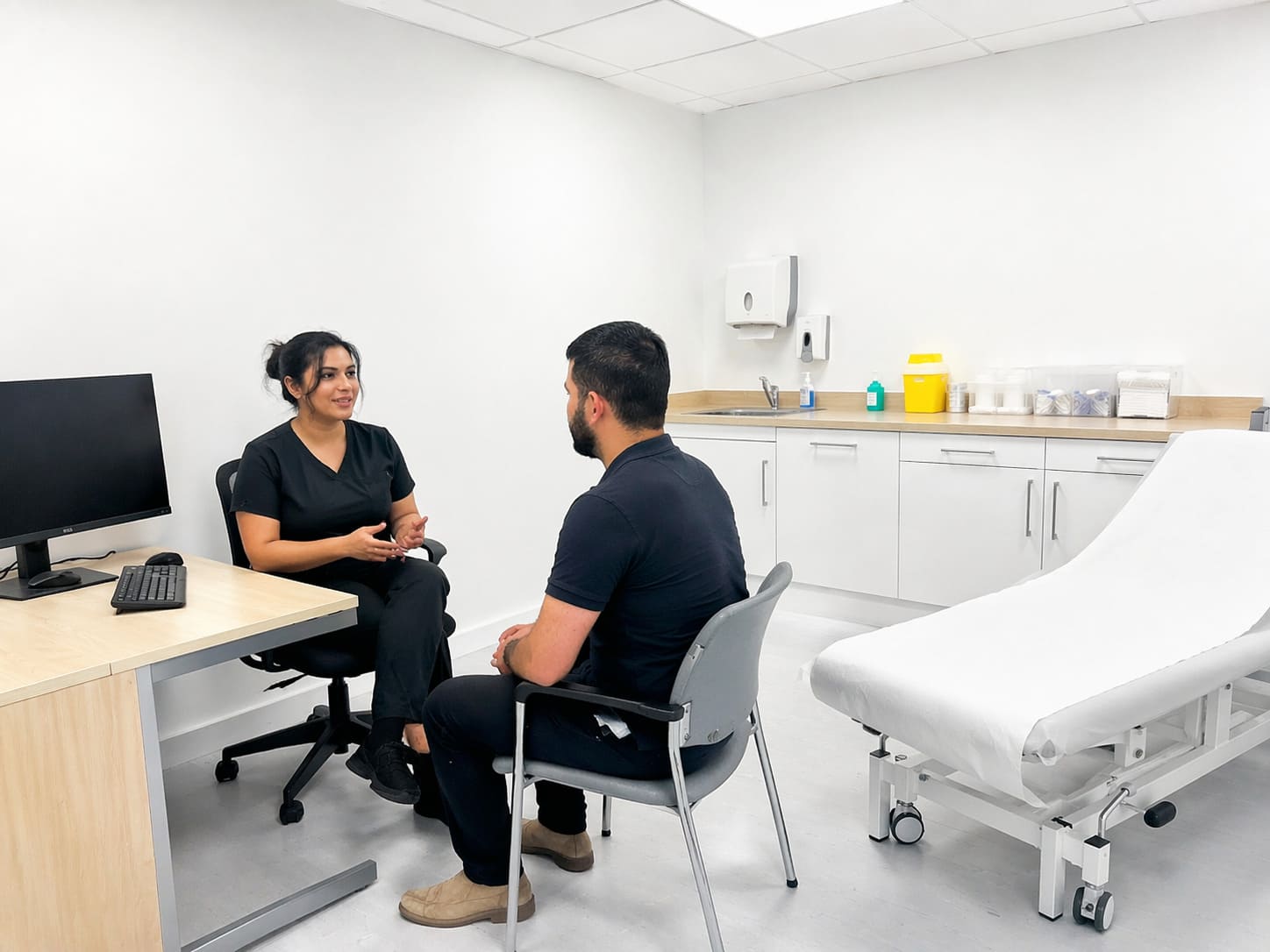
Referral Explanation Scene – Illustrative Image
Looking Ahead, and Working through Care Pathways with Confidence
Good decisions usually start with knowing what each system can and cannot do. A private GP may give you faster access to assessment, clearer referral documentation, and more time to discuss symptoms, which means that the early part of the process can move more quickly. The NHS pathway that follows will still depend on triage, eligibility, and clinical priority.
Keeping your own records organised can make a noticeable difference. Consultation letters, test results, medication lists, and imaging reports are often useful when care moves between settings, especially if different teams are involved over several weeks or months.
Clinical criteria remain the anchor point throughout. If a referral is urgent, the documents should show why. If a referral is routine, the benefit of private input may lie in earlier assessment and a clearer plan, not in a changed place on the waiting list.
Patients who understand those distinctions are usually better placed to choose the right next step, at the right time, for the right reason.