What happens during a private ECG in London, and what can the test actually show?
A private ECG in London is a short, non-invasive test that records the heart’s electrical activity. The appointment usually involves a brief clinical review, placement of small electrodes on the chest and limbs, and a recording that takes only a few minutes. The test can identify some rhythm problems, conduction abnormalities, and patterns that may suggest strain on the heart or signs of a previous cardiac event, but it does not diagnose every heart condition on its own.
What Is In This Article
Understanding the Role of a Private ECG in London
An ECG, or electrocardiogram, is used to assess heart rhythm and electrical conduction. Clinicians often request one during symptom assessment, as part of heart screening, or within a wider cardiac assessment when risk factors suggest that more information is needed.
Private access mainly changes the logistics, not the science. A private ECG London appointment may suit someone who wants a rapid ECG appointment near work, needs a same-week review, or is already arranging other cardiovascular screening protocols through a GP or private medical clinic in central London.
For many people working around Liverpool Street, Bank, Moorgate, or London Wall, timing matters. A short ECG test in central London can fit around meetings, commuting, and other appointments more easily than a longer care pathway spread across different locations.
Several common situations lead to an ECG being requested:
- Palpitations, dizziness, chest discomfort, or unexplained breathlessness
- High blood pressure, diabetes, raised cholesterol, or a family history of heart disease
- A routine heart screening review before exercise, travel, or employment-related medical assessment
An ECG is useful, although it is not a complete answer by itself. A normal trace does not rule out every heart problem, and an abnormal trace still needs clinical interpretation in context with symptoms, examination, and sometimes blood tests or imaging.
What to Expect During a Private ECG Appointment
Most ECG appointment process visits are simple and brief. Preparation is minimal, and the main purpose is to obtain a clear recording under standard clinical protocols.
At Future Care Medical, the process would usually follow a structured pattern.
- A clinician or trained healthcare professional confirms your details, symptoms, medications, and the reason for the test. If the ECG forms part of a private heart test after a GP consultation, that earlier history will guide what the team is looking for.
- You are asked to remove clothing from the upper body, and sometimes shoes or tights as well, so electrodes can be placed on the chest, wrists, and ankles. A chaperone can be offered in line with clinic policy.
- Small adhesive electrodes are attached to the skin. These are connected to the ECG machine to record a 12-lead ECG, which gives different views of the heart’s electrical activity.
- You lie still and breathe normally for a short recording. The test is painless, and the tracing itself usually takes only a few minutes.
- The ECG is reviewed by the appropriate clinician. Depending on the setting, results may be explained on the same day or added to a wider clinical review if more than one test is being interpreted together.
Comfort tends to be straightforward. Some people notice cool gel pads or mild discomfort when adhesive stickers are removed, but the procedure does not involve needles, radiation, or sedation.
After the recording, the next step depends on why the test was ordered. A normal ECG may simply be documented and filed within your patient record, whereas an unexpected finding could lead to further assessment such as blood pressure review, blood testing, ambulatory heart rhythm monitoring, or referral into a cardiology pathway.

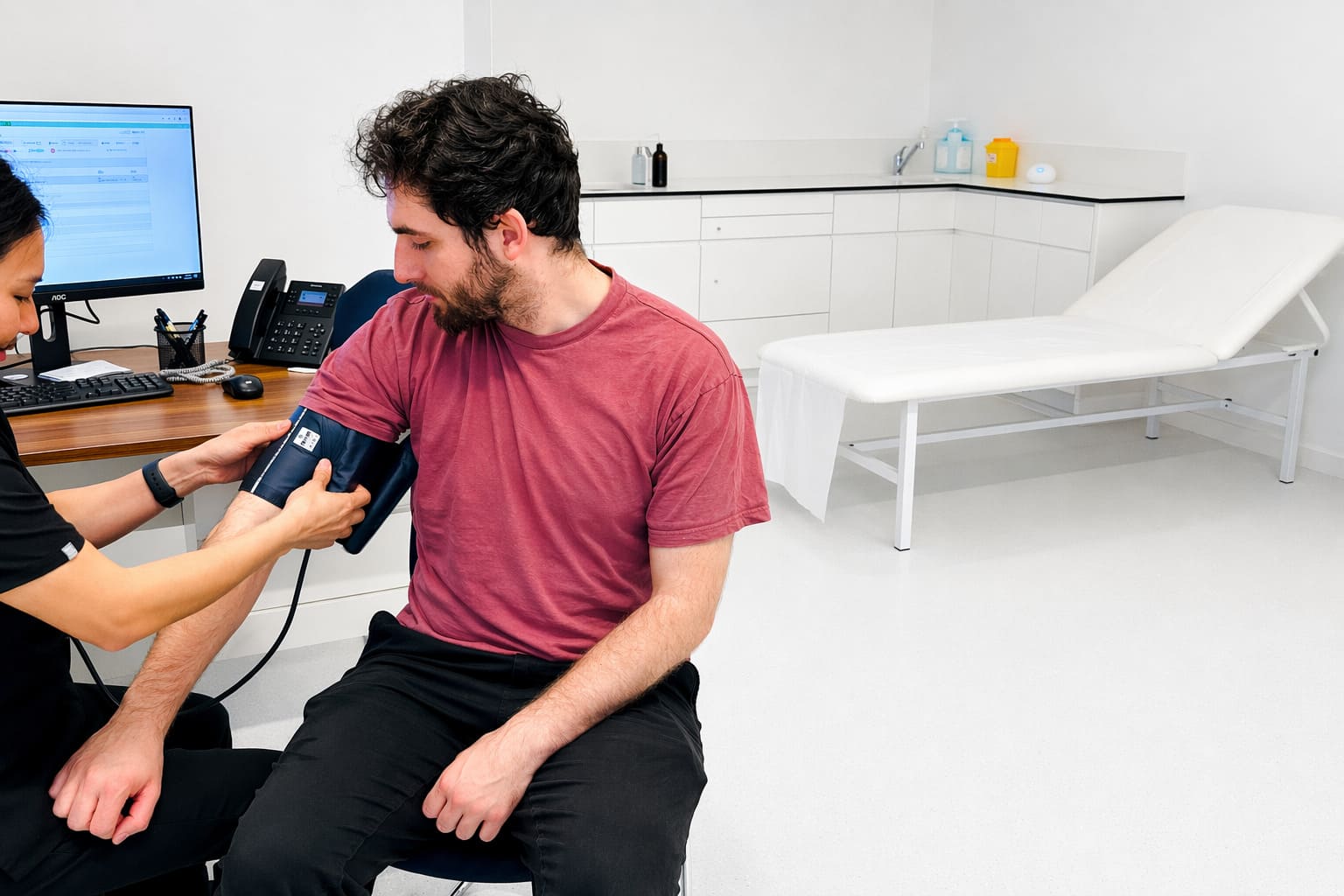
Men’s Health – Blood Pressure Check
What Can a Private ECG Detect?
An ECG can detect several types of cardiac abnormality, especially problems related to rhythm and electrical conduction. It can also show patterns that suggest the heart has been under strain or that a previous myocardial infarction, meaning heart attack, may have occurred.
One of the clearest uses is identifying arrhythmias. Atrial fibrillation, which causes an irregular and often fast rhythm, may be visible on a resting ECG if it is happening at the time of the test. Other rhythm disturbances, including some forms of tachycardia or extra beats, can appear as well.
Conduction problems are another key area. Heart block refers to delayed or interrupted electrical signals travelling through the heart. Some conduction changes are mild and incidental, whereas others need prompt review because they affect how effectively the heart beats.
Clinicians also look for signs that may point to pressure or strain on the heart. High blood pressure, some valve disorders, and certain structural changes can produce ECG findings that support a broader diagnosis, although the trace alone cannot confirm the underlying cause.
Metabolic issues occasionally leave a pattern on the ECG too. Electrolyte imbalance, including abnormal potassium levels, may alter the shape or timing of parts of the trace. Medication effects can do the same, which means that interpretation needs to take your drug history into account.
A few findings may suggest previous cardiac injury. Certain changes can be consistent with an old myocardial infarction, although timing and significance need careful assessment under established clinical decision pathways and current cardiology guidance, including NICE-informed practice where relevant.
Limits matter just as much as capabilities. A normal ECG does not exclude coronary artery disease, intermittent arrhythmias, or structural heart conditions that are not active on the trace at that moment. False positives and false negatives are possible, which is why ECG diagnosis always sits within a wider clinical picture rather than acting as a standalone verdict.

Essential Health Check – Heart and Chest Check
Who Should Consider a Private ECG in Central London?
A private ECG is usually most relevant when symptoms, risk factors, or a specific clinical review make it appropriate. It is not a universal screening test for every healthy adult.
Typical ECG indications include:
- Palpitations or an irregular heartbeat
- Chest pain or chest tightness
- Dizziness, fainting, or near-fainting episodes
- Shortness of breath that needs cardiac assessment
- High blood pressure or a known cardiovascular risk profile
- A family history of certain heart conditions
- Review before further heart screening London investigations or occupational assessment
Consider the context as well. Someone working long hours in the City may ignore intermittent symptoms because they seem minor or inconvenient to assess. A brief ECG for professionals can be useful when a GP wants to rule in or rule out obvious rhythm issues quickly, particularly if travel across London transport networks makes fragmented appointments hard to manage.
Preventive screening has a place, but only in selected circumstances. A person with no symptoms and no known risk factors may not benefit from an ECG simply for reassurance, whereas a patient with raised blood pressure, diabetes, or a strong family history might have one included within a structured cardiovascular risk assessment tool or wider heart screening review.
Practical Considerations: Access, Cost, and Result Timelines
Practical details often shape whether someone goes ahead with an ECG appointment booking. In central London, access tends to matter as much as the test itself, especially for people moving between offices, stations, and fixed work commitments.
Future Care Medical lists a 15-minute GP consultation at £105.00. If an ECG is being arranged through a GP-led review, that consultation fee may be relevant to the overall cost of assessment.
Result timing varies by clinical setup and by whether the ECG is a standalone test or one part of a broader work-up. In many private settings, the recording can be reviewed promptly, and same-day feedback may be possible when a clinician is available to interpret it within the appointment.
A few practical points are worth bearing in mind:
- Bring a list of current medications and any recent test results if you have them
- Wear clothing that can be removed easily from the upper body
- Allow extra time if your appointment also includes blood tests or a fuller cardiac assessment
Confidentiality follows standard patient confidentiality standards and data protection rules. ECG traces become part of the medical record, and any onward sharing, including referral to cardiology or inclusion in occupational health paperwork, should happen through established consent and records processes.

Comprehensive Health Check – Heart and Chest Check
Beyond the ECG: Understanding Its Place in Cardiac Care
An ECG is best understood as one tool within a larger heart health pathway. It can provide a fast, objective snapshot of electrical activity, although a snapshot is still only one moment in time.
Clinical interpretation gives the test its meaning. The same ECG finding can matter very differently depending on age, symptoms, blood pressure, medications, exercise tolerance, and previous cardiac history.
Some people need no further action after a normal result and clinical review. Others may move on to blood tests, ambulatory monitoring, echocardiography, imaging, or referral under cardiology referral protocols if the trace raises a specific concern.
Seen in that light, the value of an ECG lies in how well it fits into a structured cardiac screening process. Used thoughtfully, it supports earlier clarification, sharper decision-making, and a more informed view of heart health over time.
Essential Health Check – Blood Pressure Assessment