Do I need a blood test to diagnose menopause?
In most cases, no. If you are aged 45 or older and your symptoms are typical, such as irregular periods, hot flushes, night sweats, and mood changes then a clinical diagnosis can often be made without blood tests. However, testing may be helpful if you are younger, have atypical symptoms, or are using contraception or HRT that affects hormone levels.
Here's What We Have Covered In This Article
Understanding the difference: perimenopause vs menopause
Perimenopause is the transitional phase that leads up to menopause. During this time, hormone levels fluctuate, and symptoms such as irregular periods, mood swings, hot flushes and poor sleep may begin. This phase can last for several years. Menopause itself is defined as having had no periods for 12 months in a row, marking the end of menstrual activity.
For most people aged 45 or older with classic symptoms, menopause can be diagnosed based on symptoms and history. Blood tests are usually reserved for those with symptoms at a younger age, or when contraceptives or HRT are making the picture less clear. If you want to speak with a private GP in London who focuses on menopause care, there are contact details further down the page.
If you’re short on time:
-
Ask your GP whether a test is needed or not
-
Write down your symptoms and when they began
-
Make a note of your last natural period
-
Mention any contraception or HRT you are using or have used recently
Pro Tip: If you’re under 40 and not having periods, ask about repeat FSH testing and possible referral for early menopause assessment.
Book Your Menopause Consultation Today
Speak to a GP who understands menopause and offers same-week appointments in Central London.
What does a private menopause test usually include, and when is it useful?
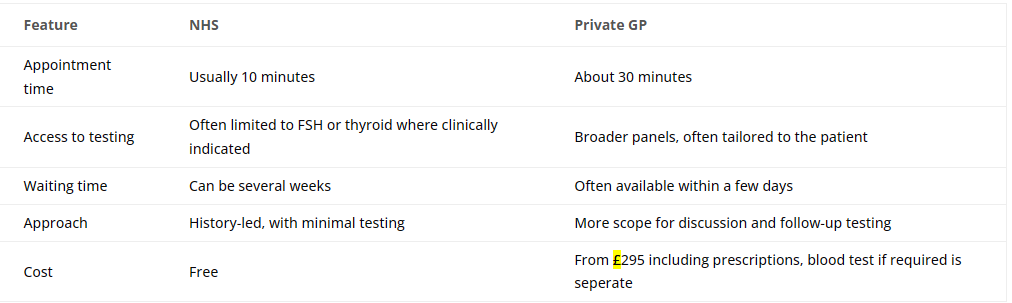
Private vs NHS menopause testing: what’s the difference
What does a private menopause test usually include, and when is it useful?
Private vs NHS menopause testing: what’s the difference?
Typical hormone and baseline health tests in London
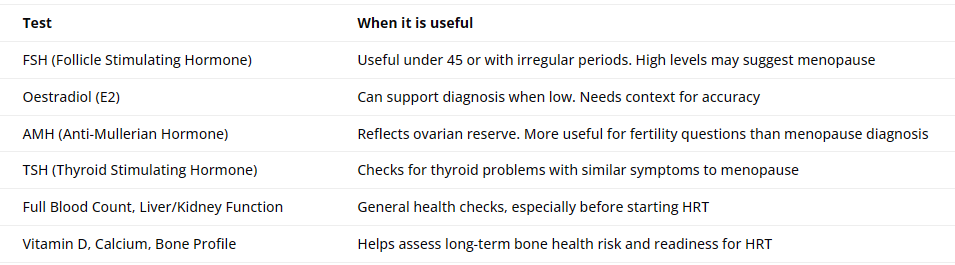
Other menopause tests sometimes included
-
DEXA scan: Used to measure bone density, especially in early menopause or when there is a family history of osteoporosis
-
Lipid profile: Evaluates cholesterol and cardiovascular risk before prescribing HRT

Will contraception or HRT affect hormone test results?
Yes, many hormonal treatments influence hormone levels and test outcomes.
- Combined contraceptive pill or HRT: These suppress natural hormone production, making results harder to interpret.
- Progestogen-only methods: These have less impact on blood test results but may still affect bleeding patterns.
- Copper coil or non-hormonal IUD: These do not interfere with hormone levels and allow more accurate testing.
What to say during your appointment:
- “I am currently using [method]. Will this affect the hormone test results?”
- “Would a symptom-based diagnosis be more accurate in my case?”
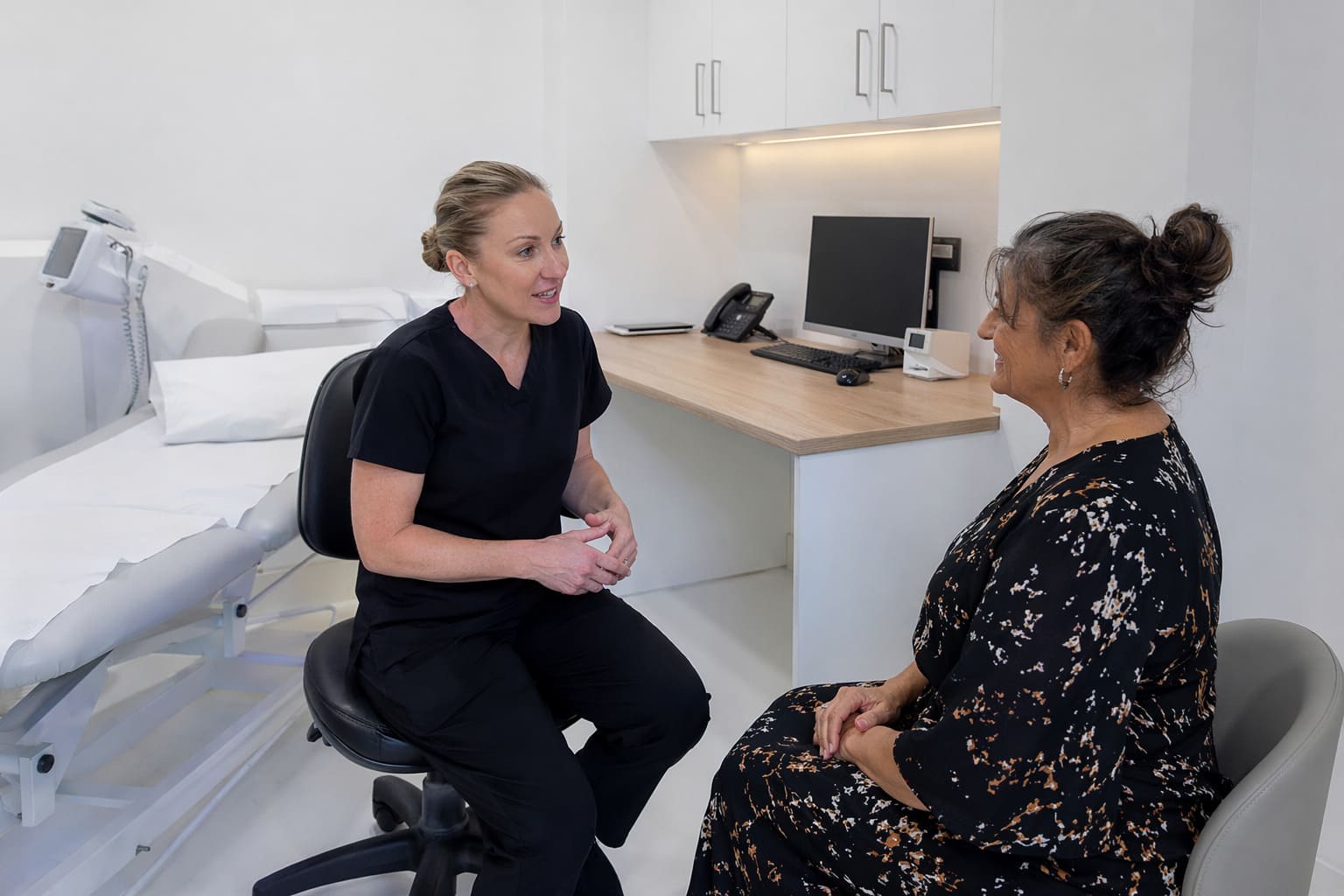
What to say at your appointment – script and checklist
Starting the conversation
“I’ve been noticing some changes that could relate to menopause or perimenopause. They started around [month/year]. I would like to talk through whether menopause blood tests would be useful or whether symptoms alone are enough.”
Helpful questions
- “Would you usually recommend testing, or is diagnosis made clinically?”
- “Will my contraception or HRT change how the results look?”
- “What will the tests include, and how do you explain them?”
- “Can we discuss HRT today if the symptoms suggest it is needed?”
- “What will the total cost be, including follow-up if needed?”
Bring along:
- A note of your symptoms and when they began (especially perimenopause symptoms)
- A list of current or recent medications, including any HRT or contraception
- The date of your last natural menstrual period
- Any previous test results, whether from home kits or GP blood tests
Pro Tip: You do not need a blood test to confirm menopause if you’re over 45 and have typical symptoms. Always ask your GP whether testing is necessary.

What your test results might mean: three practical examples
Example 1: Age 47 with typical symptoms
Symptoms: poor sleep, mood swings, hot flushes, erratic periods.
Outcome: Diagnosis made from history. Blood tests not needed. GP discusses HRT options and side effects.
Example 2: Age 38 with absent periods
When is a repeat FSH test needed?
If you are under 40 and have had no periods for several months, a single blood test may not be enough. NICE recommends doing two FSH tests around four to six weeks apart. If both are raised, it supports a diagnosis of premature ovarian insufficiency (POI) or early menopause.
Symptoms: no periods, tiredness, memory lapses.
Outcome: Repeat tests confirm POI. Referred to a specialist. Options for hormone support and fertility advice are discussed.
Example 3: Using combined pill
Symptoms: emotional ups and downs, no periods due to pill.
Outcome: Tests are not useful due to suppressed hormones. GP suggests managing based on symptoms or a short break from contraception.
If any of these sound familiar, booking a consultation at a private menopause clinic might help clarify your next steps.
London clinic overview: cost, location and booking
Future Care Medical – Menopause & Hormone Clinic
Location: Central London
Appointment length: 30 minutes
Consultation fee: £295 blood test are additional if required
(Tests and prescriptions are charged separately)
Future Care Medical is a private menopause clinic providing comprehensive consultations and menopause blood tests in London.
What’s included:
-
Full review of symptoms and background
-
Decision on whether blood tests are needed
-
Discussion about HRT, including side effects and lifestyle changes
-
Risk screening before prescribing
How to book:
Phone: 020 7362 6188
Book via the website
Appointments are available Monday to Friday.
Who you’ll see and what we offer at Future Care Medical
All appointments are with doctors who are registered with the GMC and trained in menopause care. We follow NICE and British Menopause Society guidance. HRT is only prescribed when it is safe and suitable. Every patient is assessed for cardiovascular and clotting risk before treatment is offered.
Unsure If You Need a Blood Test?
Get clear advice on whether testing is necessary based on your symptoms and age.
Frequently asked questions (FAQs)
Do I need a blood test to confirm menopause?
Not always. If you are over 45 and your symptoms are typical, your GP may decide testing is not necessary.
What blood tests might be offered?
Common ones include FSH, oestradiol and thyroid checks. Others may include vitamin D or liver function if starting HRT.
Can contraception or HRT affect my hormone results?
Yes. Hormone-based treatments often interfere with readings. Always tell your GP what you are using.
Are home menopause kits trustworthy?
Some offer basic insight, but they are not a substitute for clinician-led testing and advice.
Trusted sources and further reading
-
NICE Menopause Guidance (NG23) – How UK GPs diagnose and treat menopause
-
British Menopause Society – Advice and standards for best practice
-
NHS Menopause Information – Symptoms, treatment and access
-
BBC News – Are Home Menopause Kits Reliable? – Analysis of over-the-counter test accuracy